c. 1567 - 1571
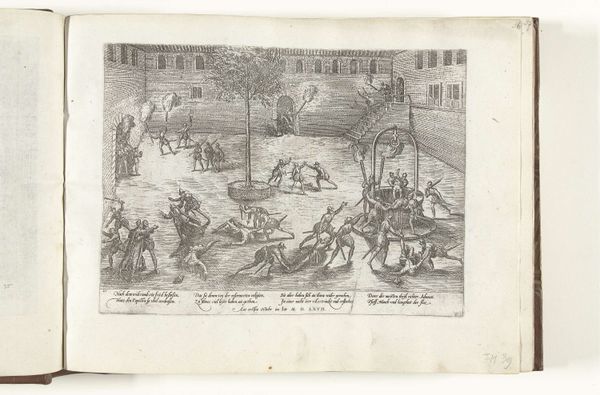
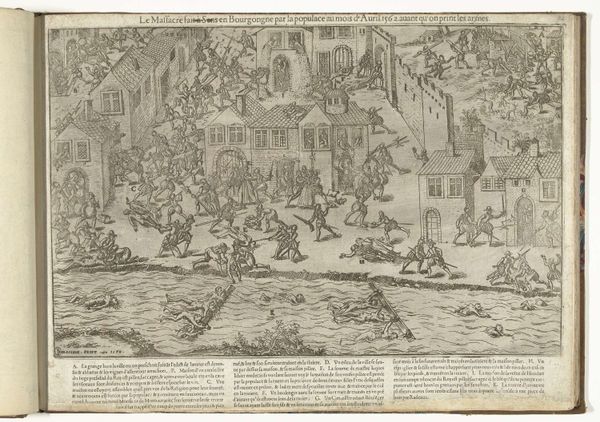
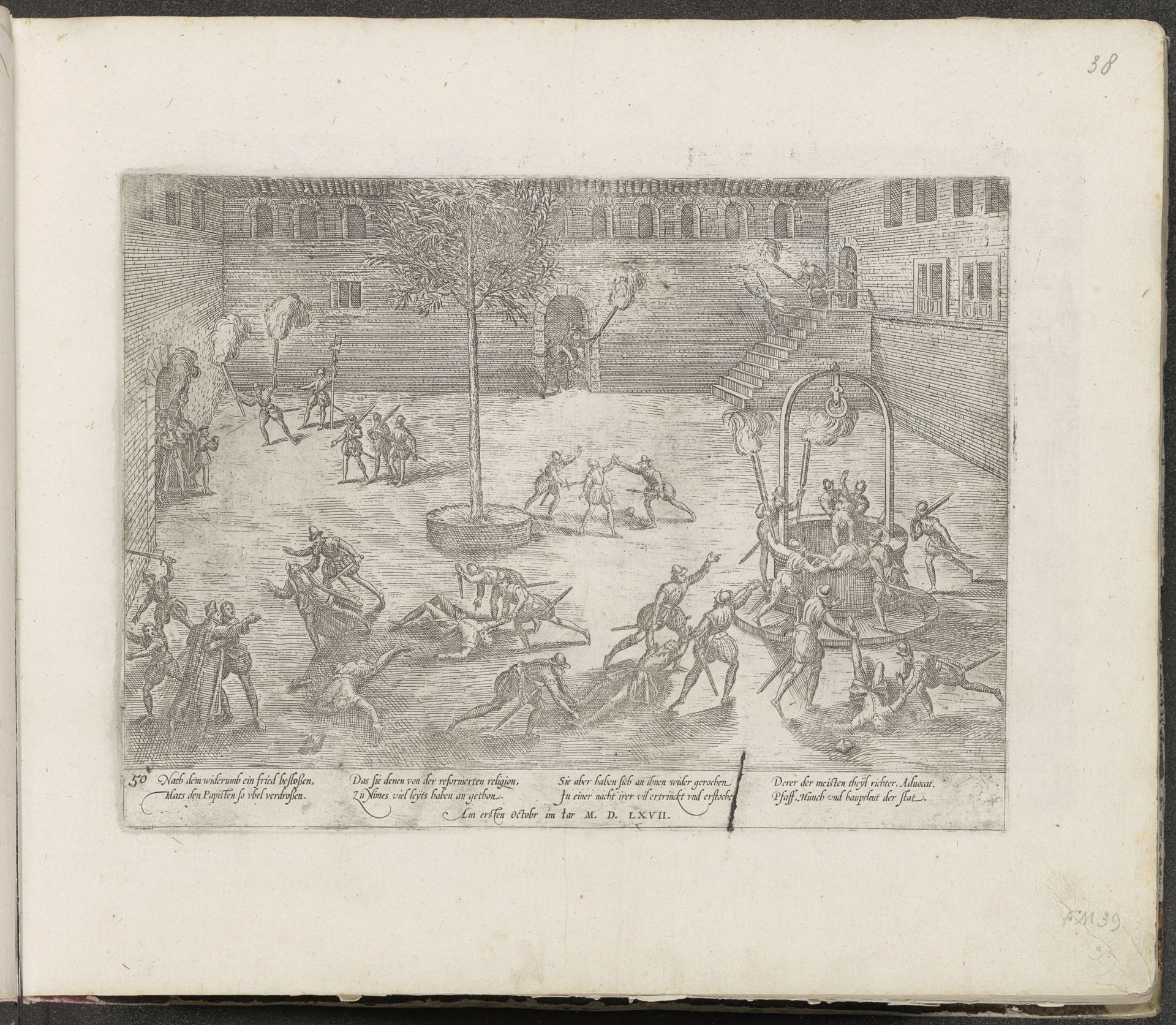
Overval op een klooster te Nîmes door de hugenoten, 1567

Frans Hogenberg
1540 - 1590Location
RijksmuseumListen to curator's interpretation
Curatorial notes
This engraving by Frans Hogenberg depicts the Huguenot assault on a monastery in Nîmes in 1567. The stark courtyard, dominated by the central image of figures being thrown into a well, evokes primal fears of enclosure and vulnerability. The act of throwing people into wells— a motif echoing through history, from ancient sacrificial rites to medieval punishments—is laden with symbolism. Water, often seen as a source of life and purification, here becomes an instrument of death and desecration. This gesture of violence stirs deep-seated anxieties about the fragility of life. Consider how similar acts of desecration appear in ancient Mesopotamian depictions of war, where the destruction of sacred spaces was a means of psychological warfare. These acts tap into the collective memory of cultural trauma, stirring subconscious fears. This image functions as a potent reminder of the cyclical nature of violence and the enduring power of such symbols to evoke emotional responses across centuries.