About this artwork
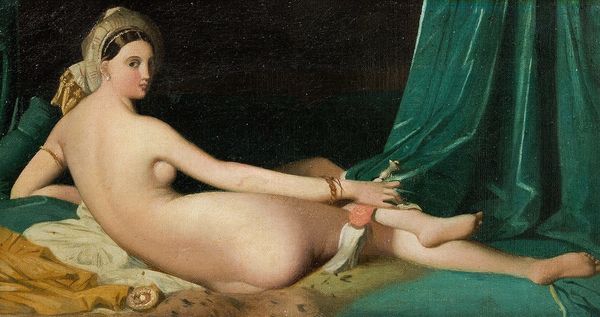
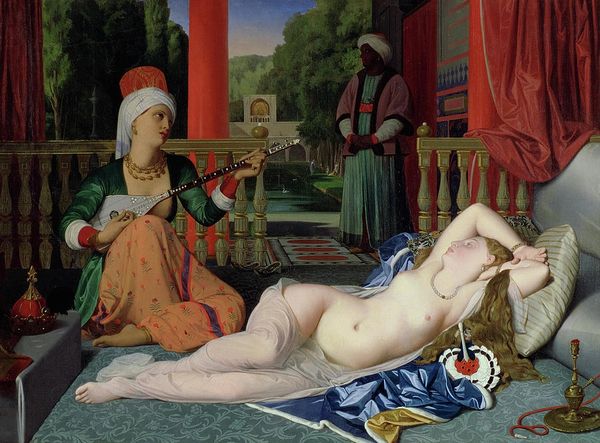
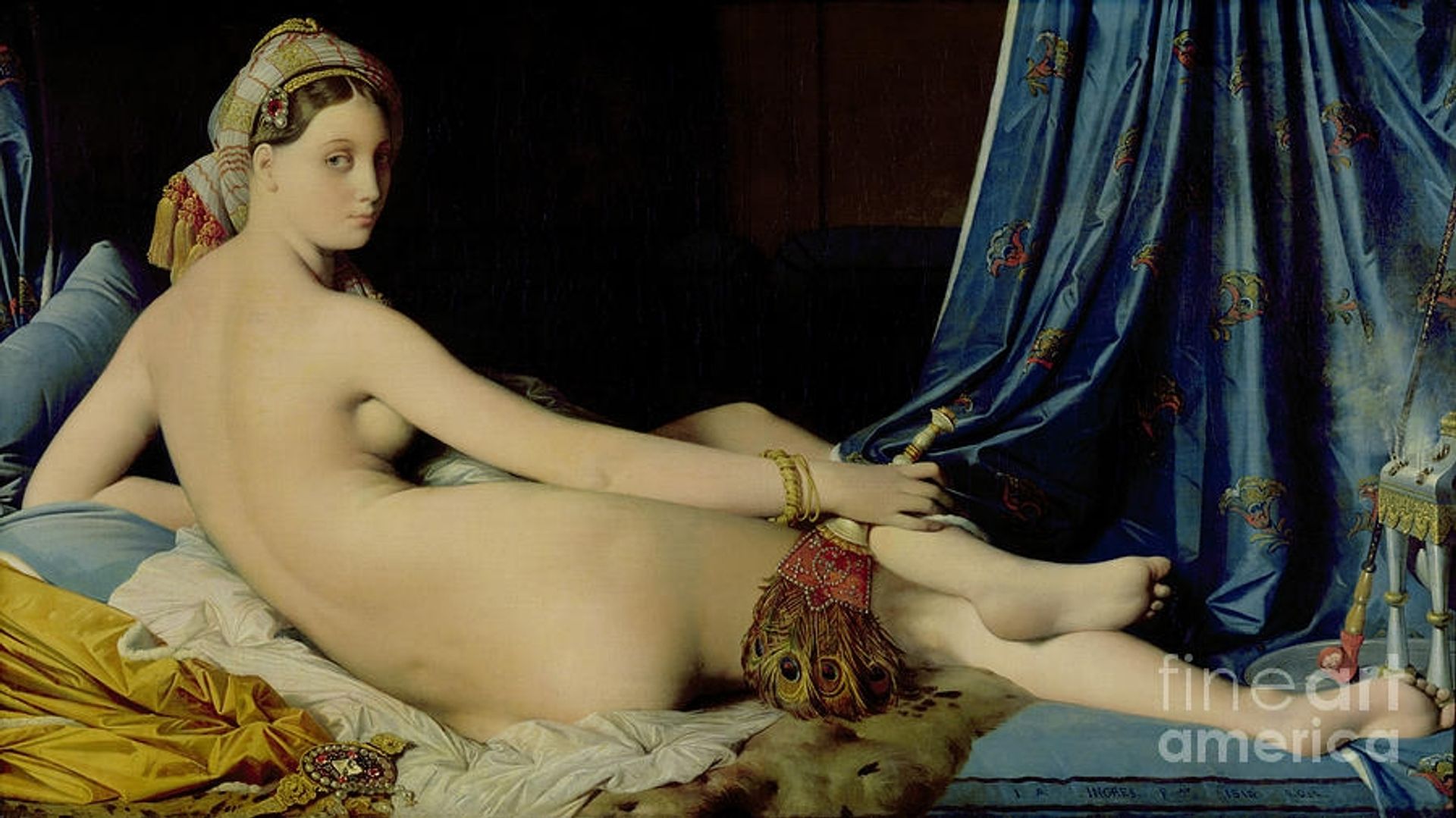
Jean-Auguste-Dominique Ingres painted "The Grande Odalisque" with oil on canvas in 1814. This work exemplifies the orientalist style popular in France during the 19th century, a time of increasing colonial expansion into North Africa and the Middle East. The image presents a reclining nude woman, adorned with exotic accessories like a turban and peacock fan, alluding to a generalized and fictionalized vision of the Ottoman Empire. The figure's elongated proportions and smooth, idealized skin reflect Ingres's academic training and his adherence to classical ideals of beauty. However, this imagined Orient served as a projection screen for Western fantasies and desires, reinforcing the power dynamics between Europe and the East. Ingres's Odalisque exists within a network of artistic and political institutions that supported and promoted this orientalist vision. To fully understand this artwork, we can look at travel literature, colonial records, and the history of collections and exhibitions in museums. The meaning of this work depends on its original context.
The Grande Odalisque 1814


Artwork details
- Medium
- painting, oil-paint, textile
- Dimensions
- 91 x 162 cm
- Location
- Louvre, Paris, France
- Copyright
- Public domain
Tags
portrait
neoclacissism
painting
oil-paint
textile
figuration
female-nude
romanticism
orientalism
nude
Comments
No comments
About this artwork
Jean-Auguste-Dominique Ingres painted "The Grande Odalisque" with oil on canvas in 1814. This work exemplifies the orientalist style popular in France during the 19th century, a time of increasing colonial expansion into North Africa and the Middle East. The image presents a reclining nude woman, adorned with exotic accessories like a turban and peacock fan, alluding to a generalized and fictionalized vision of the Ottoman Empire. The figure's elongated proportions and smooth, idealized skin reflect Ingres's academic training and his adherence to classical ideals of beauty. However, this imagined Orient served as a projection screen for Western fantasies and desires, reinforcing the power dynamics between Europe and the East. Ingres's Odalisque exists within a network of artistic and political institutions that supported and promoted this orientalist vision. To fully understand this artwork, we can look at travel literature, colonial records, and the history of collections and exhibitions in museums. The meaning of this work depends on its original context.
Comments
No comments