About this artwork
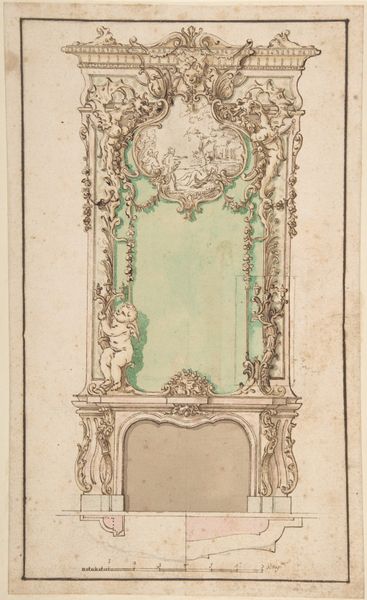
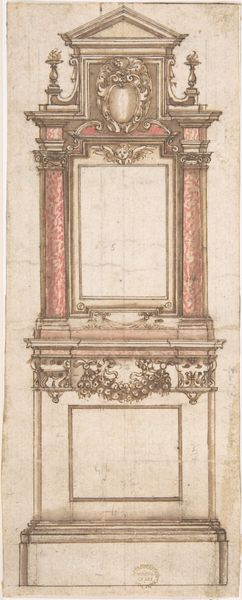
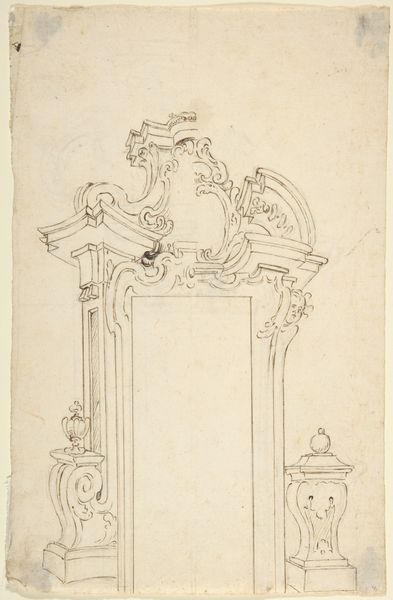
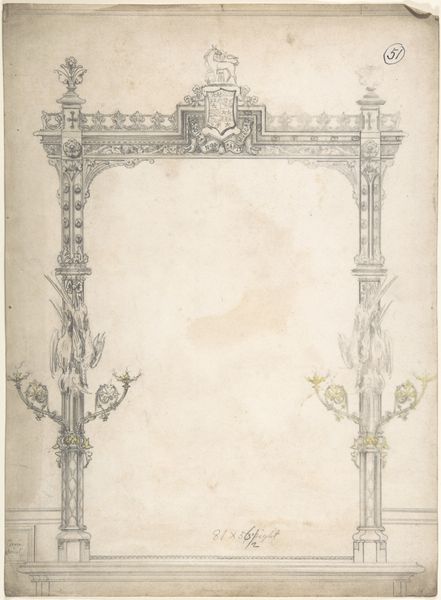
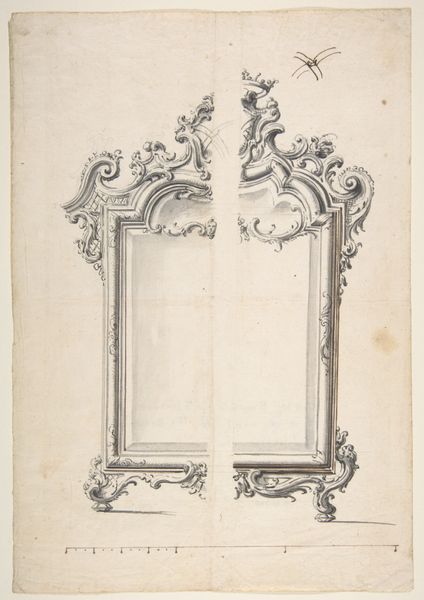
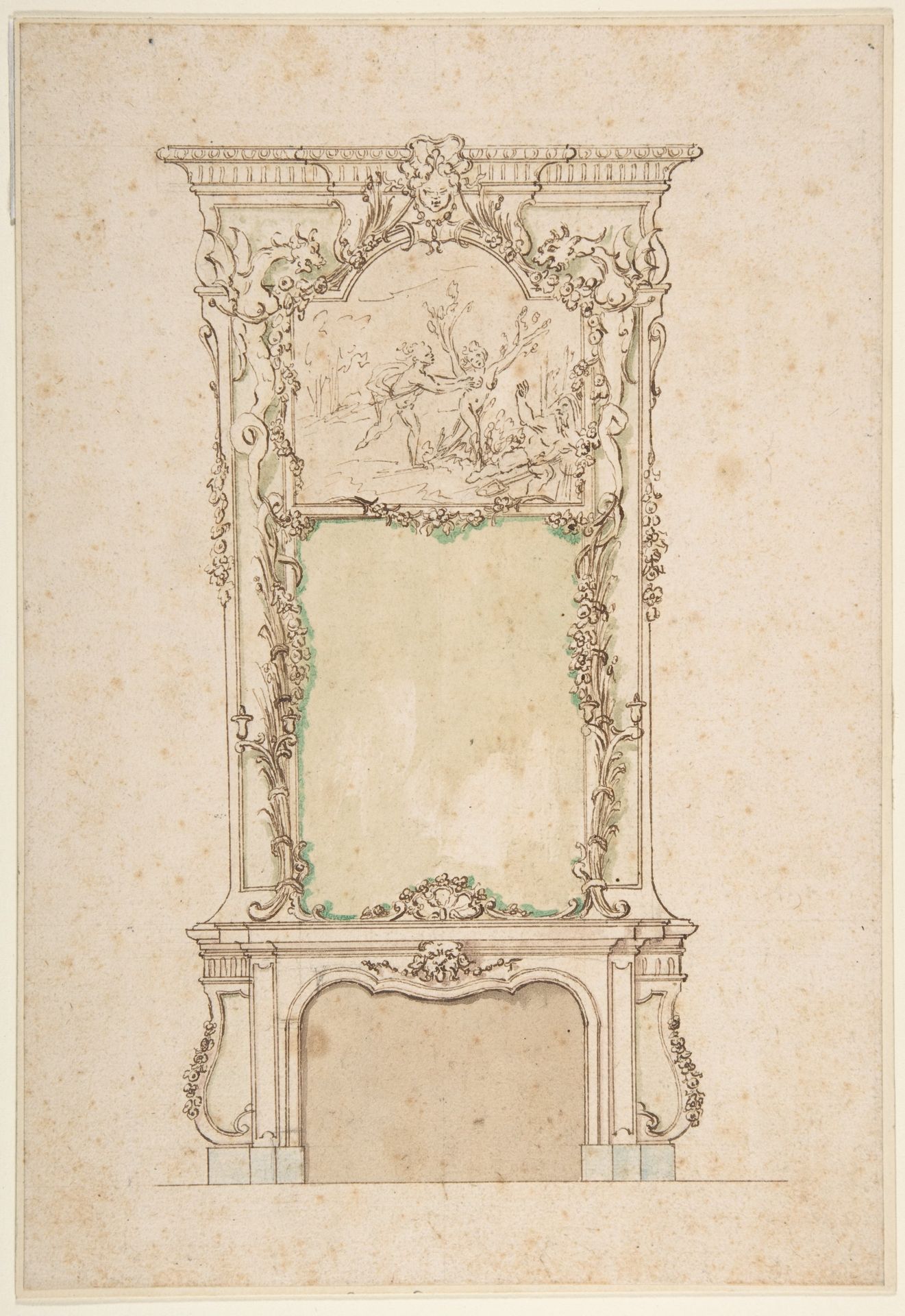
This drawing of a chimney piece was made with pen and brown ink, with some gray wash and green watercolor. Though anonymous, the design likely originates from 18th-century Europe, a period when ornate interiors were a mark of social standing. The drawing gives us insight into period craftsmanship. The intricate details, from the floral garlands to the classical figures at the top, suggest a culture of highly skilled artisans. Stonemasons, carvers, and other craftspeople would have been needed to turn this design into a physical reality. The chimney piece itself would have been a focal point of a grand room, symbolizing warmth and hospitality. But it also speaks to labor. The creation of such an elaborate piece would have involved many hours of work, reflecting a society with a clear hierarchy between those who commissioned such designs and those who produced them. Considering the social context of its making enriches our understanding of this object. It's a reminder that even decorative arts can be powerful indicators of the values, skills, and social dynamics of their time.
Design for Chimney Piece
1700 - 1800


Artwork details
- Medium
- drawing, print, architecture
- Dimensions
- 10-3/8 x 7-1/8 in
- Location
- Metropolitan Museum of Art, New York, NY
- Copyright
- Public Domain
Tags
Comments
Share your thoughts
About this artwork
This drawing of a chimney piece was made with pen and brown ink, with some gray wash and green watercolor. Though anonymous, the design likely originates from 18th-century Europe, a period when ornate interiors were a mark of social standing. The drawing gives us insight into period craftsmanship. The intricate details, from the floral garlands to the classical figures at the top, suggest a culture of highly skilled artisans. Stonemasons, carvers, and other craftspeople would have been needed to turn this design into a physical reality. The chimney piece itself would have been a focal point of a grand room, symbolizing warmth and hospitality. But it also speaks to labor. The creation of such an elaborate piece would have involved many hours of work, reflecting a society with a clear hierarchy between those who commissioned such designs and those who produced them. Considering the social context of its making enriches our understanding of this object. It's a reminder that even decorative arts can be powerful indicators of the values, skills, and social dynamics of their time.
Comments
Share your thoughts