About this artwork
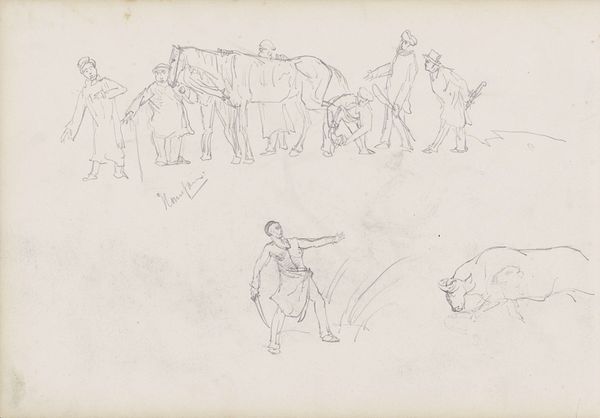
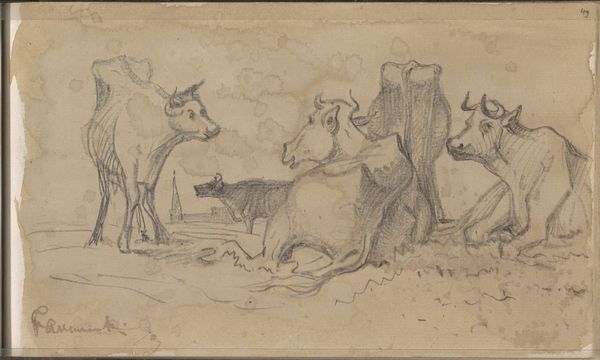
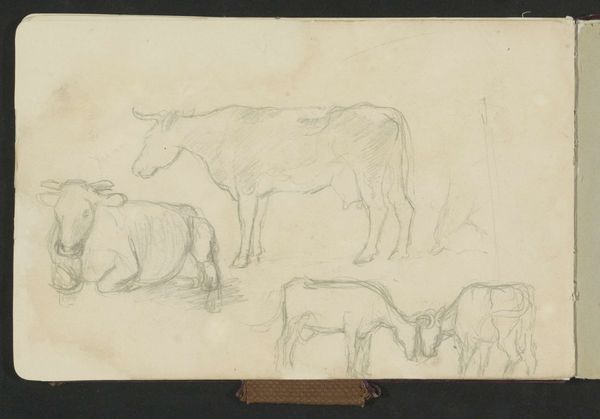
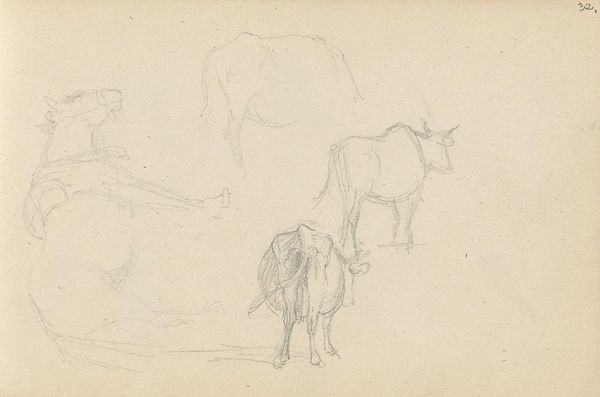
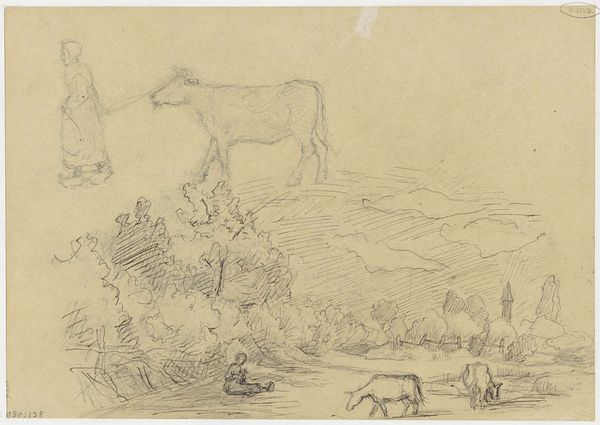
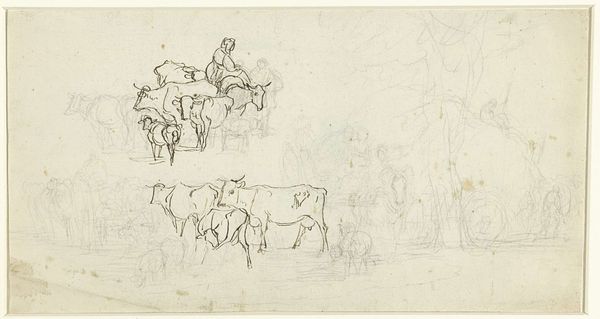
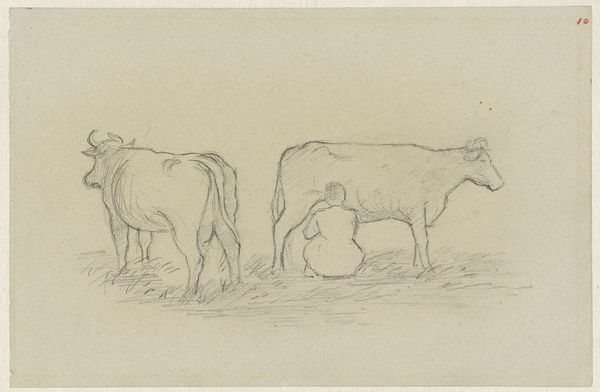
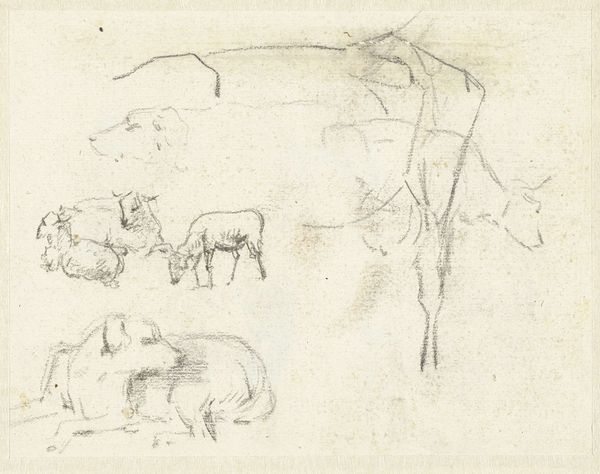
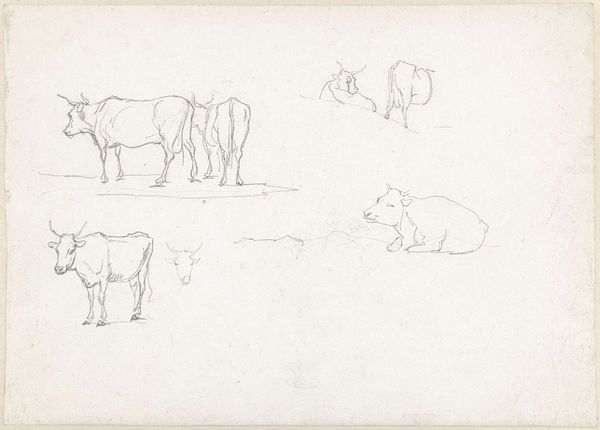
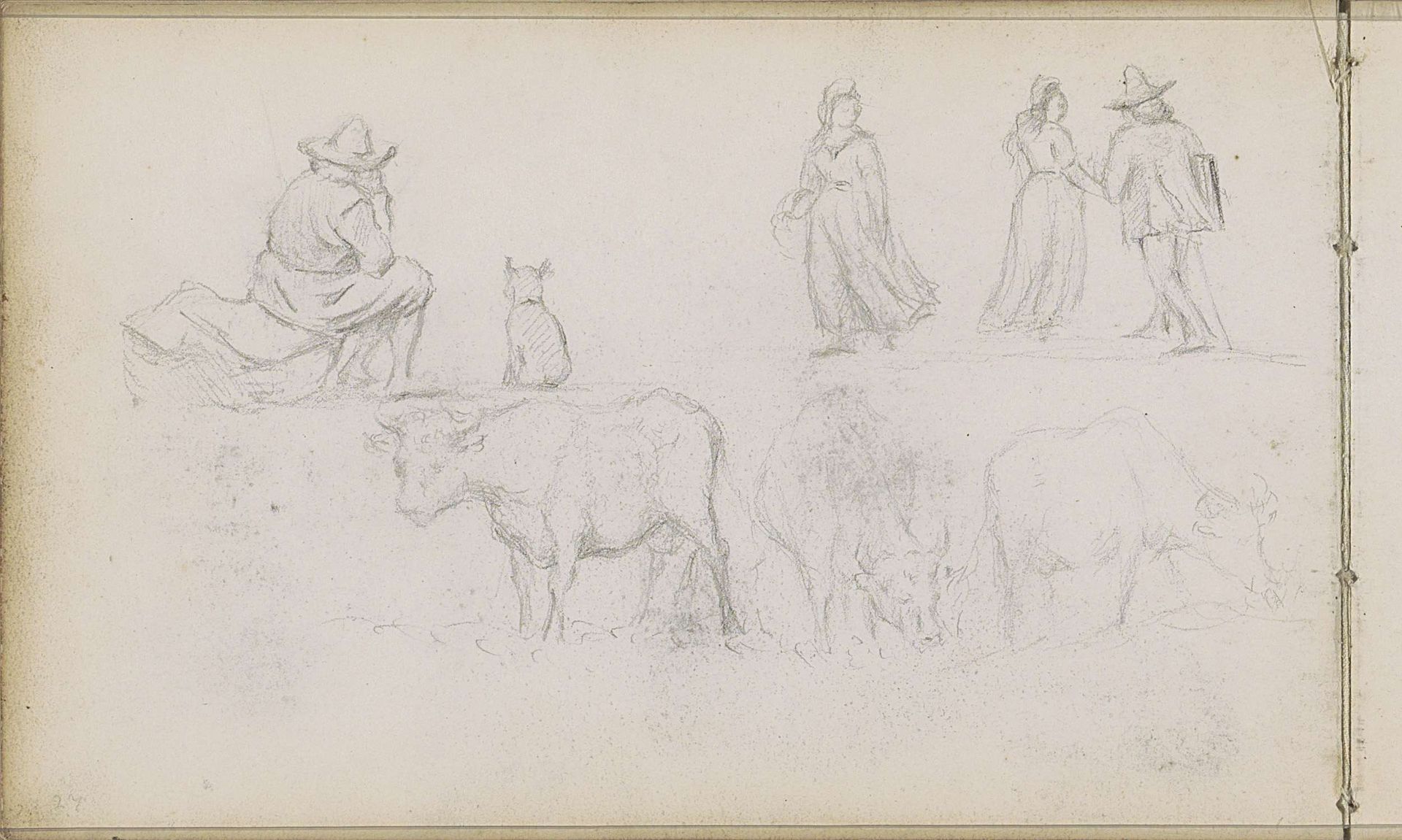
Willem Cornelis Rip rendered this study with graphite. In the foreground, Rip sketches grazing cows, archetypal symbols of pastoral life, deeply interwoven with human existence and culture. From ancient Egypt, where cows were revered as symbols of motherhood and nourishment, to the classical myths of Europa and Io, transformed into a heifer, the image of the cow evokes themes of fertility, abundance, and transformation. In various cultures, the cow is a powerful emblem of patience and endurance, embodying a serene connection to nature. The figure of the cow appears across time and space, reflecting the collective human relationship to the natural world, and continues to resonate, reminding us of our shared history and the psychological weight carried by these enduring symbols.
Studieblad, onder andere met grazende koeien en figuren
1874 - 1875

Artwork details
- Medium
- drawing, pencil
- Dimensions
- height 142 mm, width 218 mm
- Copyright
- Rijks Museum: Open Domain
Tags
Comments
Share your thoughts
About this artwork
Willem Cornelis Rip rendered this study with graphite. In the foreground, Rip sketches grazing cows, archetypal symbols of pastoral life, deeply interwoven with human existence and culture. From ancient Egypt, where cows were revered as symbols of motherhood and nourishment, to the classical myths of Europa and Io, transformed into a heifer, the image of the cow evokes themes of fertility, abundance, and transformation. In various cultures, the cow is a powerful emblem of patience and endurance, embodying a serene connection to nature. The figure of the cow appears across time and space, reflecting the collective human relationship to the natural world, and continues to resonate, reminding us of our shared history and the psychological weight carried by these enduring symbols.
Comments
Share your thoughts