About this artwork
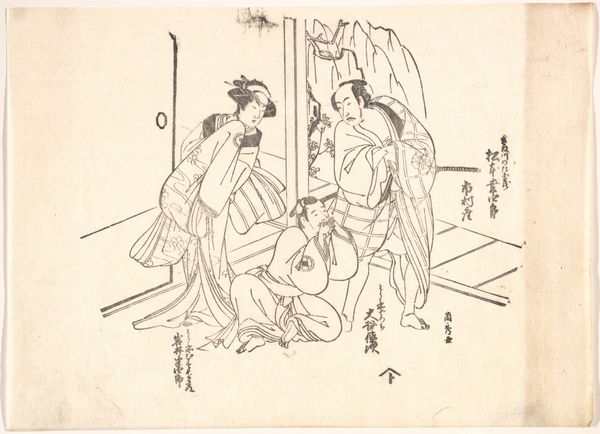
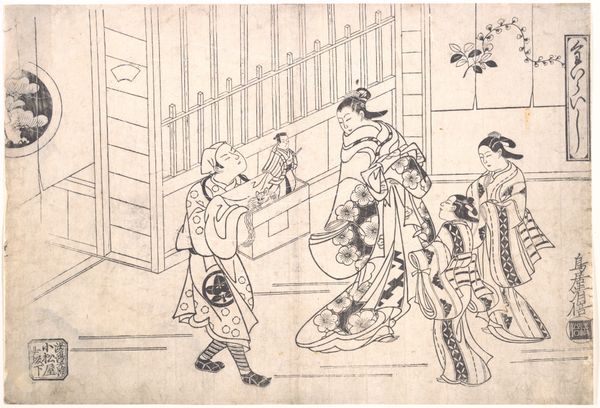
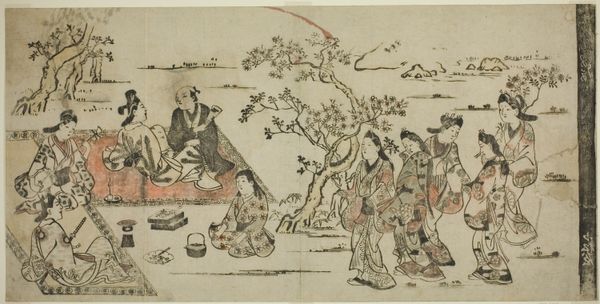
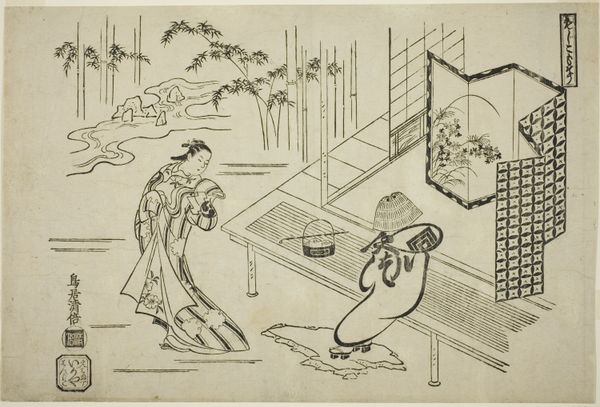
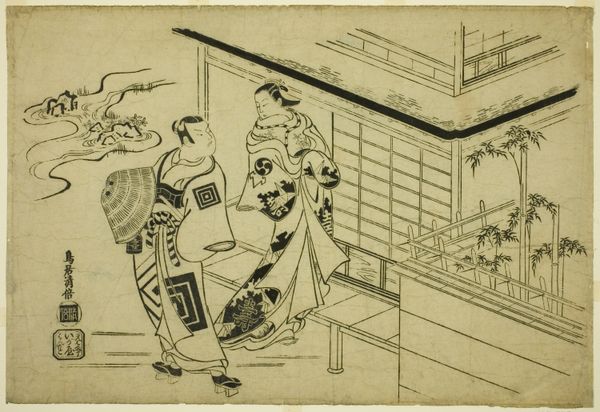
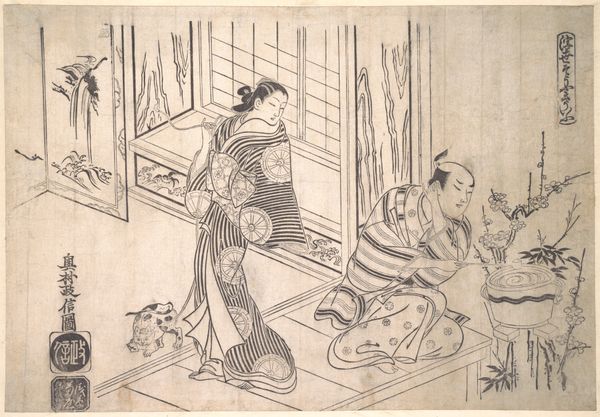
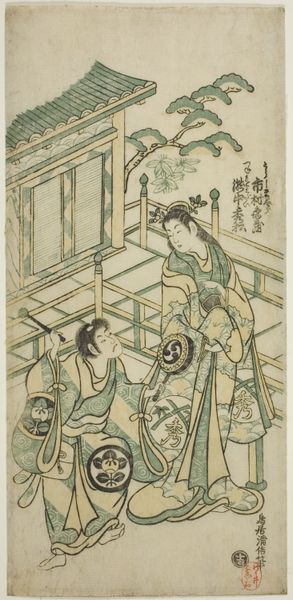
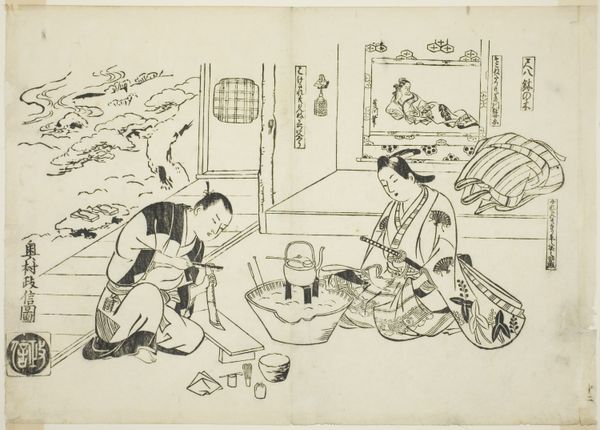
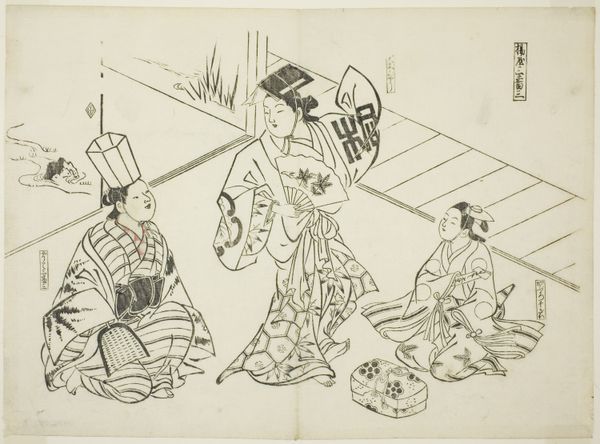
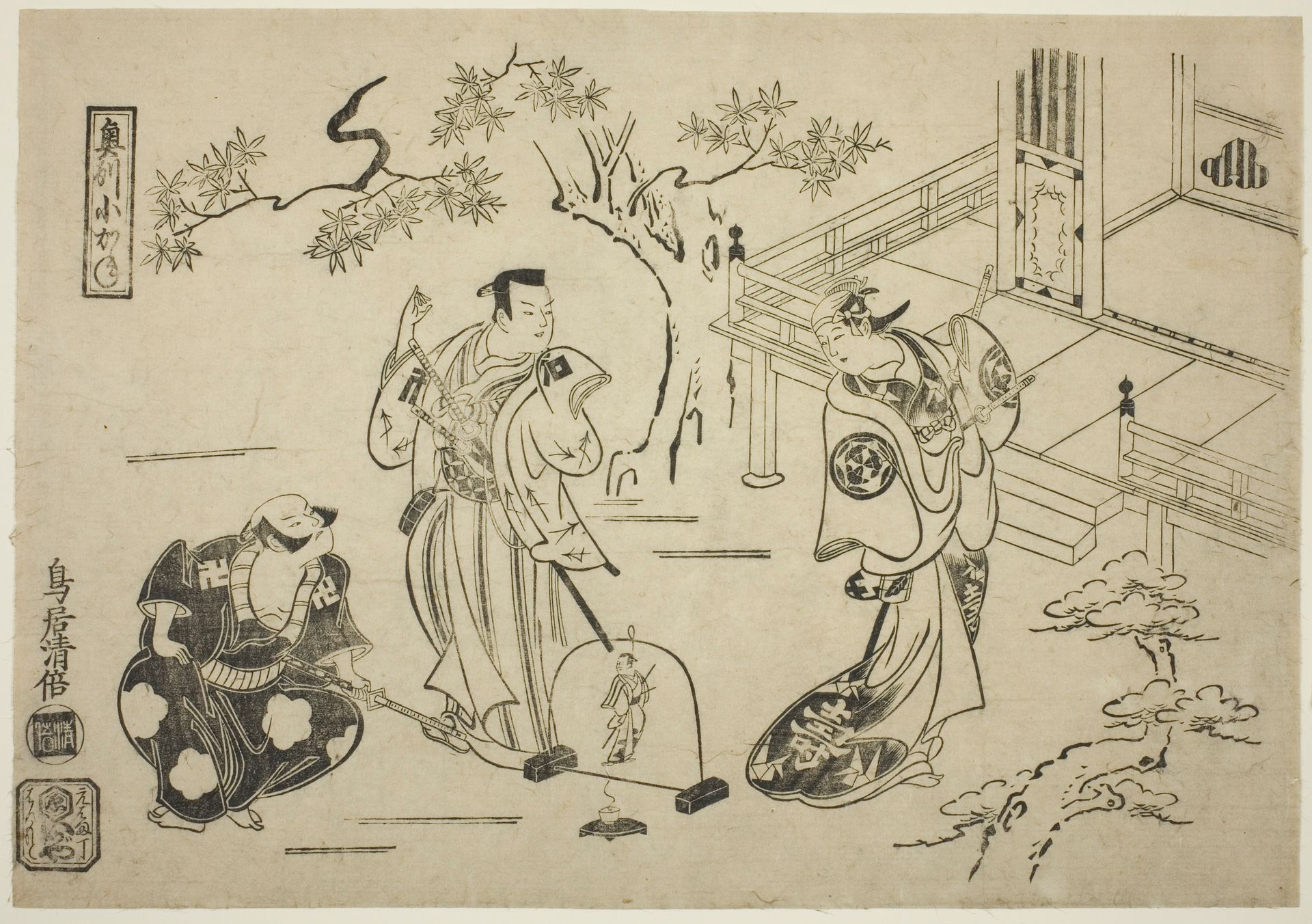
This woodblock print by Torii Kiyomasu I, dating back to 1716, depicts actors in a scene from the play "Yoroi Kurabe Oshu Kogane." Notice the symbolic weight each figure carries through their garments. The crests on the robes—circular patterns enclosing geometric or floral designs—are mon, emblematic of family identity, much like European heraldry. The motifs of cherry blossoms and chrysanthemums woven into the kimonos represent beauty and longevity, underscoring the transient yet enduring nature of life. The characters in the play are eternalized through Kiyomasu’s art. Consider how such symbols appear across cultures: the recurring image of the wheel, emblem of Buddhism, is a cosmic echo of cyclical existence. In the same way, the family crests of feudal Japan find counterparts in the clan symbols of ancient Greece and medieval Europe, underscoring the eternal quest for identity and legacy. Each emblem and pattern reflects the collective memory of their cultures. The print invites us to recognize our shared human experiences across time.
The Actors Ichimura Tamagashiwa I as Iwaki Hime, Murayama Heiemon III as Katsuta Jiro, and Katsuyama Matagoro as Minamoto no Yoshiie in the play "Yoroi Kurabe Oshu Kogane," performed at the Ichimura Theater in the eleventh month, 1716 1716


Artwork details
- Medium
- print, paper, woodblock-print
- Dimensions
- 10 1/2 × 15 3/4 in.
- Location
- The Art Institute of Chicago
- Copyright
- Public Domain
Tags
ink drawing
asian-art
ukiyo-e
japan
figuration
paper
woodblock-print
genre-painting
Comments
No comments
About this artwork
This woodblock print by Torii Kiyomasu I, dating back to 1716, depicts actors in a scene from the play "Yoroi Kurabe Oshu Kogane." Notice the symbolic weight each figure carries through their garments. The crests on the robes—circular patterns enclosing geometric or floral designs—are mon, emblematic of family identity, much like European heraldry. The motifs of cherry blossoms and chrysanthemums woven into the kimonos represent beauty and longevity, underscoring the transient yet enduring nature of life. The characters in the play are eternalized through Kiyomasu’s art. Consider how such symbols appear across cultures: the recurring image of the wheel, emblem of Buddhism, is a cosmic echo of cyclical existence. In the same way, the family crests of feudal Japan find counterparts in the clan symbols of ancient Greece and medieval Europe, underscoring the eternal quest for identity and legacy. Each emblem and pattern reflects the collective memory of their cultures. The print invites us to recognize our shared human experiences across time.
Comments
No comments