1860
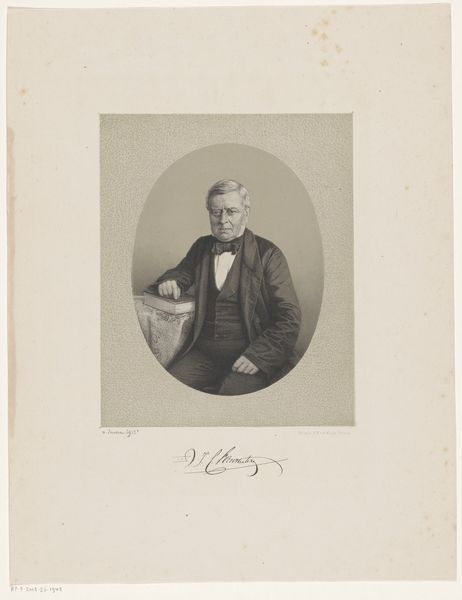
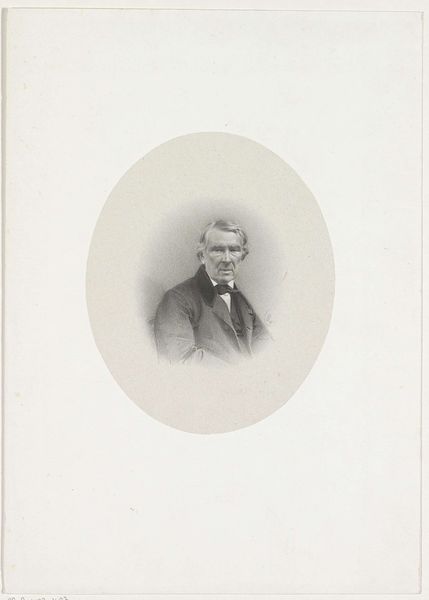
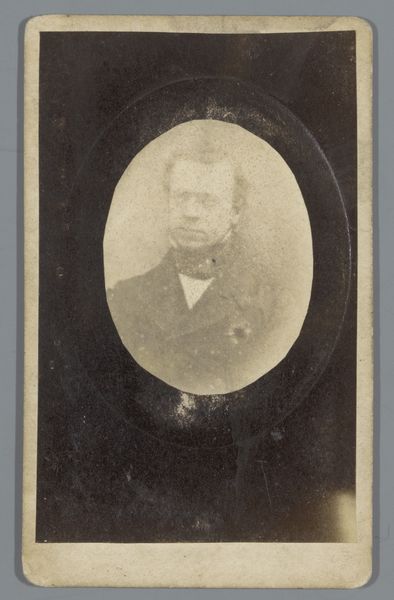
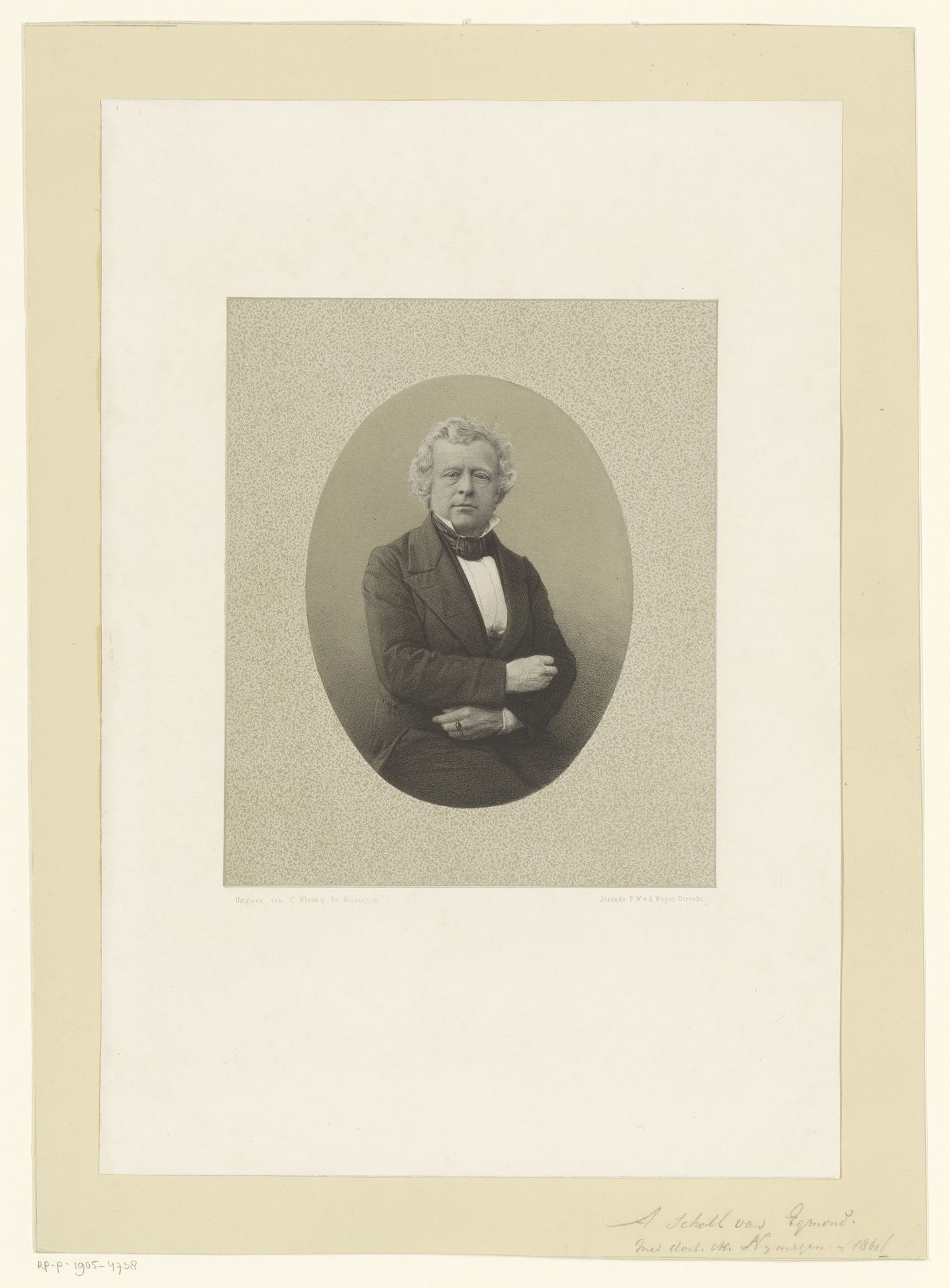
Portret van Abraham Scholl van Egmond

Pieter Wilhelmus van de Weijer
1816 - 1880Location
RijksmuseumListen to curator's interpretation
Curatorial notes
Editor: So, this is "Portret van Abraham Scholl van Egmond," a gelatin silver print from around 1860. It's a photograph by Pieter Wilhelmus van de Weijer. I'm struck by how serious and almost defiant the subject seems. What do you see in this portrait? Curator: What immediately captures my attention is how van de Weijer utilizes the oval frame, almost mimicking a classical cameo, a symbolic nod to permanence and remembrance. Abraham's crossed arms, a pose found across centuries, suggest both authority and introspection. Do you find the eyes convey a similar duality? Editor: Yes, absolutely. There's a sense of power, but also weariness. The dark clothing is so formal. Curator: Indeed. The dark attire was not merely fashion; it was a visual signifier of status, respectability, and the gravity associated with intellectual or professional life during that period. How might the soft focus of early photography enhance that air of gravitas? Editor: I guess it softens the details and adds to a sense of dignity and timelessness? Curator: Precisely! It transforms a potentially harsh likeness into something…archetypal. A representation that aspires beyond mere individual portraiture. Does the fact that it’s a photograph change your reading? If this were a painting, would we approach it differently? Editor: Good question! Maybe a painting would feel more idealized. A photograph, especially an early one, feels like it’s capturing a truer likeness, somehow. More like an artifact. Curator: An excellent observation. That’s a critical difference – this photo has an evidentiary weight; it suggests a direct link to the past. A compelling image for understanding both photographic practices and the construction of identity in the 19th century. Editor: I learned so much just looking at it through this symbolic lens! Thank you! Curator: It was my pleasure. Images offer constant revelation, don't they?