About this artwork
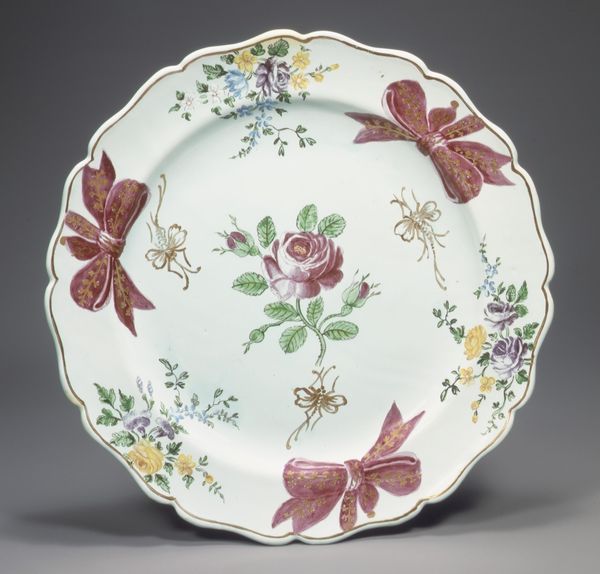
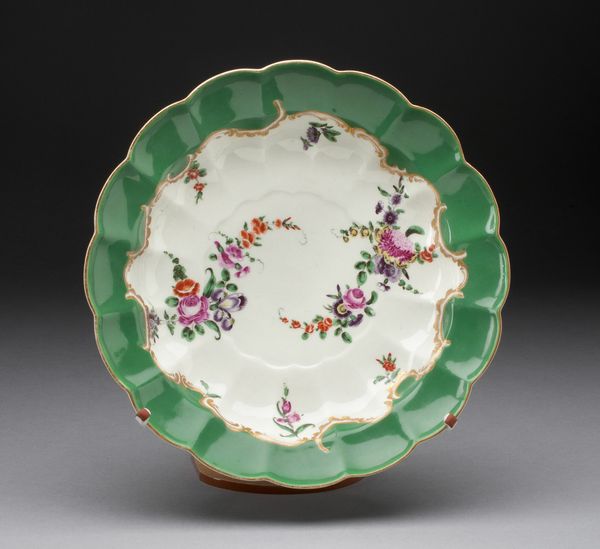
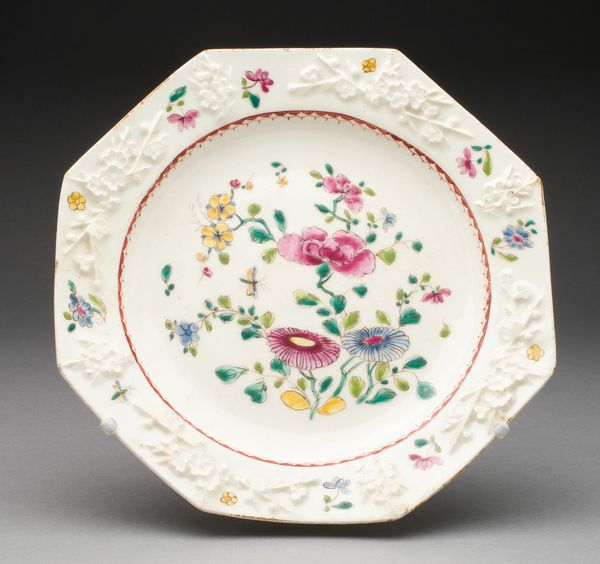
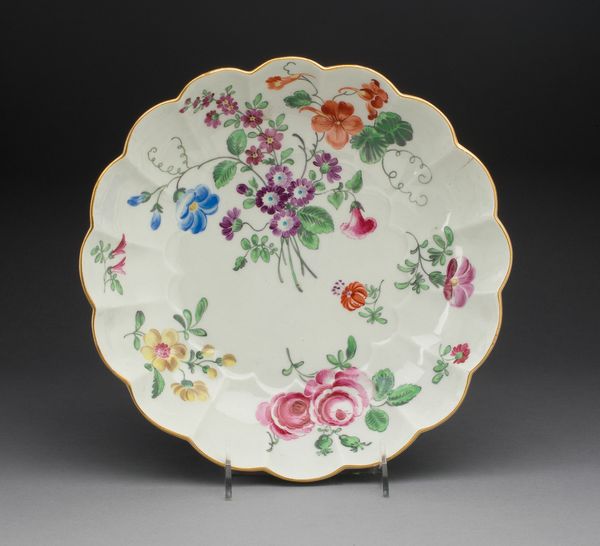
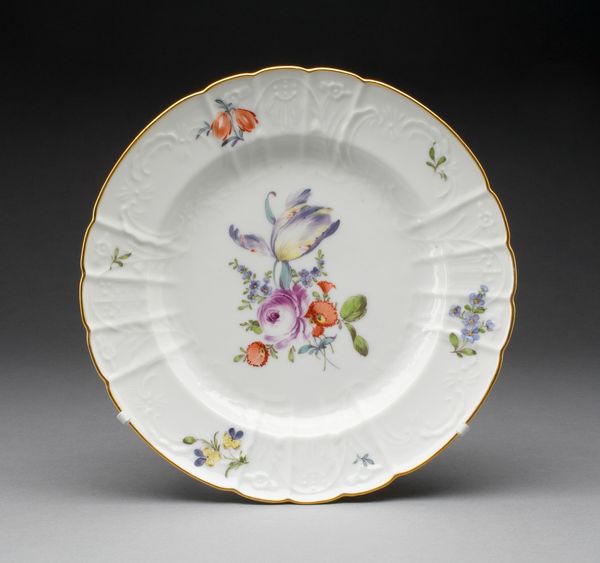
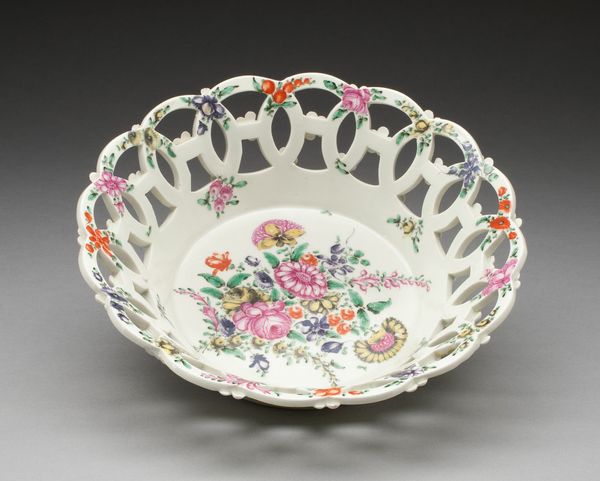
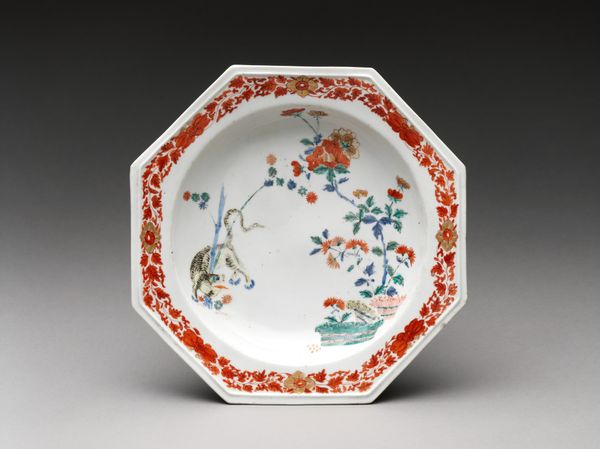
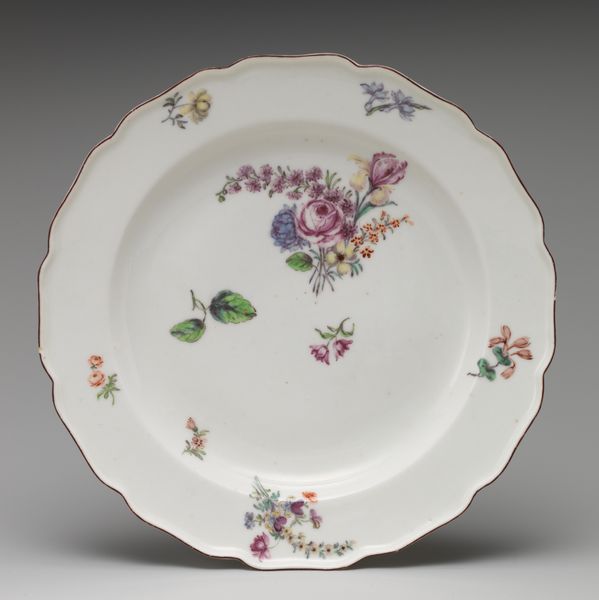
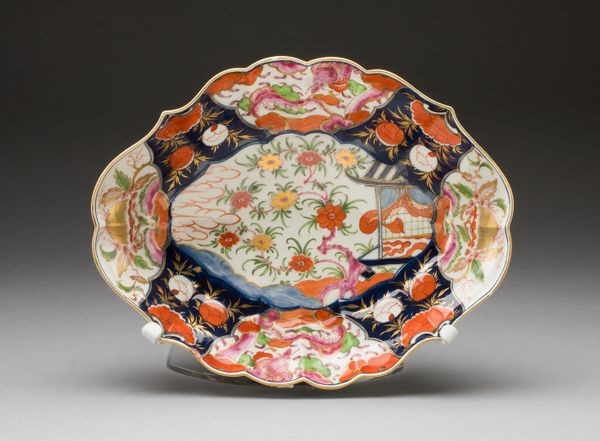
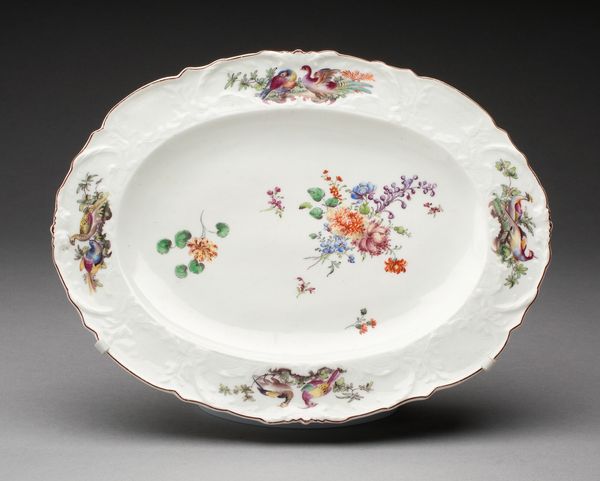
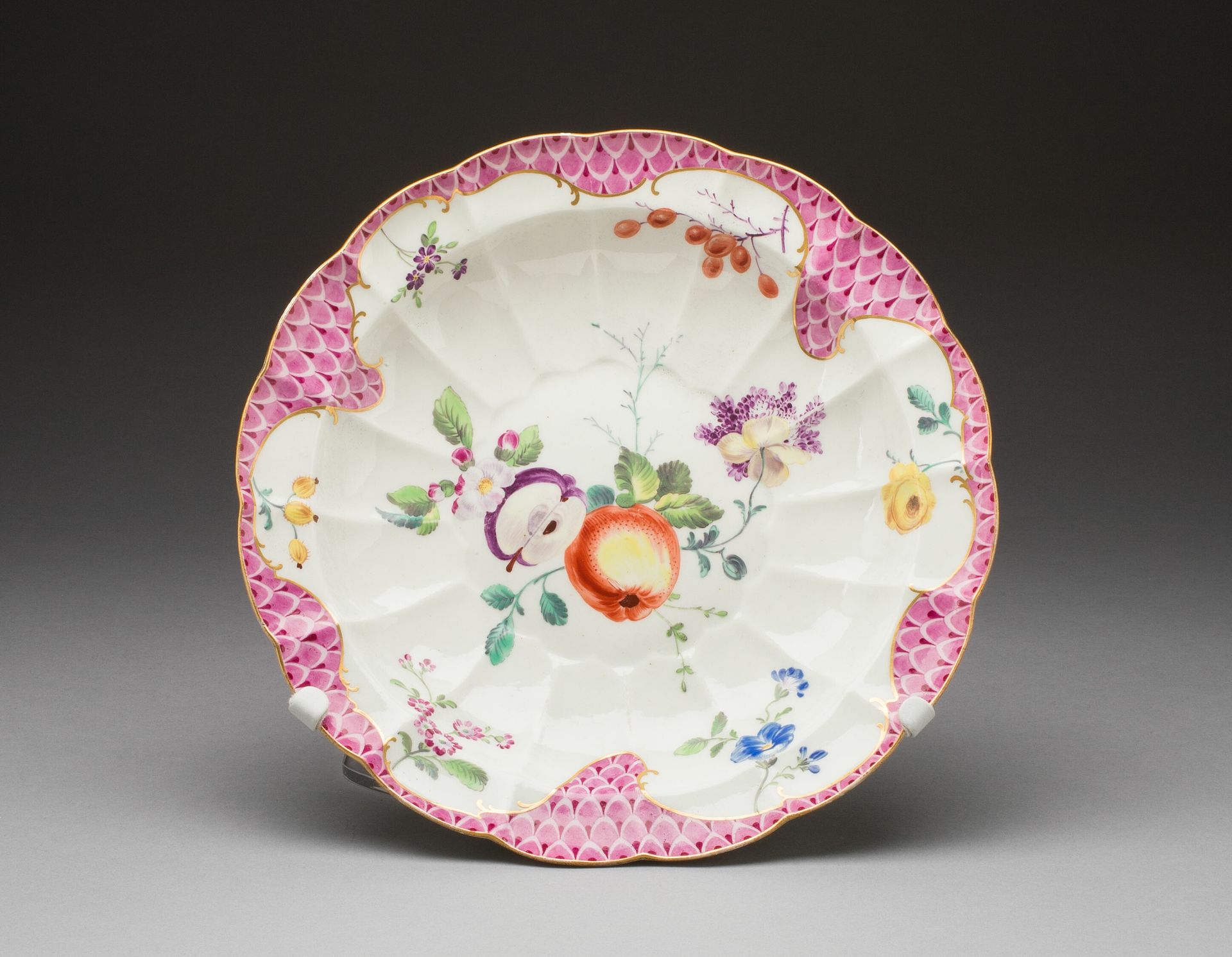
This porcelain dish, made by the Worcester Royal Porcelain Company, captivates with its delicate balance of form and ornamentation. The scalloped edge, adorned with a pink, scale-like pattern, frames the central composition of artfully arranged fruit and flowers. The pastel hues, predominantly soft yellows, purples, and greens, contribute to an overall impression of gentle harmony. The dish's structure is divided into segments that radiate from the center, creating a subtle rhythm which emphasizes the floral arrangement. This composition, while seemingly traditional, engages with the semiotic language of luxury and refinement, reflecting broader cultural values. The arrangement of flora and fauna becomes a statement about taste, status, and the commodification of nature. Observe how the refined craftsmanship and ornate design reflect a desire to capture and control nature through art. This challenges fixed meanings and encourages us to reflect on how we engage with beauty and material culture.
Dish c. 1770

Worcester Royal Porcelain Company
@worcesterroyalporcelaincompany
The Art Institute of Chicago
The Art Institute of ChicagoArtwork details
- Medium
- painting, ceramic, porcelain
- Dimensions
- Diam. 26.5 cm (10 7/16 in.)
- Location
- The Art Institute of Chicago
- Copyright
- Public Domain
Tags
painting
ceramic
porcelain
ceramic
decorative-art
Comments
No comments
About this artwork
This porcelain dish, made by the Worcester Royal Porcelain Company, captivates with its delicate balance of form and ornamentation. The scalloped edge, adorned with a pink, scale-like pattern, frames the central composition of artfully arranged fruit and flowers. The pastel hues, predominantly soft yellows, purples, and greens, contribute to an overall impression of gentle harmony. The dish's structure is divided into segments that radiate from the center, creating a subtle rhythm which emphasizes the floral arrangement. This composition, while seemingly traditional, engages with the semiotic language of luxury and refinement, reflecting broader cultural values. The arrangement of flora and fauna becomes a statement about taste, status, and the commodification of nature. Observe how the refined craftsmanship and ornate design reflect a desire to capture and control nature through art. This challenges fixed meanings and encourages us to reflect on how we engage with beauty and material culture.
Comments
No comments