About this artwork
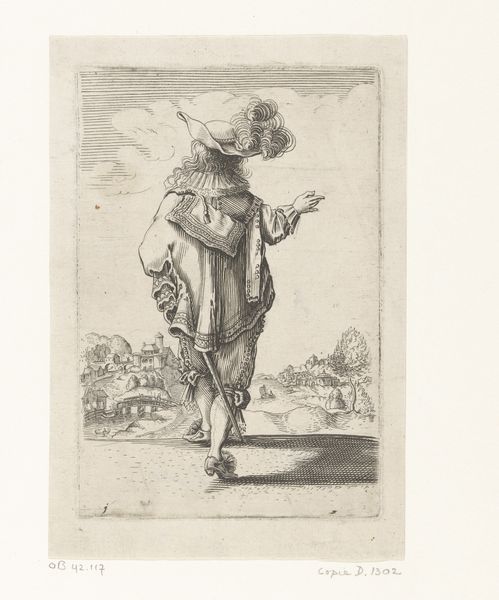
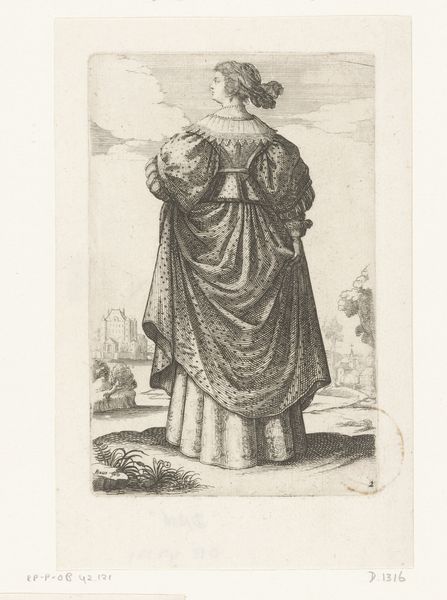
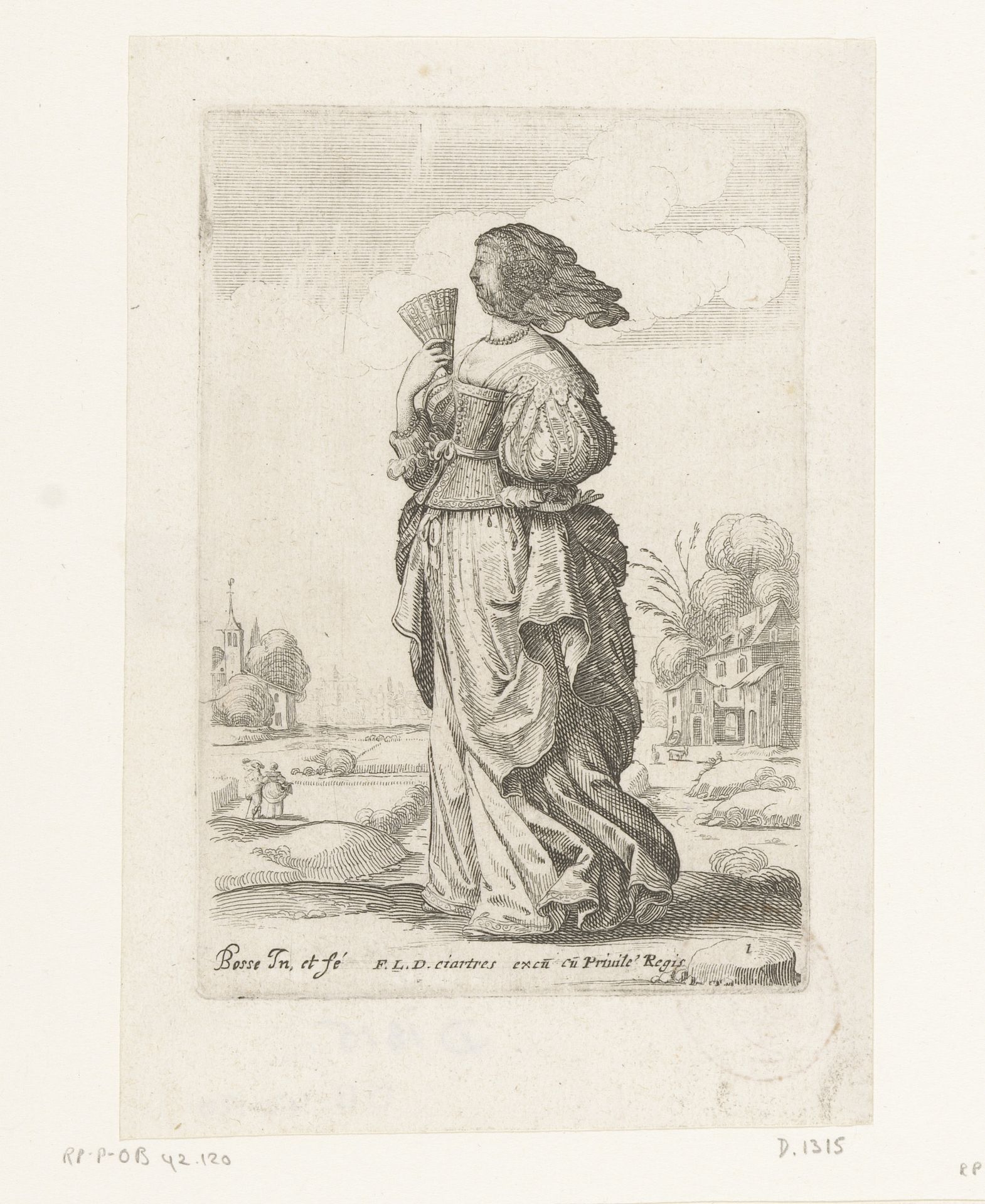
Abraham Bosse made this etching of a French noblewoman around 1630. It depicts a woman, fashionable for her time, holding a fan and gazing into the distance, with a landscape behind her. Prints like this were commodities in a growing art market, consumed by an expanding middle class. Bosse himself played a crucial role in shaping the artistic institutions of his time. He was a professor at the Académie Royale, using printmaking to circulate his teachings on perspective and design. Through his publications, drawing and design became standardized, democratized, and accessible to a wider audience. Looking at this print, a historian might ask: what does it tell us about the fashion, the social life, and the visual culture of 17th-century France? We can consult fashion plates, portraits, and social histories to understand this image in its proper context. The meaning of art is contingent on the social and institutional context.
Franse edelvrouw met sluier, gekleed volgens de mode van ca. 1630
1629

Abraham Bosse
1602 - 1676Location
RijksmuseumArtwork details
- Medium
- print, etching
- Dimensions
- height 140 mm, width 95 mm
- Location
- Rijksmuseum
- Copyright
- Rijks Museum: Open Domain
Tags
Comments
Share your thoughts
About this artwork
Abraham Bosse made this etching of a French noblewoman around 1630. It depicts a woman, fashionable for her time, holding a fan and gazing into the distance, with a landscape behind her. Prints like this were commodities in a growing art market, consumed by an expanding middle class. Bosse himself played a crucial role in shaping the artistic institutions of his time. He was a professor at the Académie Royale, using printmaking to circulate his teachings on perspective and design. Through his publications, drawing and design became standardized, democratized, and accessible to a wider audience. Looking at this print, a historian might ask: what does it tell us about the fashion, the social life, and the visual culture of 17th-century France? We can consult fashion plates, portraits, and social histories to understand this image in its proper context. The meaning of art is contingent on the social and institutional context.
Comments
Share your thoughts