About this artwork
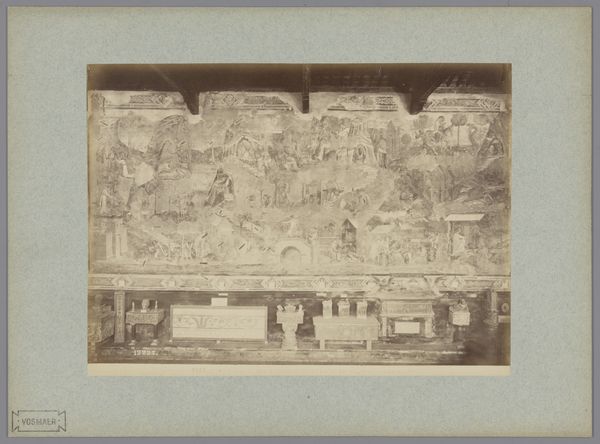
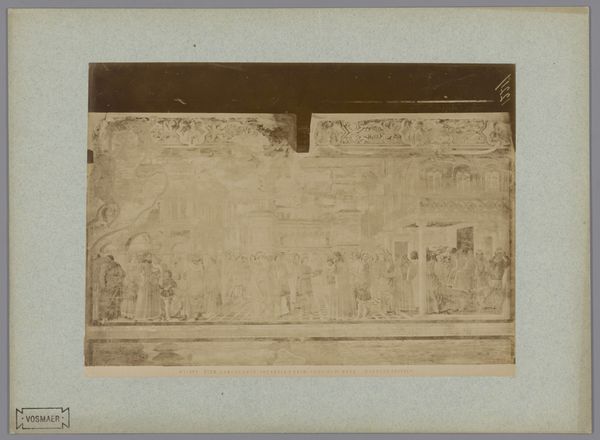
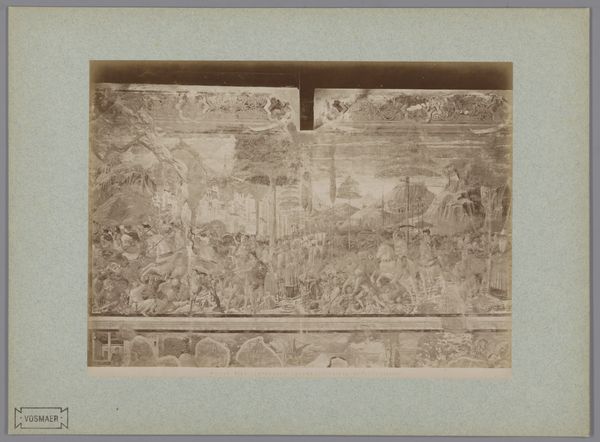
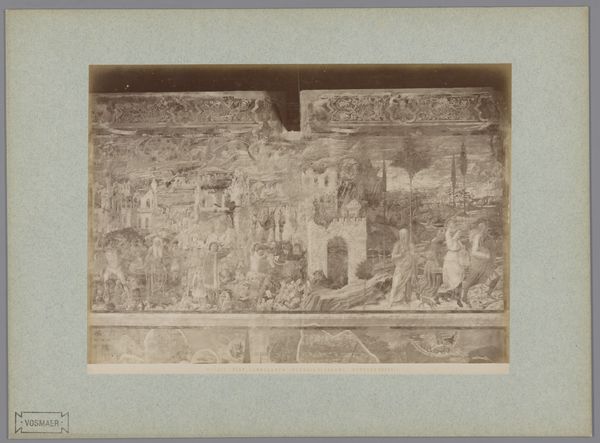
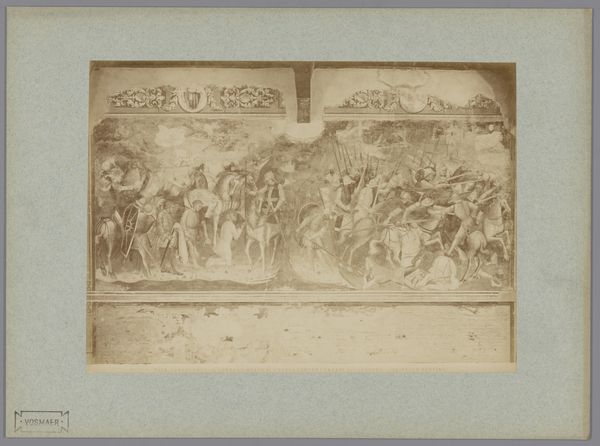
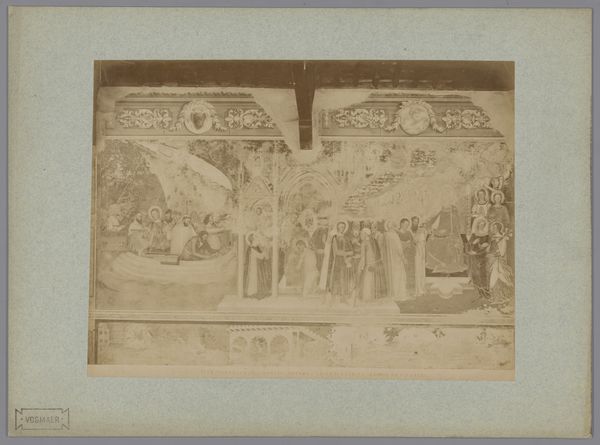
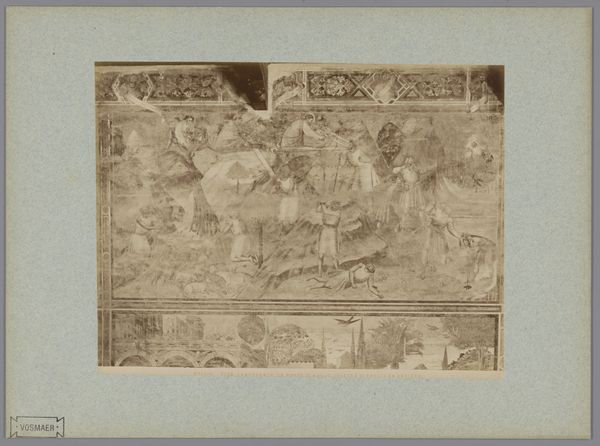
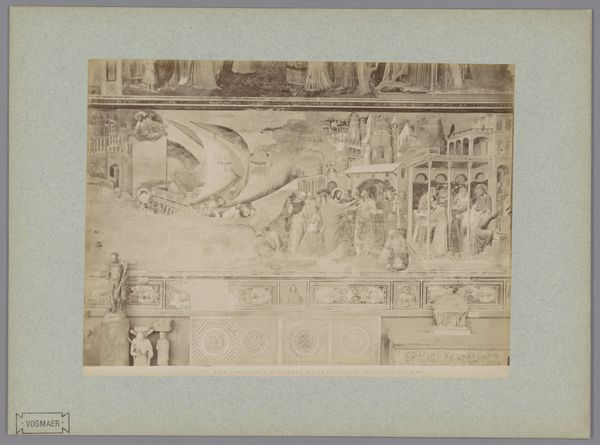
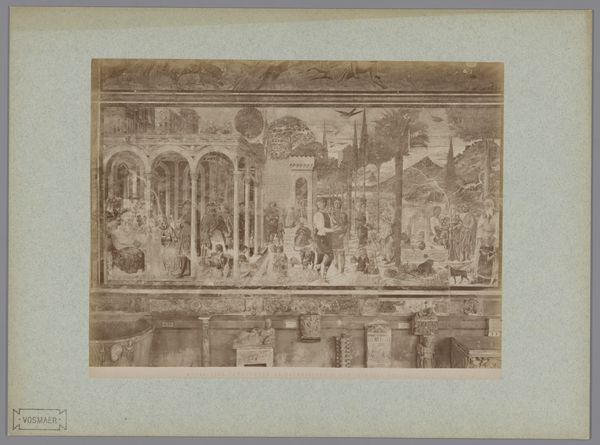
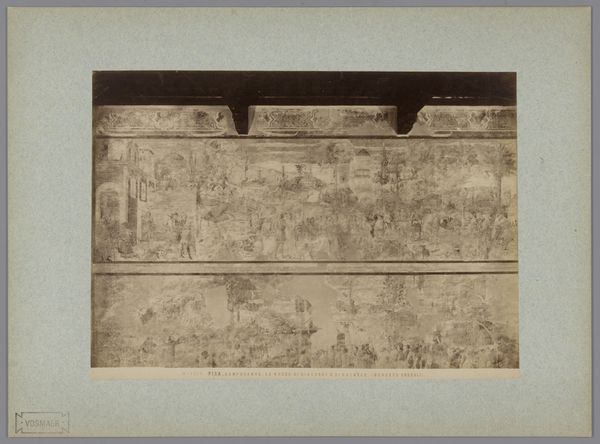
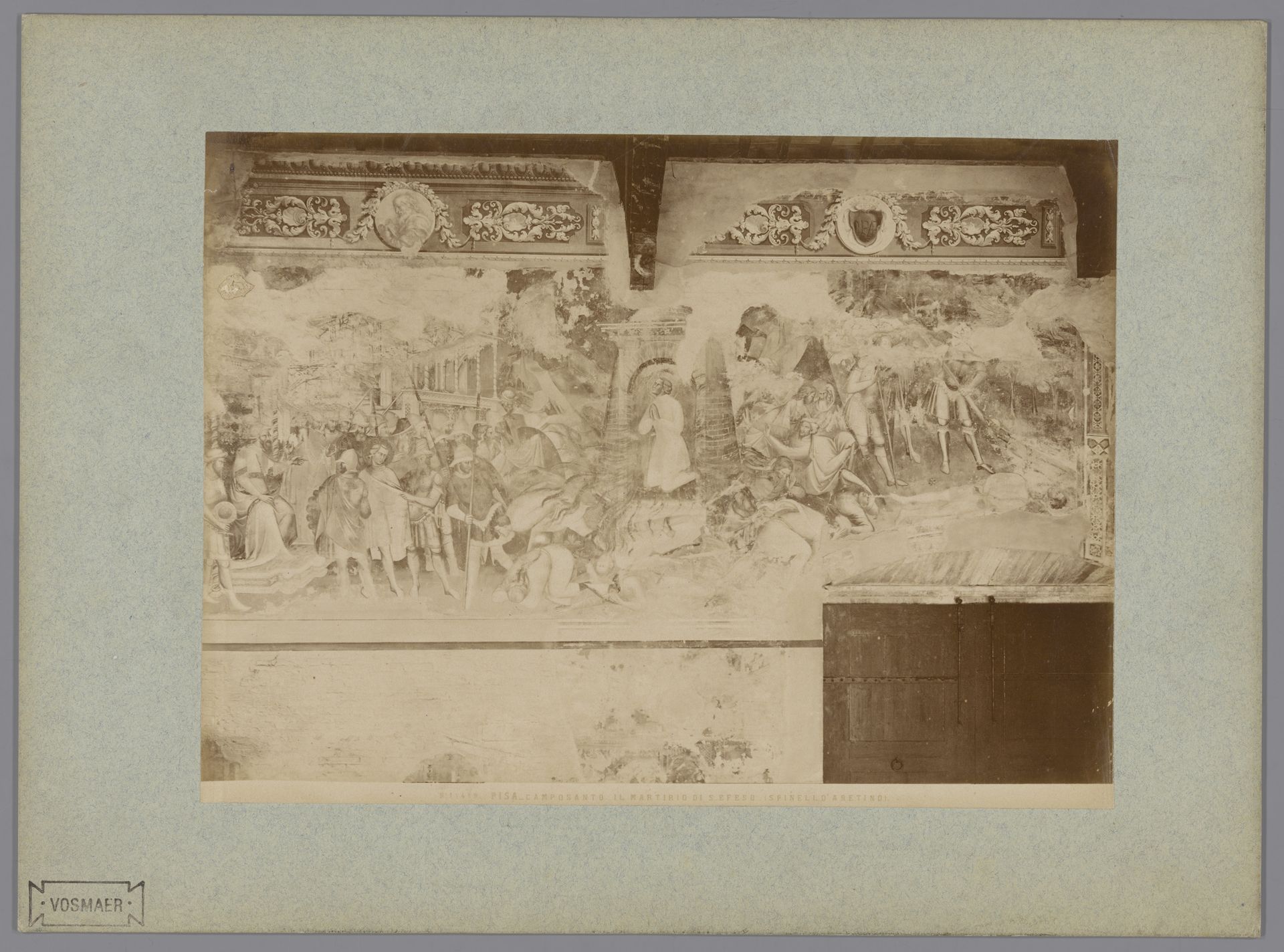
This is a photographic reproduction by Fratelli Alinari of a fresco titled "The Martyrdom of Saint Ephysius" by Spinello Aretino, located in the Camposanto in Pisa, Italy. The photograph captures a panoramic view of the fresco, immediately drawing our attention to its layered composition and the narrative unfolding within. Note how the scene is structured into distinct yet interconnected groups of figures and architectural elements. The artist uses linear perspective to guide the viewer's eye through the depicted space, creating a sense of depth. The monochromatic palette of the photograph enhances the play of light and shadow across the fresco’s surface, emphasizing the texture and form of the figures. Each element functions as a signifier within a larger semiotic system, inviting us to decode the cultural and religious narratives embedded in the artwork. Consider the enduring dialogue between the original fresco and its photographic reproduction. Each representation offers a unique lens through which we can interpret the martyrdom of Saint Ephysius.
Fotoreproductie van het fresco Het martelaarschap van Sint Ephysius naar Spinello Aretino in het Camposanto te Pisa, Italië
1857 - 1900

Artwork details
- Medium
- print, fresco, photography, gelatin-silver-print
- Dimensions
- height 194 mm, width 259 mm, height 261 mm, width 354 mm
- Copyright
- Rijks Museum: Open Domain
Tags
Comments
Share your thoughts
About this artwork
This is a photographic reproduction by Fratelli Alinari of a fresco titled "The Martyrdom of Saint Ephysius" by Spinello Aretino, located in the Camposanto in Pisa, Italy. The photograph captures a panoramic view of the fresco, immediately drawing our attention to its layered composition and the narrative unfolding within. Note how the scene is structured into distinct yet interconnected groups of figures and architectural elements. The artist uses linear perspective to guide the viewer's eye through the depicted space, creating a sense of depth. The monochromatic palette of the photograph enhances the play of light and shadow across the fresco’s surface, emphasizing the texture and form of the figures. Each element functions as a signifier within a larger semiotic system, inviting us to decode the cultural and religious narratives embedded in the artwork. Consider the enduring dialogue between the original fresco and its photographic reproduction. Each representation offers a unique lens through which we can interpret the martyrdom of Saint Ephysius.
Comments
Share your thoughts