

1567 - 1579
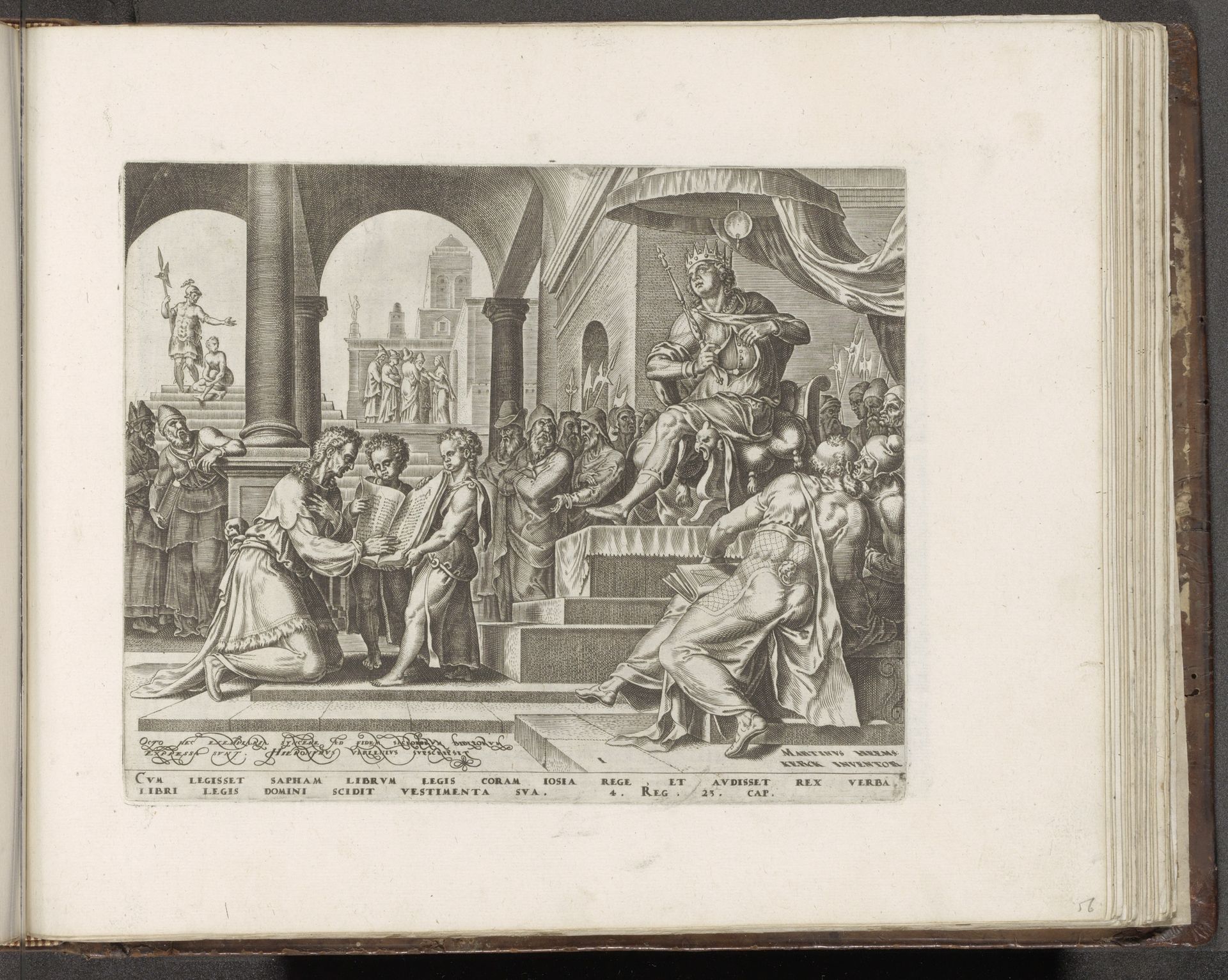
Koning Josia scheurt zijn kleren bij het horen van de wet

Philips Galle
1537 - 1612Location
RijksmuseumListen to curator's interpretation
Curatorial notes
This print, depicting King Josiah rending his clothes, was made by Philips Galle, probably in Antwerp, sometime in the late 16th century. It’s an engraving, meaning that Galle would have used a tool called a burin to cut lines into a copper plate. Ink would then have been applied to the plate and wiped off, remaining only in the incised lines. The plate would then have been pressed onto paper, transferring the image. The real artistry here lies in Galle’s ability to create such a dramatic scene using only line. Look closely, and you'll see the extraordinary level of detail. The architecture, the robes, the faces, the expressions of shock. Of course, prints like this are not unique objects. They are made in multiples, and were relatively cheap to produce. The print medium was absolutely essential to the spread of ideas during the Reformation, allowing iconographies like this to spread far and wide. It is a reminder that even the most seemingly ‘minor’ art forms can have a major impact on the world.