About this artwork
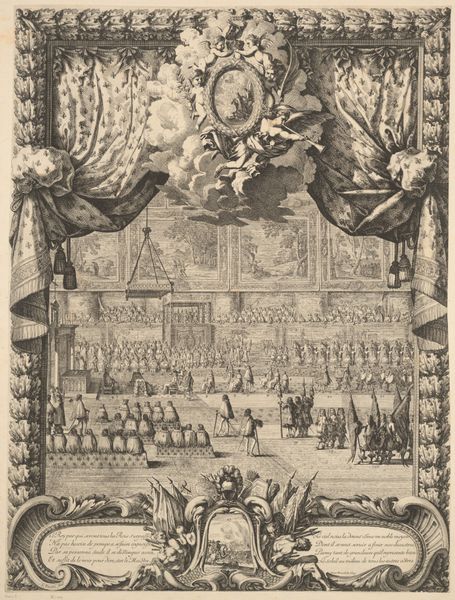
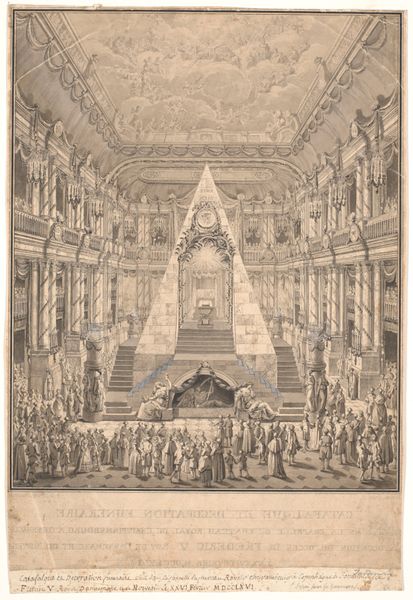
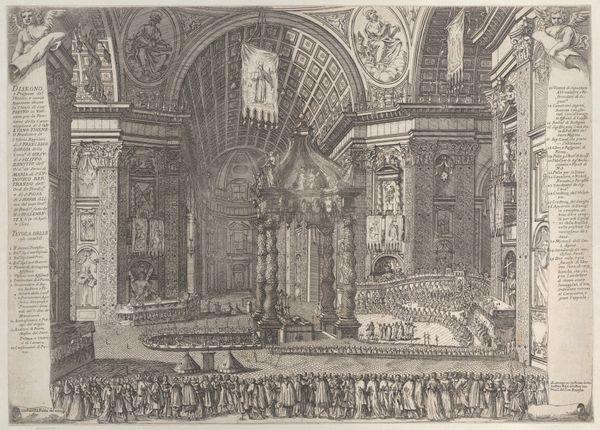
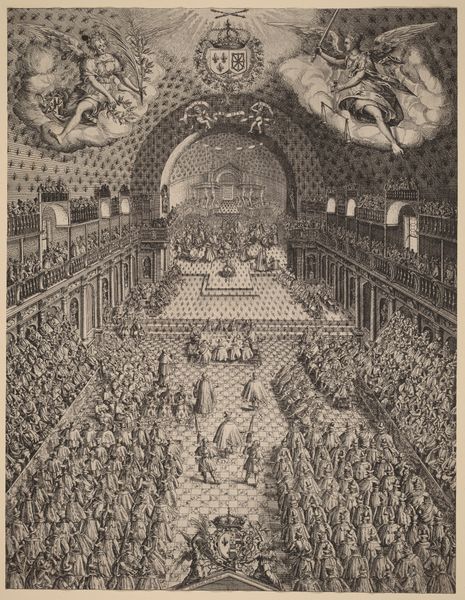
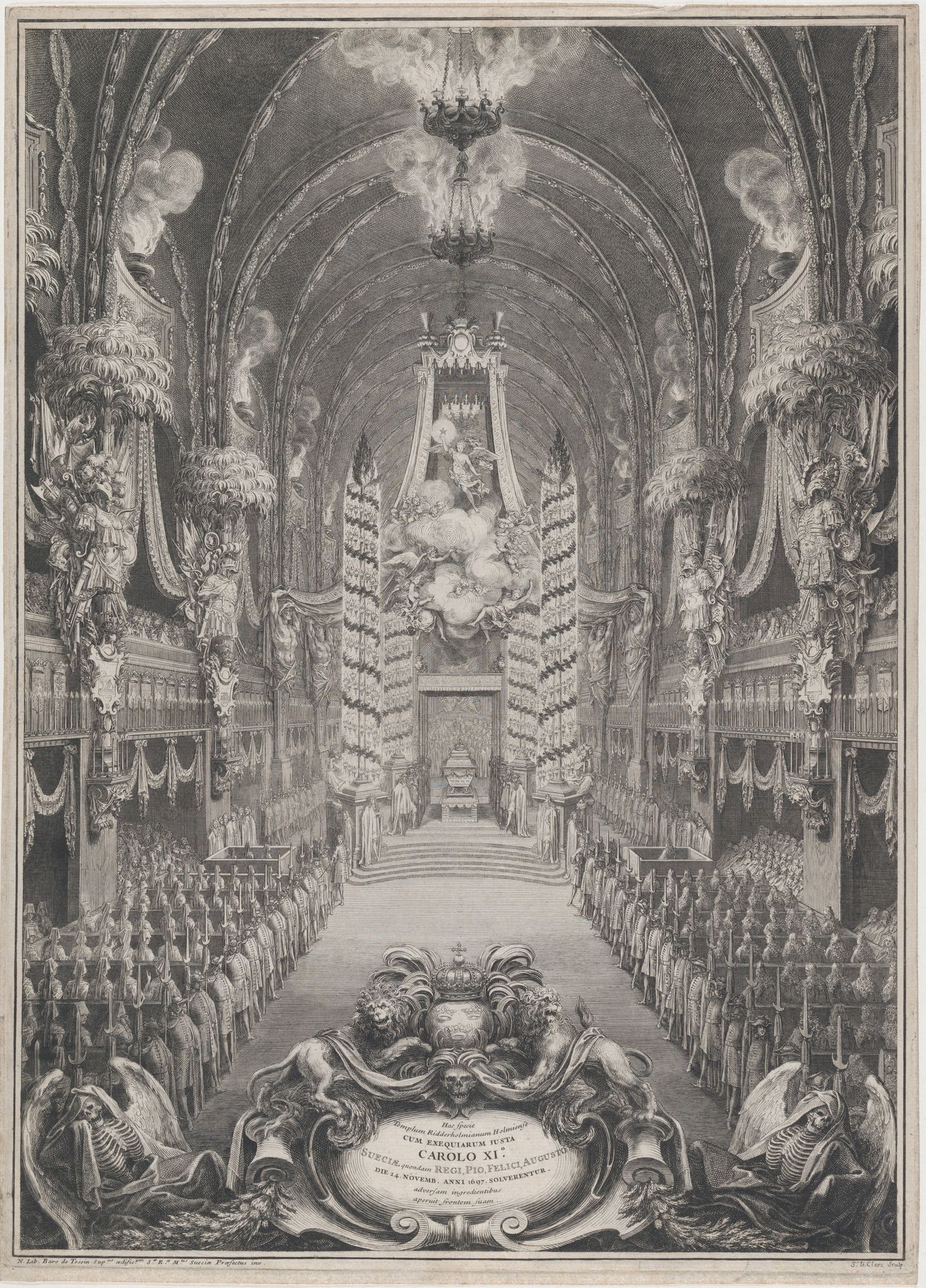
Sébastien Leclerc I made this print, "Catafalque of Charles XI, King of Sweden, Riddarholm Church, Stockholm," using etching. The composition is strikingly symmetrical, directing our gaze along a central axis into the depths of the church. Leclerc masterfully uses linear perspective to create an illusion of vast space, with the converging lines drawing us toward the distant, elevated catafalque. The contrast between the dark, densely packed figures in the foreground and the diminishing scale of the architecture enhances this sense of depth and grandeur. Here, the rigid formality of the architectural setting and the solemn assembly of figures serve as a stage for the drama of royal death. Leclerc evokes both the earthly power of the monarchy and the spiritual transcendence sought in death. Consider how this print translates the ephemeral spectacle of a royal funeral into a lasting image. It reflects both Baroque aesthetics and broader philosophical inquiries into mortality and the representation of power.
Catafalque of Charles XI, King of Sweden, Riddarholm Church, Stockholm
1700

Sébastien Leclerc I
1637 - 1714
The Metropolitan Museum of Art
Metropolitan Museum of Art, New York, NYArtwork details
- Medium
- drawing, print, engraving, architecture
- Dimensions
- Sheet (Trimmed): 18 in. × 12 7/8 in. (45.7 × 32.7 cm)
- Location
- Metropolitan Museum of Art, New York, NY
- Copyright
- Public Domain
Tags
Comments
Share your thoughts
About this artwork
Sébastien Leclerc I made this print, "Catafalque of Charles XI, King of Sweden, Riddarholm Church, Stockholm," using etching. The composition is strikingly symmetrical, directing our gaze along a central axis into the depths of the church. Leclerc masterfully uses linear perspective to create an illusion of vast space, with the converging lines drawing us toward the distant, elevated catafalque. The contrast between the dark, densely packed figures in the foreground and the diminishing scale of the architecture enhances this sense of depth and grandeur. Here, the rigid formality of the architectural setting and the solemn assembly of figures serve as a stage for the drama of royal death. Leclerc evokes both the earthly power of the monarchy and the spiritual transcendence sought in death. Consider how this print translates the ephemeral spectacle of a royal funeral into a lasting image. It reflects both Baroque aesthetics and broader philosophical inquiries into mortality and the representation of power.
Comments
Share your thoughts