About this artwork
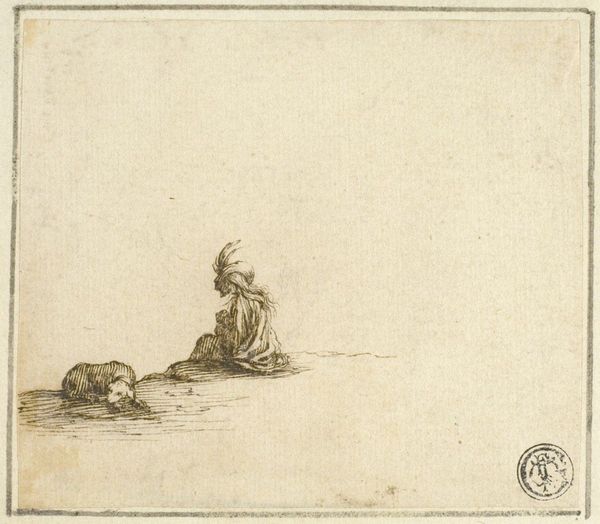
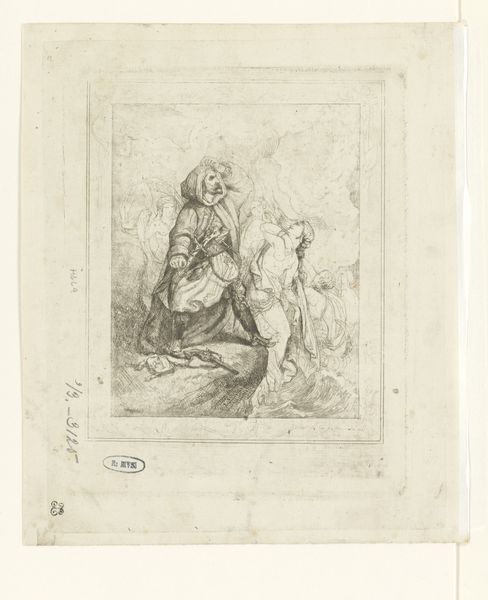
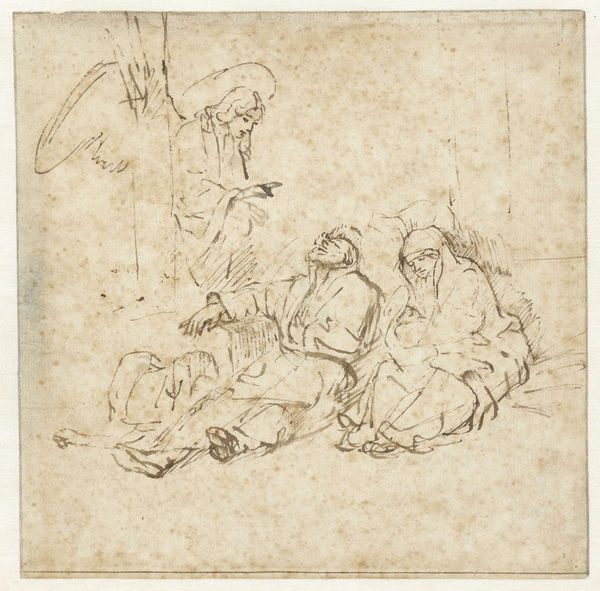
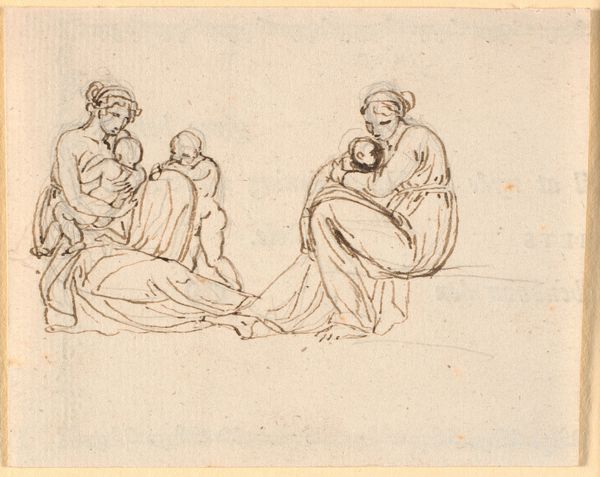
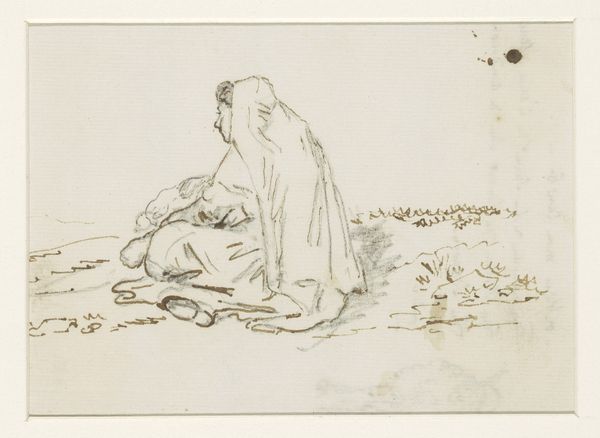
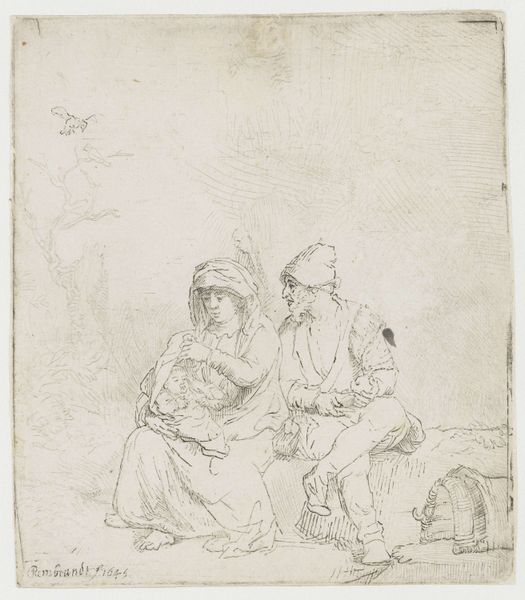
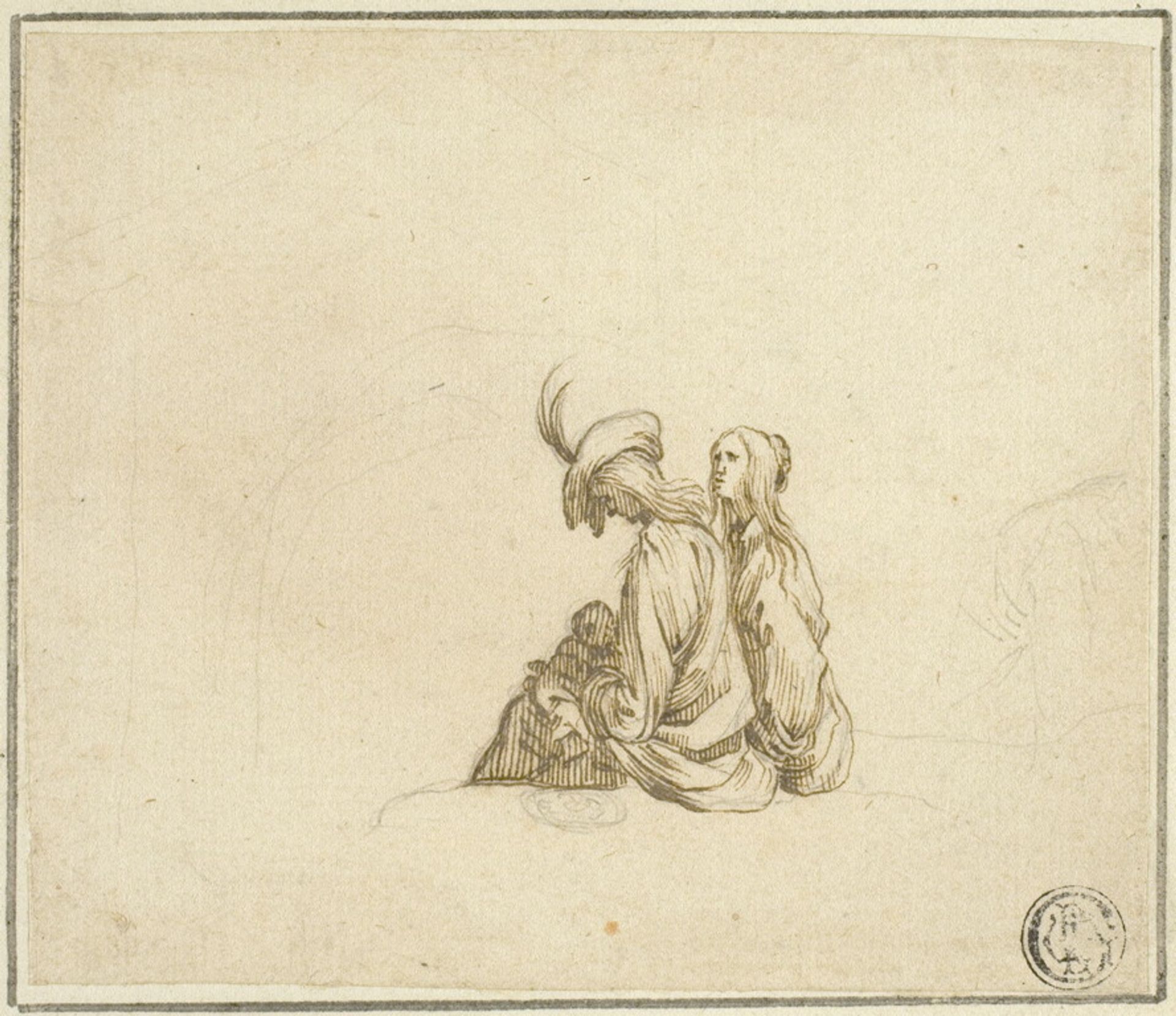
Stefano della Bella created this etching, "Two Gypsy Women with Child," using metal, acid, and ink sometime in the mid-17th century. Etching is an indirect process, reliant on the controlled corrosion of a metal plate. The artist covers the plate with a waxy, acid-resistant ground, then draws through it with a sharp needle. The plate is then immersed in acid, which bites into the exposed lines. Ink is then applied, filling these grooves, and the surface is wiped clean. The image transfers to paper under the intense pressure of a printing press. The crispness of the lines here is crucial. Notice the contrast between the figures and the empty space around them; this contrast is what gives the work its vitality. Although it's a relatively quick method, etching demands a high degree of skill. This print testifies to the rich culture of reproductive printmaking in early modern Europe, which depended on specialized labor and artistic vision. It is a reminder that even small works on paper can be powerful documents of lived experience.
Two Gypsy Women with Child
n.d.


Artwork details
- Medium
- drawing, print, paper, ink, graphite, pen
- Dimensions
- 94 × 111 mm
- Location
- The Art Institute of Chicago
- Copyright
- Public Domain
Tags
Comments
Share your thoughts
About this artwork
Stefano della Bella created this etching, "Two Gypsy Women with Child," using metal, acid, and ink sometime in the mid-17th century. Etching is an indirect process, reliant on the controlled corrosion of a metal plate. The artist covers the plate with a waxy, acid-resistant ground, then draws through it with a sharp needle. The plate is then immersed in acid, which bites into the exposed lines. Ink is then applied, filling these grooves, and the surface is wiped clean. The image transfers to paper under the intense pressure of a printing press. The crispness of the lines here is crucial. Notice the contrast between the figures and the empty space around them; this contrast is what gives the work its vitality. Although it's a relatively quick method, etching demands a high degree of skill. This print testifies to the rich culture of reproductive printmaking in early modern Europe, which depended on specialized labor and artistic vision. It is a reminder that even small works on paper can be powerful documents of lived experience.
Comments
Share your thoughts