About this artwork
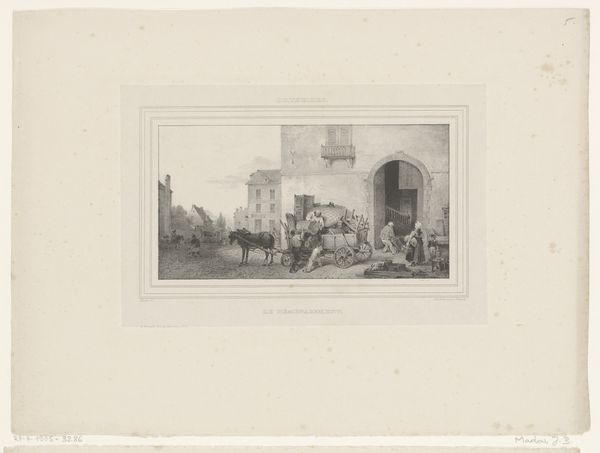
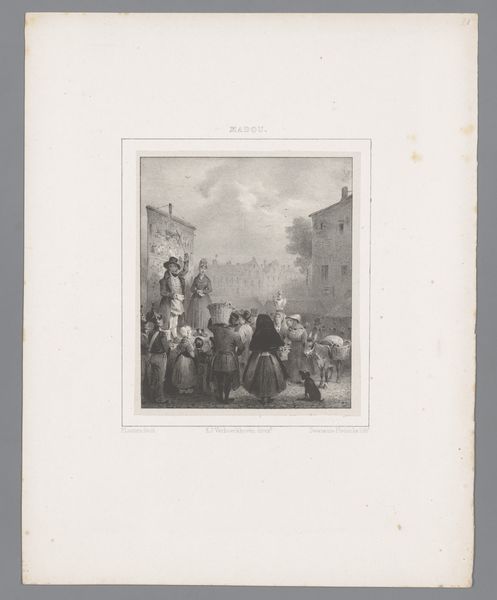
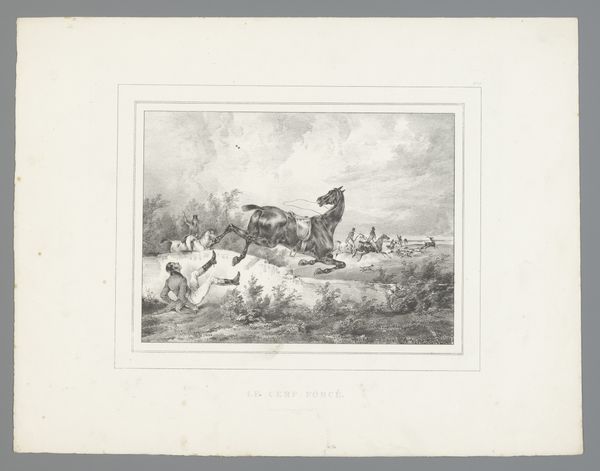
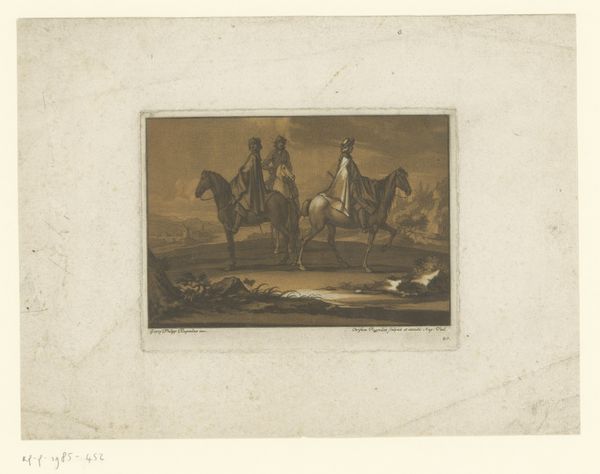
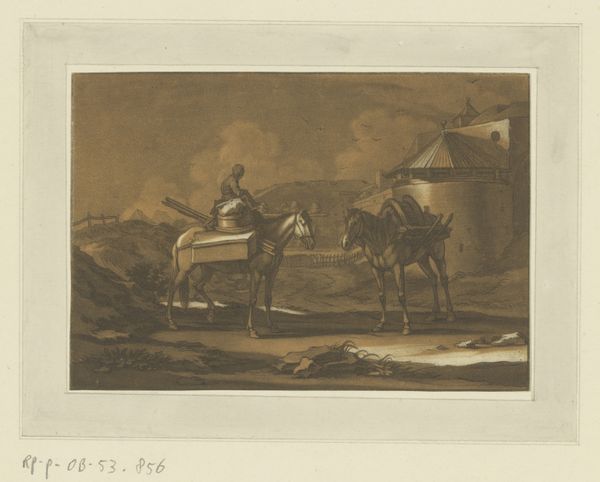
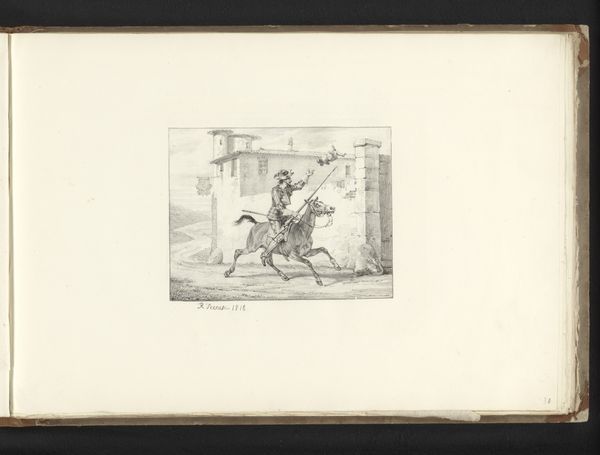
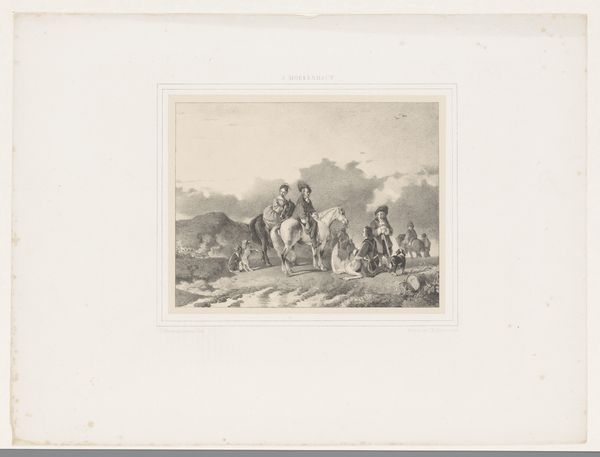
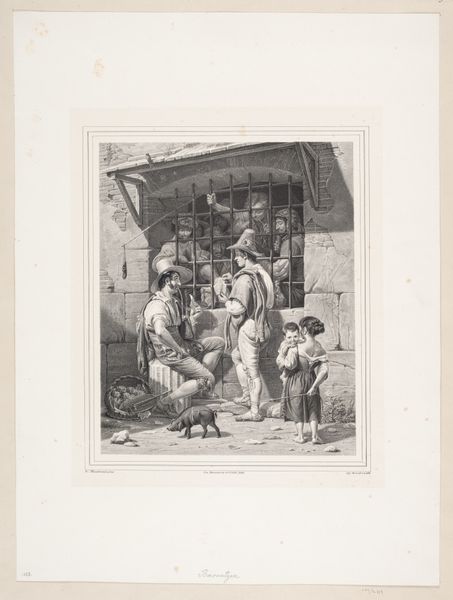
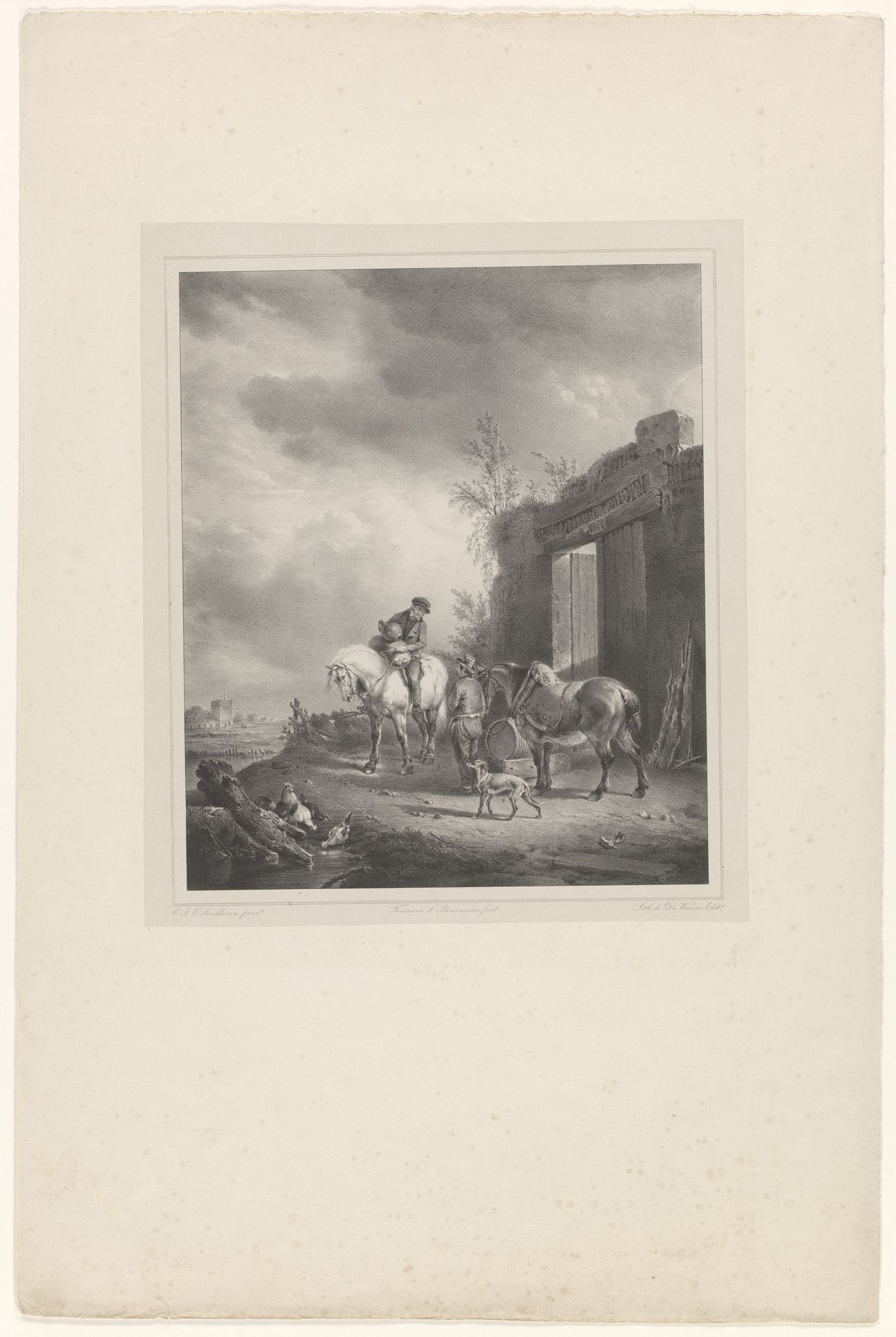
Théodore Fourmois made this landscape with two men and horses by a gate as a black chalk lithograph. Fourmois, who lived through a period of significant social upheaval in Belgium, including its revolution and the rise of industrial society, often depicted rural scenes, reflecting a nostalgia for the countryside amidst rapid modernization. Here, we see a pastoral scene, but not one of untouched nature. The crumbling gate and the figures suggest both transit and transaction. The relationship between the mounted men and the one standing on the ground could imply social hierarchy and economic exchange which speaks to the class dynamics inherent in 19th-century rural life. It reflects the identities tied to land and labor. Fourmois’s landscapes invite us to consider the intersection of progress and tradition, and to reflect on our own place within the ever-changing landscapes of our lives.
Landschap met twee mannen en paarden bij een poort
c. 1835
Théodore Fourmois
1814 - 1871Location
RijksmuseumArtwork details
- Medium
- etching, plein-air
- Dimensions
- height 550 mm, width 362 mm
- Location
- Rijksmuseum
- Copyright
- Rijks Museum: Open Domain
Tags
Comments
Share your thoughts
About this artwork
Théodore Fourmois made this landscape with two men and horses by a gate as a black chalk lithograph. Fourmois, who lived through a period of significant social upheaval in Belgium, including its revolution and the rise of industrial society, often depicted rural scenes, reflecting a nostalgia for the countryside amidst rapid modernization. Here, we see a pastoral scene, but not one of untouched nature. The crumbling gate and the figures suggest both transit and transaction. The relationship between the mounted men and the one standing on the ground could imply social hierarchy and economic exchange which speaks to the class dynamics inherent in 19th-century rural life. It reflects the identities tied to land and labor. Fourmois’s landscapes invite us to consider the intersection of progress and tradition, and to reflect on our own place within the ever-changing landscapes of our lives.
Comments
Share your thoughts