About this artwork
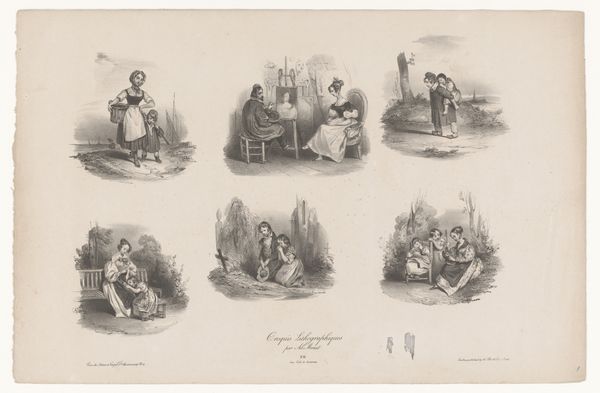
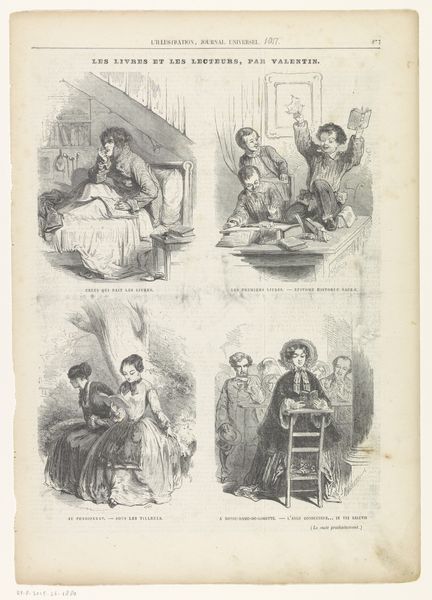
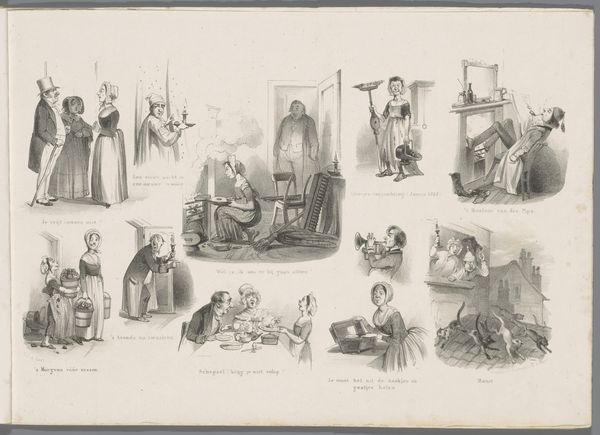
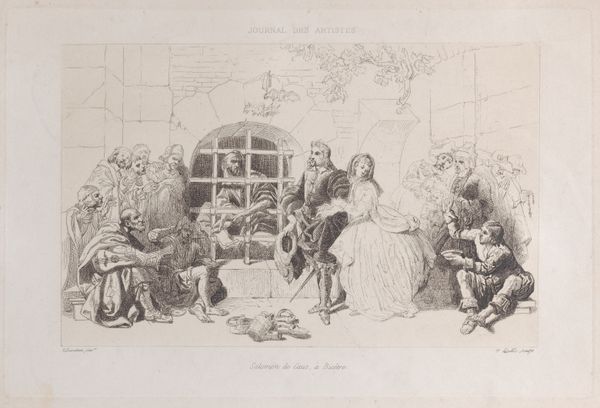
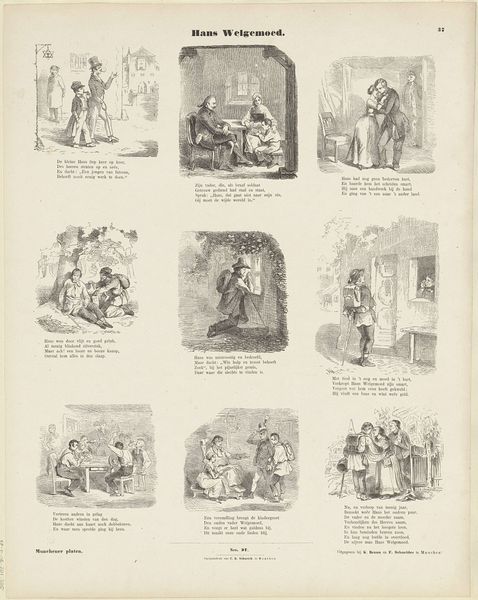
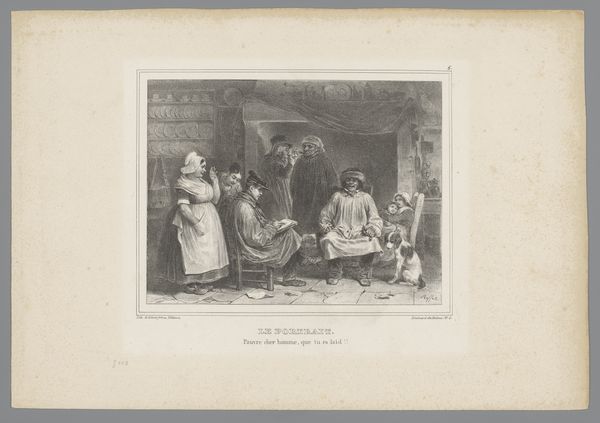
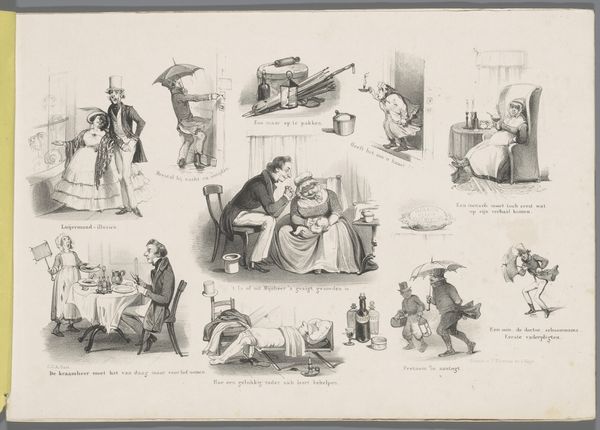
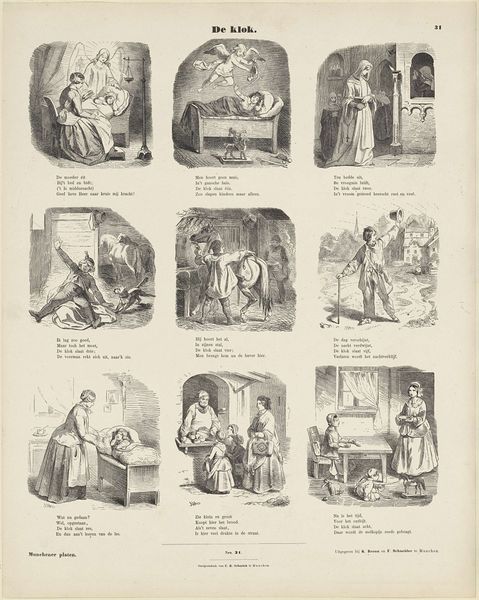
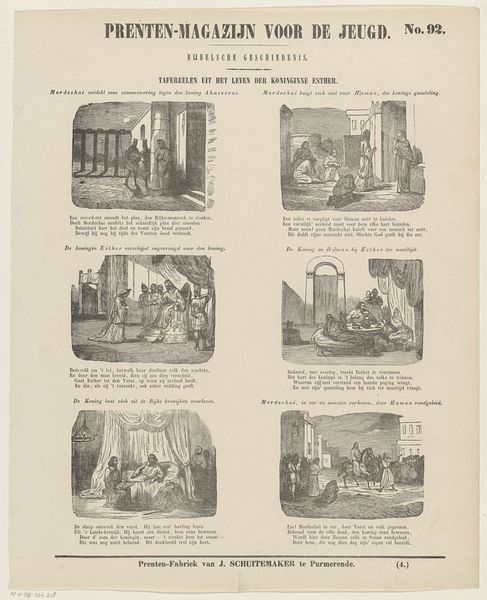
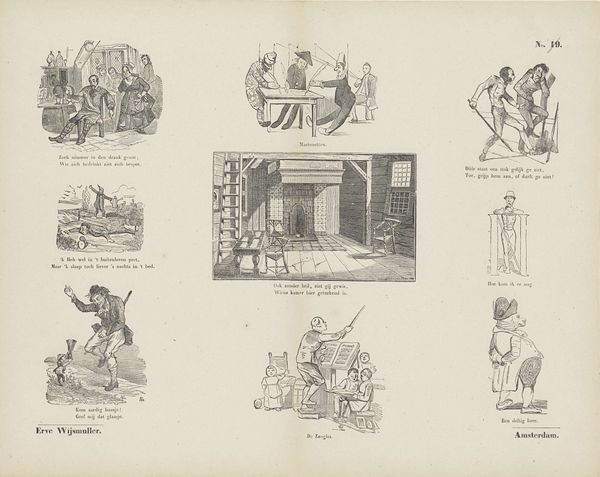
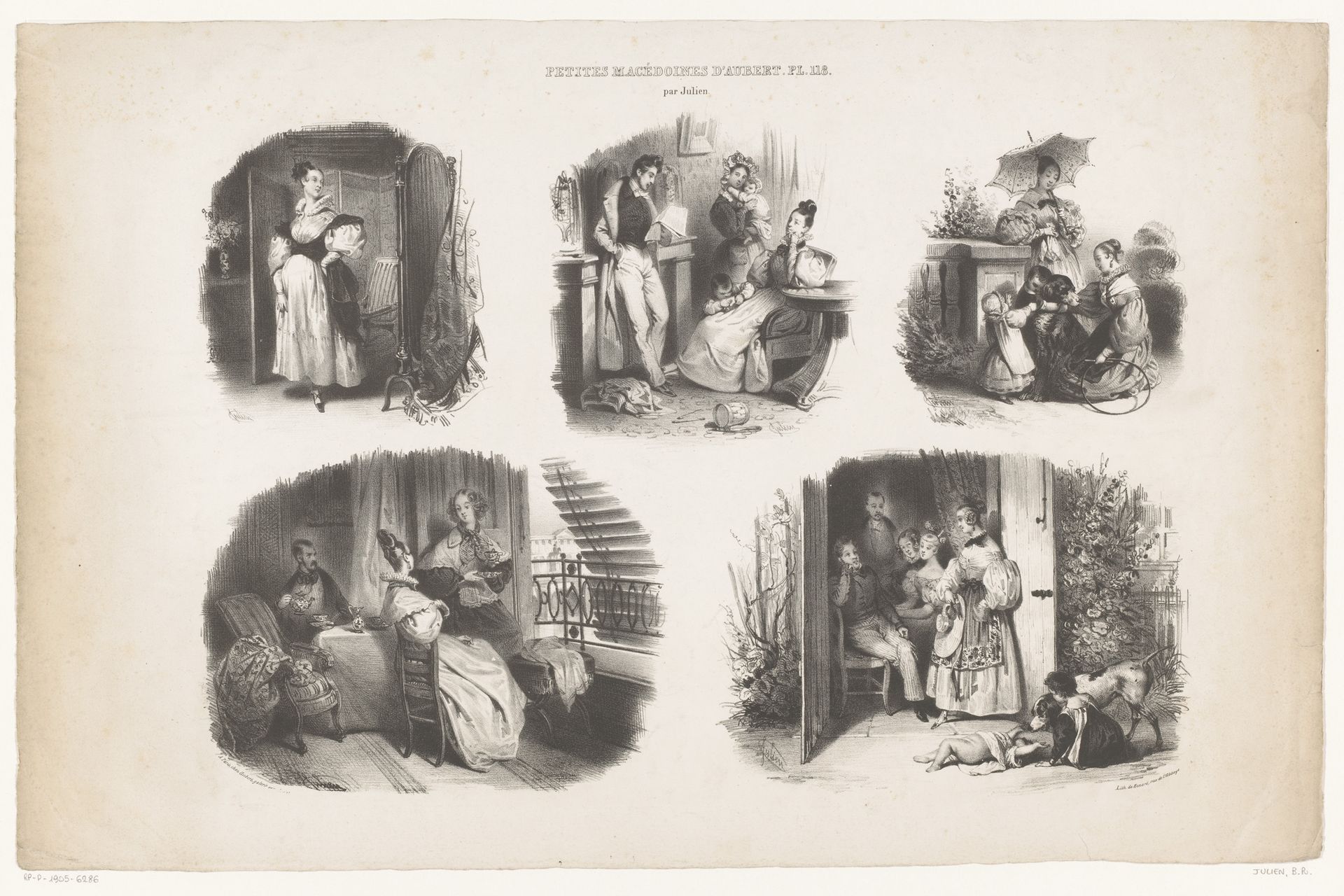
Bernard Romain Julien created this print, titled 'Vijf voorstellingen van mensen in tuinen en interieurs' - 'Five representations of people in gardens and interiors', sometime during his career. Here we see the French bourgeoisie engaged in the rituals of domestic life. But who are these people, and what is the nature of their relationships? The women are dressed in the height of fashion, and are largely confined to interior spaces. They are seen caring for children or playing music. The men occupy a more public sphere; they appear to be conducting business or are seen relaxing in the presence of women. There's a sense of prescribed roles being acted out in these drawings. It invites us to consider the unspoken rules governing behavior, and how these settings reinforced specific expectations of gender and class in 19th-century French society. The scenes suggest a tension between freedom and confinement, performance, and authenticity.
Vijf voorstellingen van mensen in tuinen en interieurs
1832 - 1833

Bernard Romain Julien
1802 - 1871Location
RijksmuseumArtwork details
- Medium
- drawing, paper, pen
- Dimensions
- height 352 mm, width 542 mm
- Location
- Rijksmuseum
- Copyright
- Rijks Museum: Open Domain
Tags
Comments
Share your thoughts
About this artwork
Bernard Romain Julien created this print, titled 'Vijf voorstellingen van mensen in tuinen en interieurs' - 'Five representations of people in gardens and interiors', sometime during his career. Here we see the French bourgeoisie engaged in the rituals of domestic life. But who are these people, and what is the nature of their relationships? The women are dressed in the height of fashion, and are largely confined to interior spaces. They are seen caring for children or playing music. The men occupy a more public sphere; they appear to be conducting business or are seen relaxing in the presence of women. There's a sense of prescribed roles being acted out in these drawings. It invites us to consider the unspoken rules governing behavior, and how these settings reinforced specific expectations of gender and class in 19th-century French society. The scenes suggest a tension between freedom and confinement, performance, and authenticity.
Comments
Share your thoughts