About this artwork
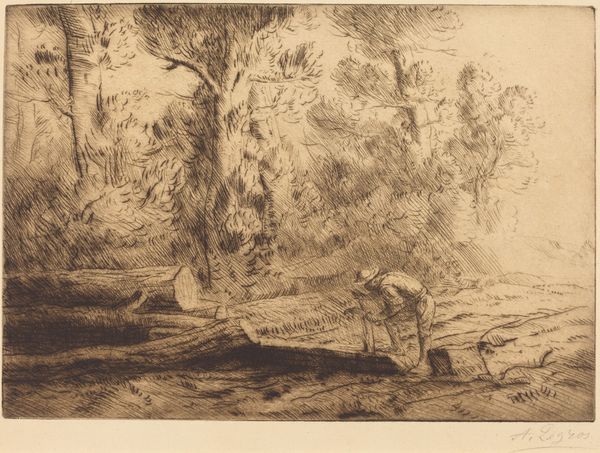
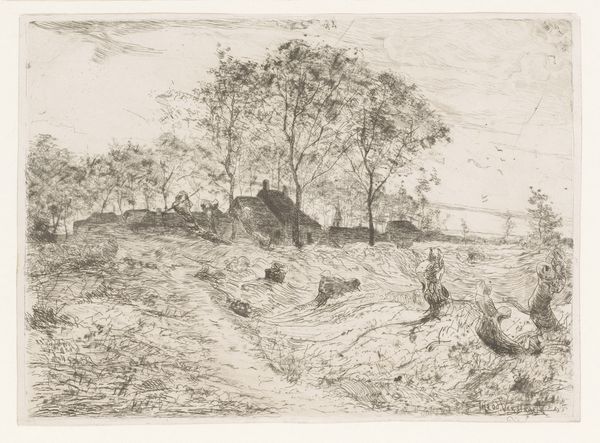
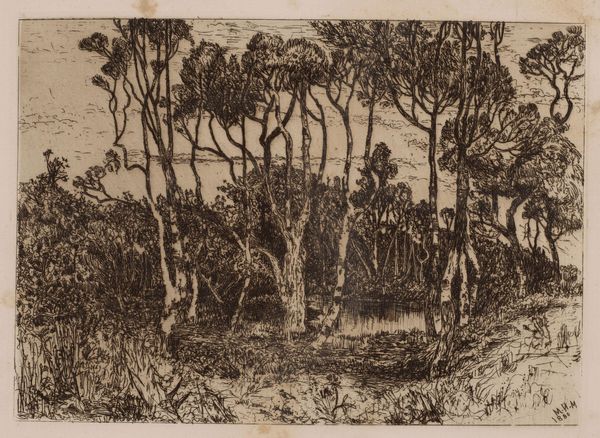
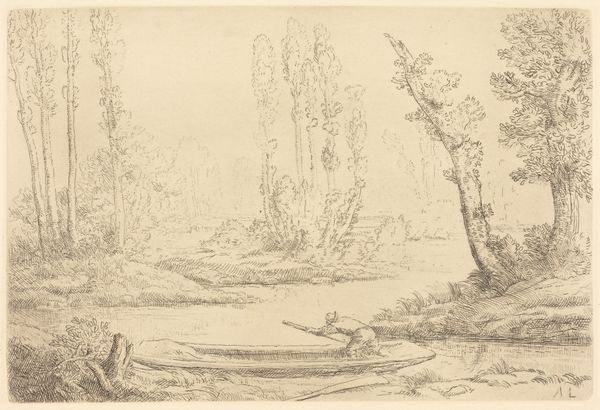
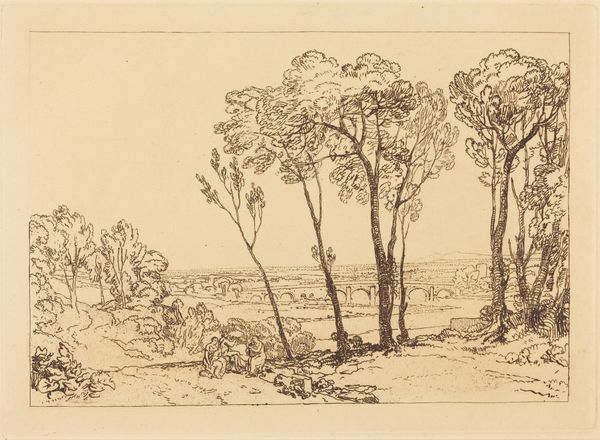
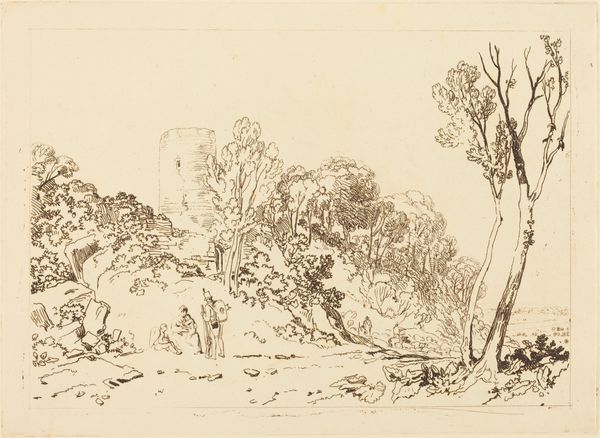
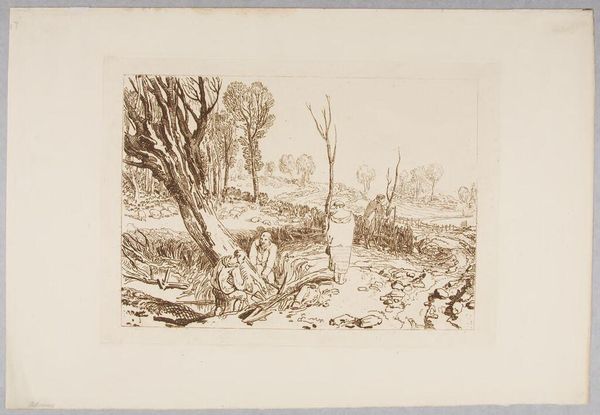
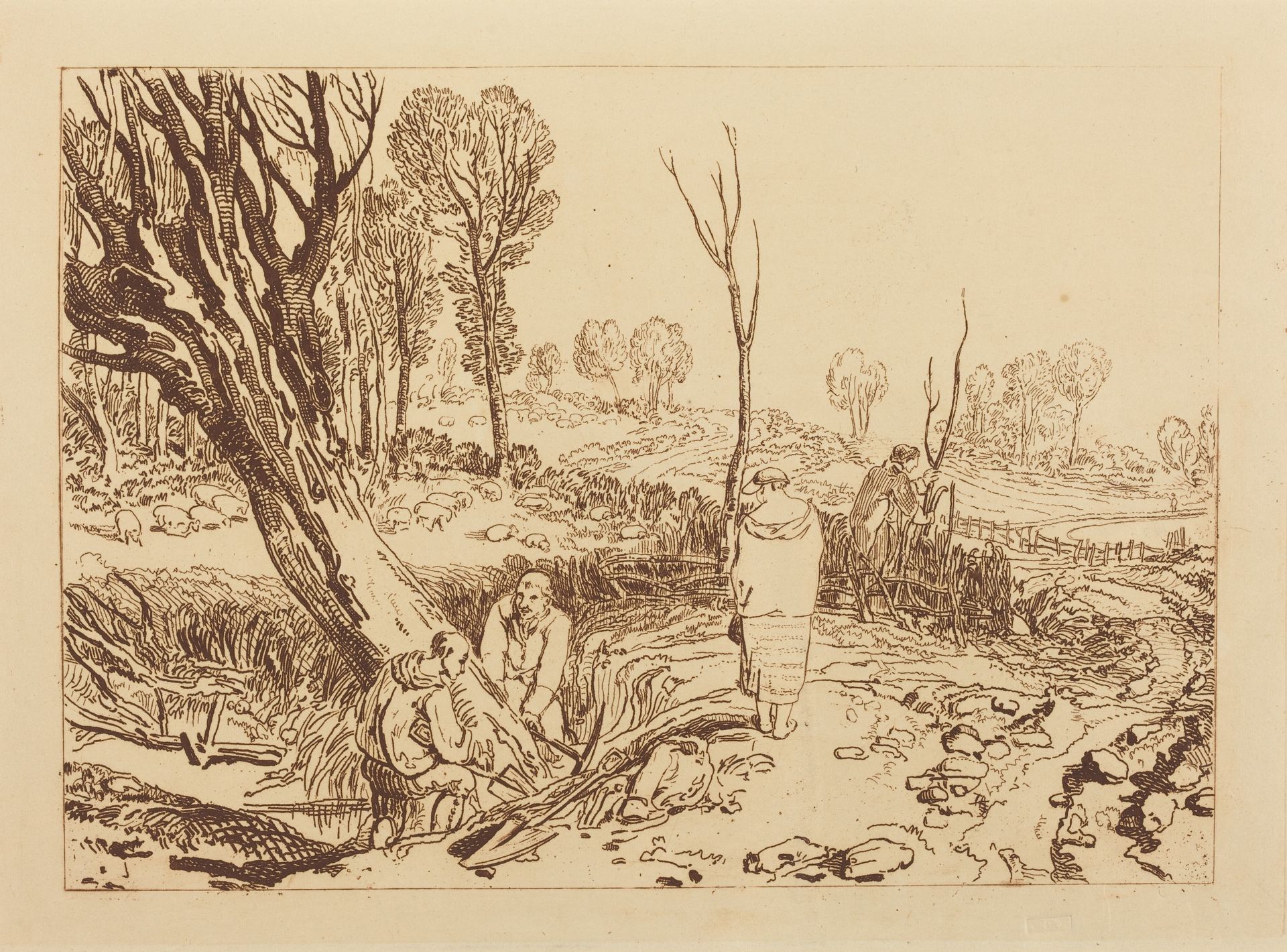
J.M.W. Turner made this print called 'Hedging and Ditching,' using etching and mezzotint, techniques that allowed for detailed tonal contrasts. Born in working-class London, Turner was acutely aware of social stratification, a theme subtly explored here through the depiction of rural laborers. Hedging and ditching were essential agricultural tasks, often performed by the poorest members of society. The figures in the foreground seem weary, perhaps a commentary on the physical demands and socio-economic realities of their labor. During Turner's time, ideas about the rural poor were often romanticized, yet the scene avoids idealization, presenting a more grounded view. As you consider this artwork, reflect on the lives of these workers, their connection to the land, and the social hierarchies that shaped their existence. This print invites us to consider the human element within landscape, prompting a deeper understanding of the lives intertwined with the land.
Hedging and Ditching Possibly 1812


Artwork details
- Medium
- drawing, etching
- Copyright
- National Gallery of Art: CC0 1.0
Tags
drawing
etching
landscape
etching
romanticism
Comments
No comments
About this artwork
J.M.W. Turner made this print called 'Hedging and Ditching,' using etching and mezzotint, techniques that allowed for detailed tonal contrasts. Born in working-class London, Turner was acutely aware of social stratification, a theme subtly explored here through the depiction of rural laborers. Hedging and ditching were essential agricultural tasks, often performed by the poorest members of society. The figures in the foreground seem weary, perhaps a commentary on the physical demands and socio-economic realities of their labor. During Turner's time, ideas about the rural poor were often romanticized, yet the scene avoids idealization, presenting a more grounded view. As you consider this artwork, reflect on the lives of these workers, their connection to the land, and the social hierarchies that shaped their existence. This print invites us to consider the human element within landscape, prompting a deeper understanding of the lives intertwined with the land.
Comments
No comments