About this artwork
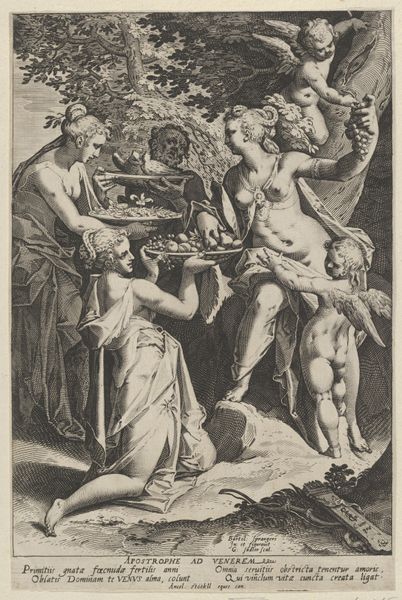
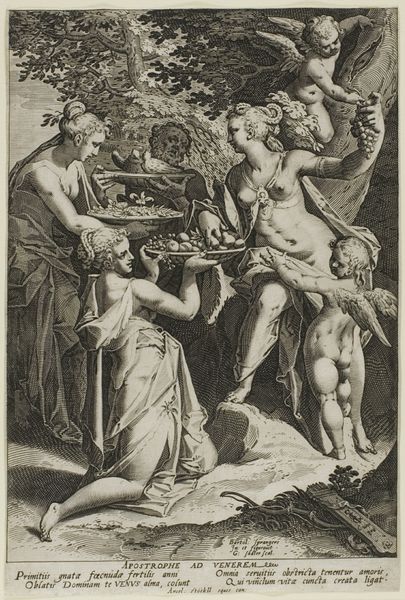
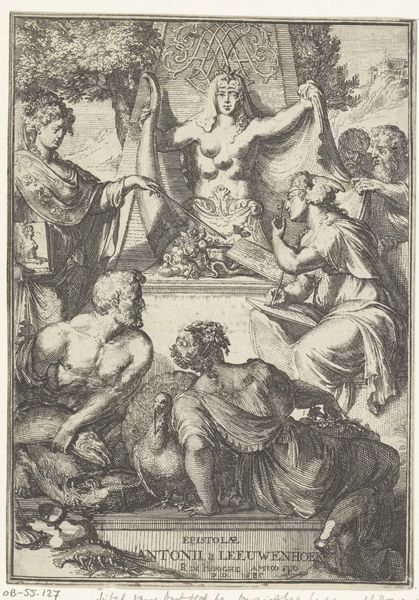
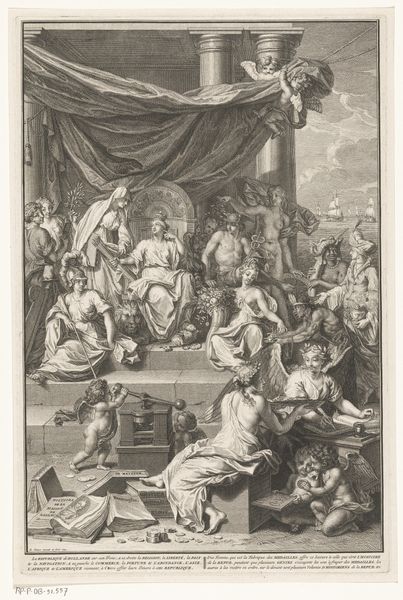
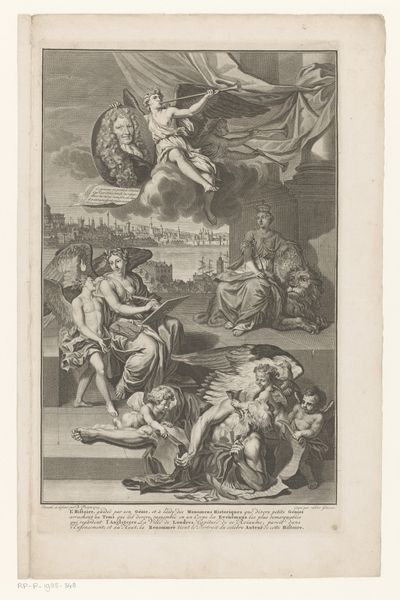
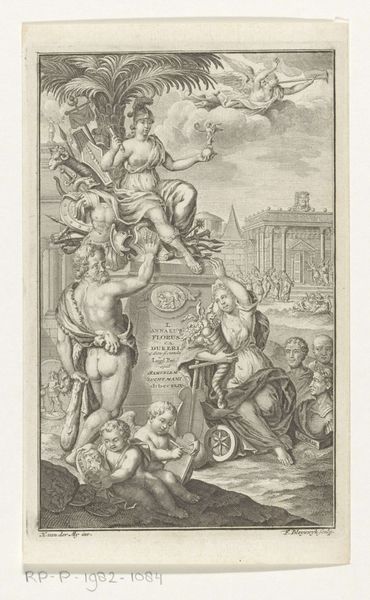
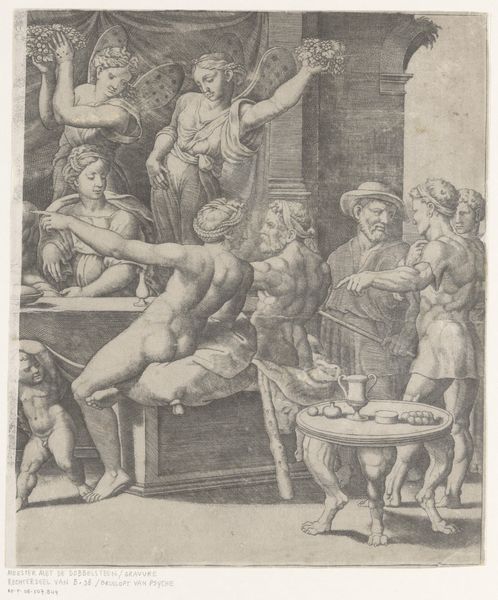
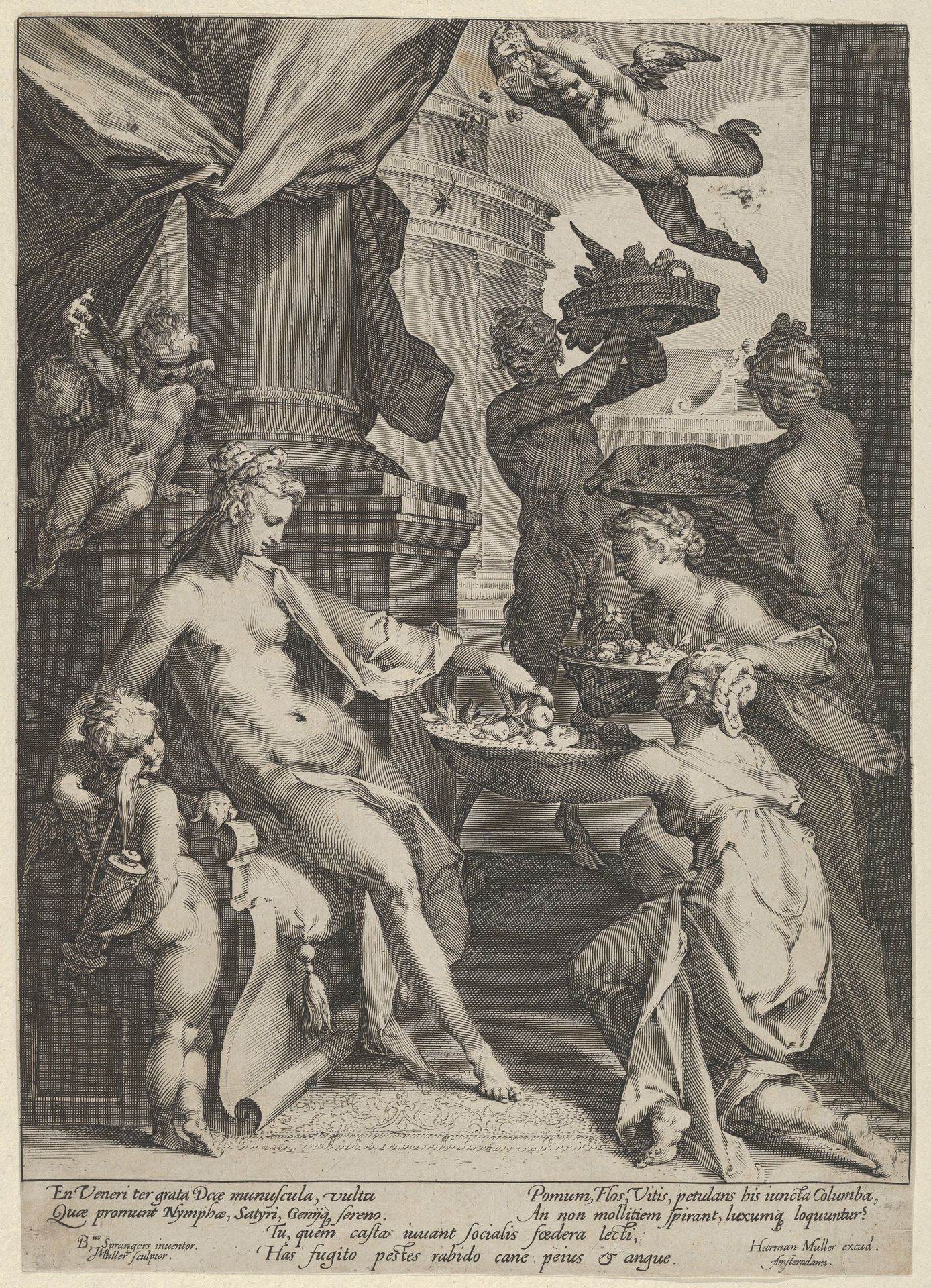
Jan Muller created this print, "Venus Honored by the Nymphs," sometime around the late 16th or early 17th century. Note the central figure of Venus, the Roman goddess of love and beauty. She is surrounded by nymphs and satyrs bearing gifts: fruits, flowers, and other symbols of fertility and abundance. The iconography here is rich, drawing from classical mythology to evoke themes of love, nature, and prosperity. The image resonates with similar motifs found throughout art history. Consider Botticelli's "Primavera," where Venus is also depicted amidst a flourishing garden, surrounded by figures representing the bounty of spring. The presence of putti, or cherubic figures, flitting about Venus, emphasizes the sensual and playful atmosphere. These recurring figures, with their roots in antiquity, reappear in Renaissance and Baroque art, often carrying the same connotations of divine love and innocence. These symbols, passed down through history, are never fixed but constantly shifting in meaning as culture evolves. The emotional power embedded in these visual symbols is intense, engaging viewers on a deep, subconscious level.
Venus Honored by the Nymphs
1586 - 1596


Artwork details
- Medium
- drawing, print, engraving
- Dimensions
- Sheet: 11 1/8 × 7 7/8 in. (28.2 × 20 cm)
- Location
- Metropolitan Museum of Art, New York, NY
- Copyright
- Public Domain
Tags
Comments
Share your thoughts
About this artwork
Jan Muller created this print, "Venus Honored by the Nymphs," sometime around the late 16th or early 17th century. Note the central figure of Venus, the Roman goddess of love and beauty. She is surrounded by nymphs and satyrs bearing gifts: fruits, flowers, and other symbols of fertility and abundance. The iconography here is rich, drawing from classical mythology to evoke themes of love, nature, and prosperity. The image resonates with similar motifs found throughout art history. Consider Botticelli's "Primavera," where Venus is also depicted amidst a flourishing garden, surrounded by figures representing the bounty of spring. The presence of putti, or cherubic figures, flitting about Venus, emphasizes the sensual and playful atmosphere. These recurring figures, with their roots in antiquity, reappear in Renaissance and Baroque art, often carrying the same connotations of divine love and innocence. These symbols, passed down through history, are never fixed but constantly shifting in meaning as culture evolves. The emotional power embedded in these visual symbols is intense, engaging viewers on a deep, subconscious level.
Comments
Share your thoughts