About this artwork
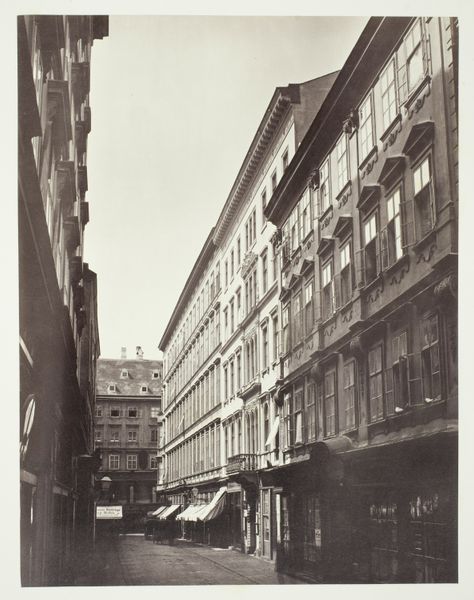
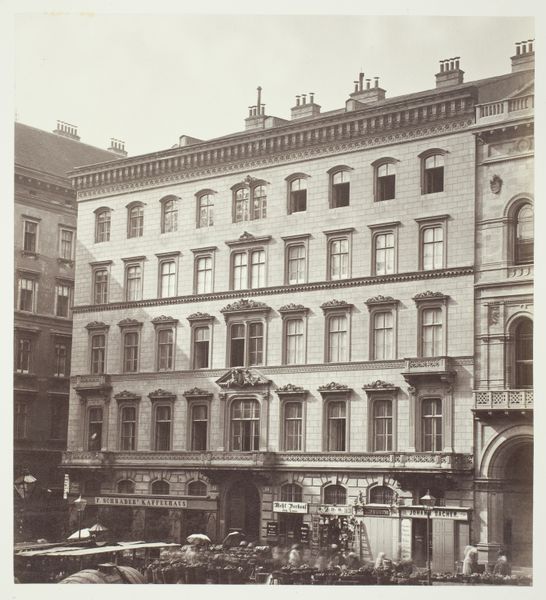
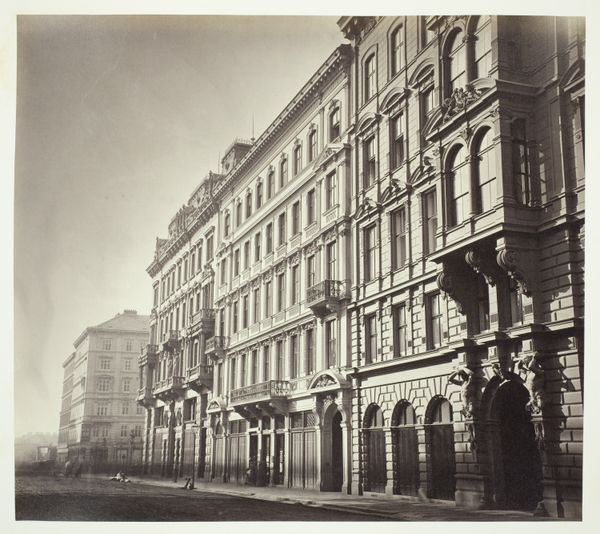
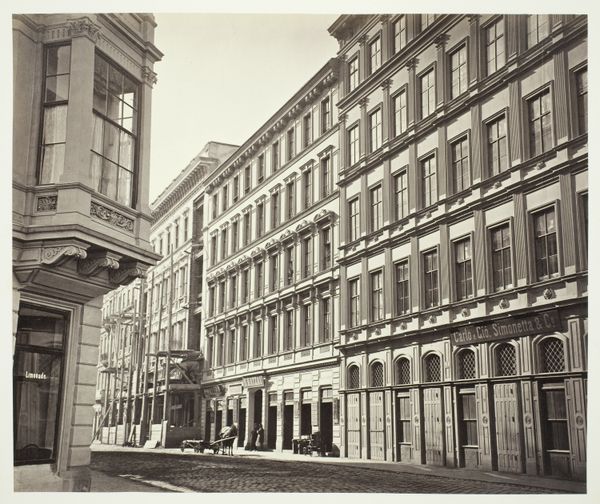
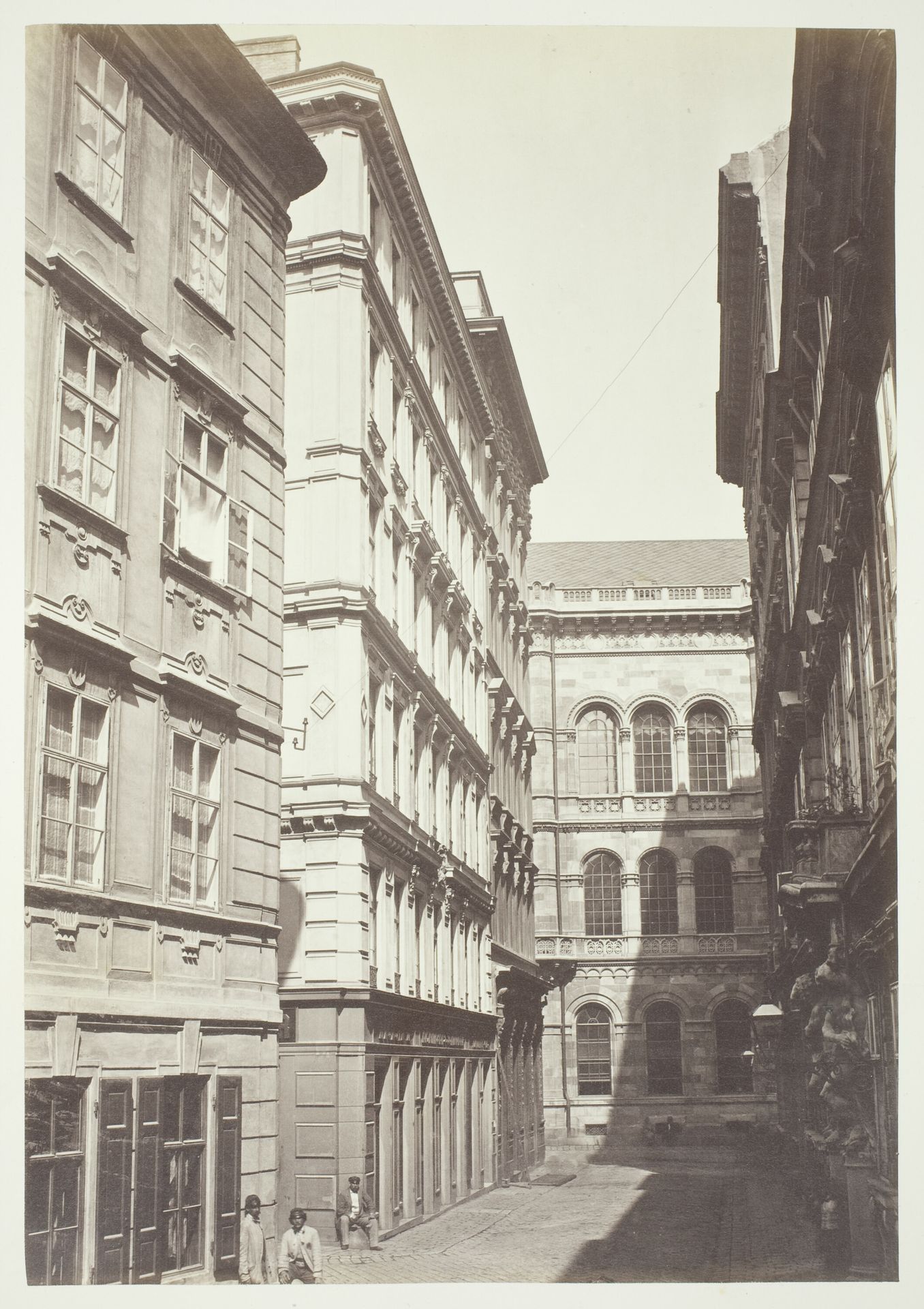
Editor: So, here we have "Wallnerstraβe No. 17, Zinshaus des Herrn A. J. H. Rogge," a gelatin-silver print from around the 1860s. It depicts a rather stately looking street. It feels incredibly formal and... almost claustrophobic, the way the buildings crowd the frame. What jumps out at you when you look at it? Curator: The unwavering presence of architecture! I see in this image echoes of power, stability and perhaps, even a certain anxiety tied to urbanization. What does a street *mean* culturally? How does the very act of documenting a building like this shape our memory of the society that built it? Consider those repeating windows: are they an expression of order, or something more ominous… a relentless pattern denying individuality? Editor: That’s fascinating. I hadn't thought about the windows as having that kind of symbolism. The buildings, although beautiful in their architecture, do seem to box in the few figures present in the image. Curator: Exactly. Even the light, filtered and directed by the buildings, plays a role. Photography in this period held a certain claim to 'truth,' wouldn't you agree? How do we grapple with that legacy? Look closer - what feelings do those shadowed corners stir? Fear, perhaps, of that which hides within progress and history? This photographer, whoever they were, used symbolic compositions! Editor: The idea of “shadows within progress” gives a whole new layer to this seemingly straightforward street view. I hadn’t really considered the anxieties it might reflect, only the imposing architecture. Curator: Well, hopefully, you will now! Perhaps now you will look into the memory embedded within an urban space. The image stays with you differently when considered with history! Editor: Definitely! It makes me want to investigate more images to unpack what cultural and social codes hide inside them!
Wallnerstraβe No. 17, Zinshaus des Herrn A. J. H. Rogge
c. 1860s


Artwork details
- Medium
- print, photography, gelatin-silver-print
- Dimensions
- 33.9 × 23.6 cm (image/paper); 61.2 × 42.7 cm (album page)
- Location
- The Art Institute of Chicago
- Copyright
- Public Domain
Tags
landscape
photography
gelatin-silver-print
cityscape
Comments
Be the first to share your thoughts about this work.
About this artwork
Editor: So, here we have "Wallnerstraβe No. 17, Zinshaus des Herrn A. J. H. Rogge," a gelatin-silver print from around the 1860s. It depicts a rather stately looking street. It feels incredibly formal and... almost claustrophobic, the way the buildings crowd the frame. What jumps out at you when you look at it? Curator: The unwavering presence of architecture! I see in this image echoes of power, stability and perhaps, even a certain anxiety tied to urbanization. What does a street *mean* culturally? How does the very act of documenting a building like this shape our memory of the society that built it? Consider those repeating windows: are they an expression of order, or something more ominous… a relentless pattern denying individuality? Editor: That’s fascinating. I hadn't thought about the windows as having that kind of symbolism. The buildings, although beautiful in their architecture, do seem to box in the few figures present in the image. Curator: Exactly. Even the light, filtered and directed by the buildings, plays a role. Photography in this period held a certain claim to 'truth,' wouldn't you agree? How do we grapple with that legacy? Look closer - what feelings do those shadowed corners stir? Fear, perhaps, of that which hides within progress and history? This photographer, whoever they were, used symbolic compositions! Editor: The idea of “shadows within progress” gives a whole new layer to this seemingly straightforward street view. I hadn’t really considered the anxieties it might reflect, only the imposing architecture. Curator: Well, hopefully, you will now! Perhaps now you will look into the memory embedded within an urban space. The image stays with you differently when considered with history! Editor: Definitely! It makes me want to investigate more images to unpack what cultural and social codes hide inside them!
Comments
Be the first to share your thoughts about this work.