About this artwork
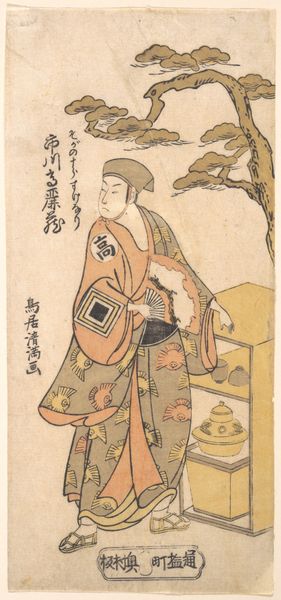
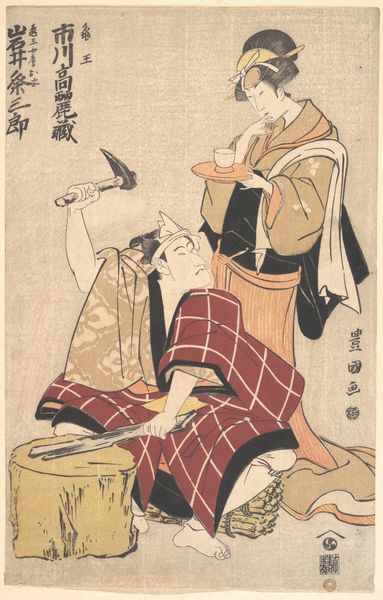
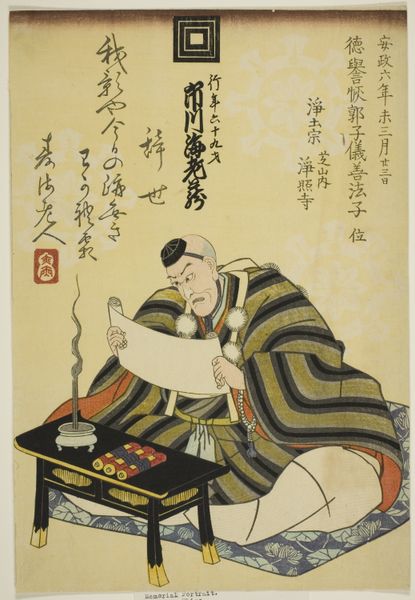
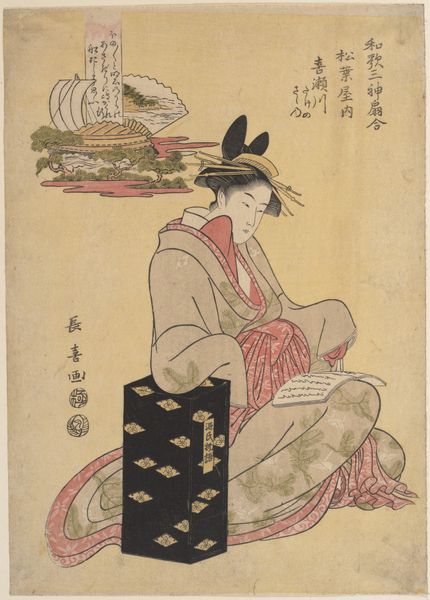
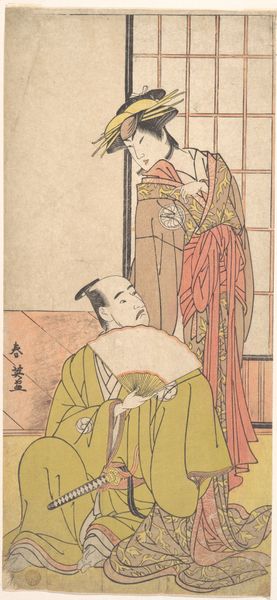
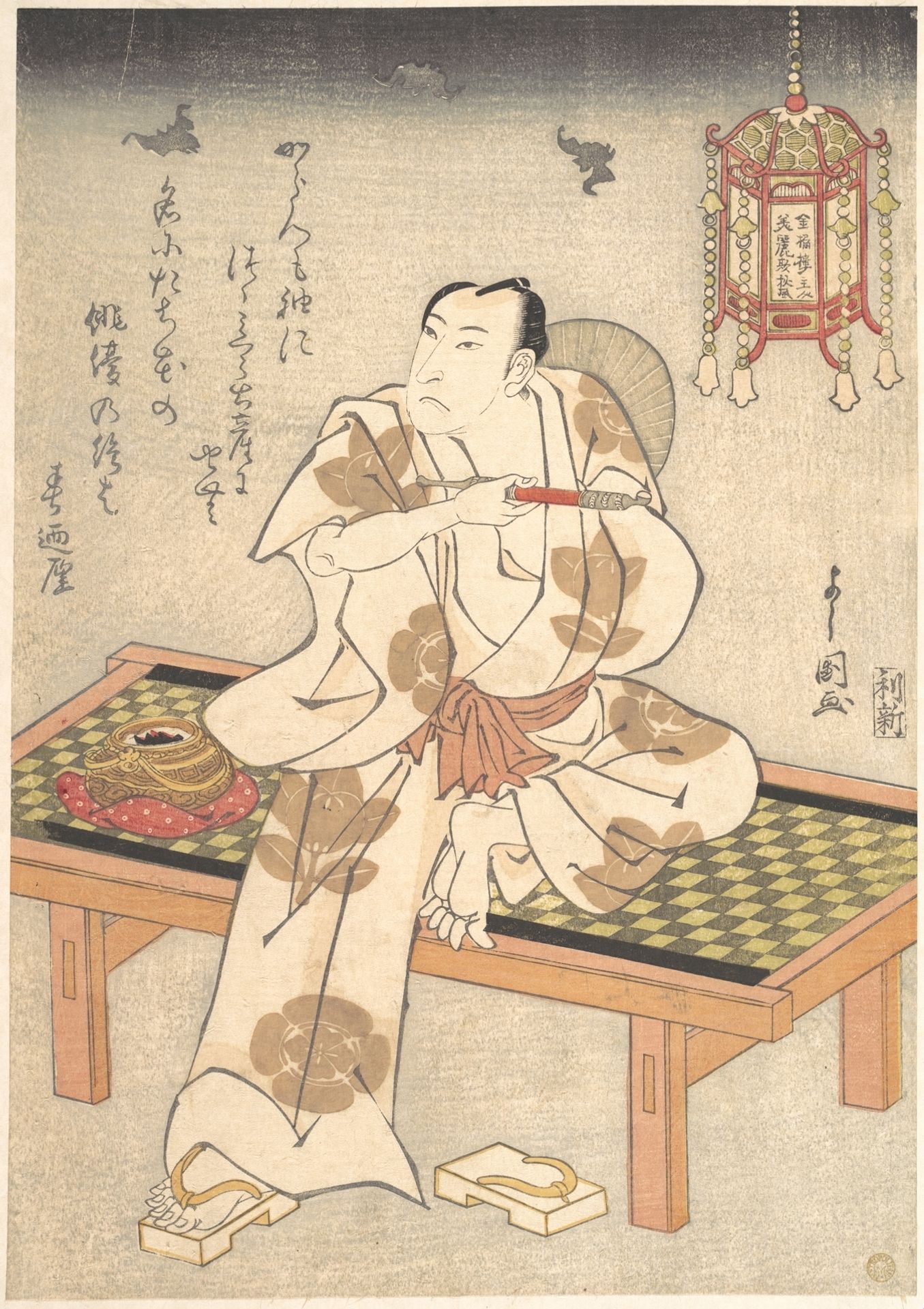
Ippyotei Yoshikuni made this woodblock print of an actor of the Ichimura line sometime in the 19th century. It offers a glimpse into the world of Japanese Kabuki theatre and the lives of the actors who shaped its cultural landscape. The actor, dressed in a patterned kimono, sits on a bench designed for the strategy game Shogi, holding a pipe, surrounded by props and symbols of his profession. The Ichimura line was a prominent lineage of actors that were associated with the Ichimura-za theatre in Edo, today's Tokyo. Kabuki was a popular form of entertainment that often challenged social norms. These actors were celebrities, their images widely circulated in prints like this one. Yoshikuni’s print provides a window into the social and cultural dynamics of Japan during a period of transformation, and it prompts us to consider the role of art in reflecting and shaping society. Further research into the history of Kabuki theatre and the Ichimura line would help us understand the cultural significance of this print. Scrutinizing historical records, theatre programs, and biographical accounts of actors would reveal more about the social context in which the print was made.
An Actor of the Ichimura Line Sitting on a Shogi (Wooden Bench) and Holding a Pipe
1836 - 1870


Artwork details
- Medium
- Dimensions
- H. 14 5/8 in. (37.1 cm); W. 10 1/4 in. (26 cm)
- Location
- Metropolitan Museum of Art, New York, NY
- Copyright
- Public Domain
Tags
portrait
asian-art
ukiyo-e
genre-painting
Comments
Be the first to share your thoughts about this work.
About this artwork
Ippyotei Yoshikuni made this woodblock print of an actor of the Ichimura line sometime in the 19th century. It offers a glimpse into the world of Japanese Kabuki theatre and the lives of the actors who shaped its cultural landscape. The actor, dressed in a patterned kimono, sits on a bench designed for the strategy game Shogi, holding a pipe, surrounded by props and symbols of his profession. The Ichimura line was a prominent lineage of actors that were associated with the Ichimura-za theatre in Edo, today's Tokyo. Kabuki was a popular form of entertainment that often challenged social norms. These actors were celebrities, their images widely circulated in prints like this one. Yoshikuni’s print provides a window into the social and cultural dynamics of Japan during a period of transformation, and it prompts us to consider the role of art in reflecting and shaping society. Further research into the history of Kabuki theatre and the Ichimura line would help us understand the cultural significance of this print. Scrutinizing historical records, theatre programs, and biographical accounts of actors would reveal more about the social context in which the print was made.
Comments
Be the first to share your thoughts about this work.