About this artwork
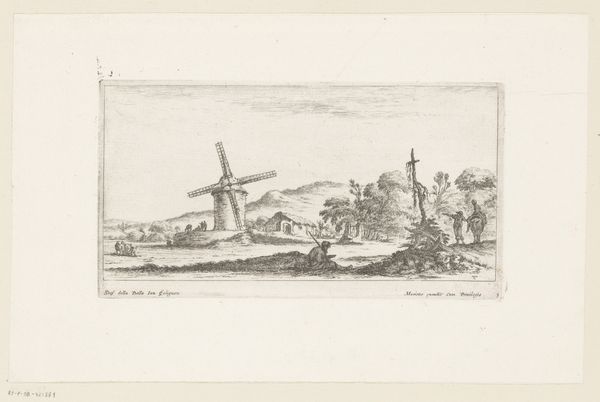
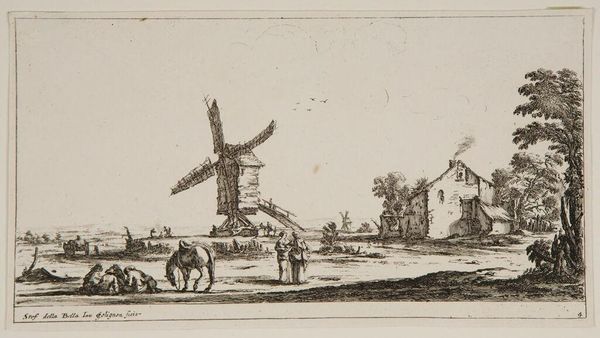
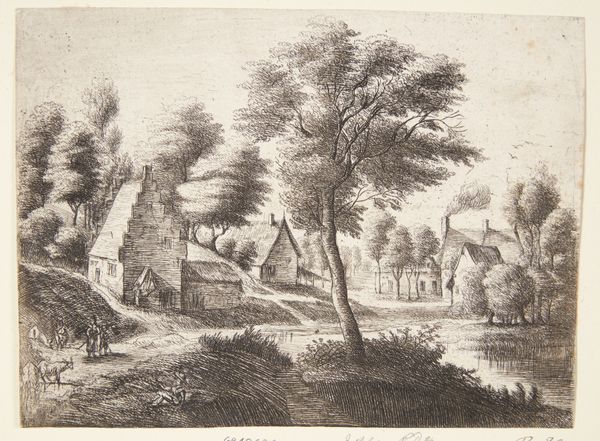
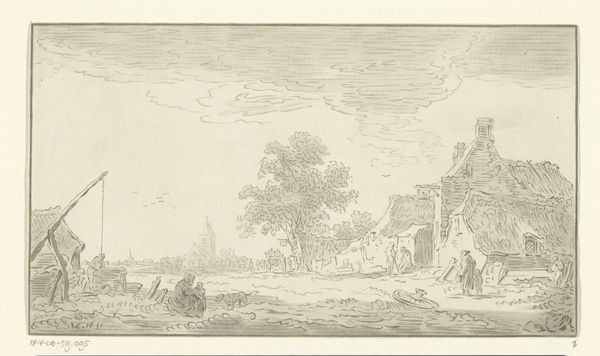
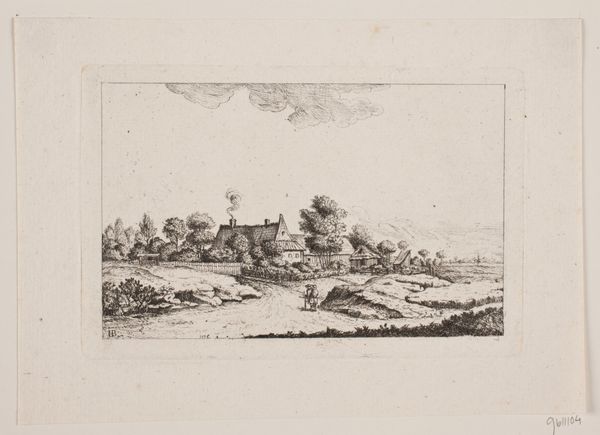
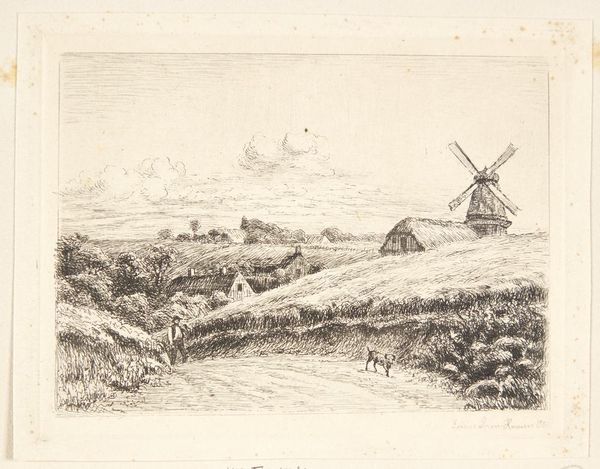
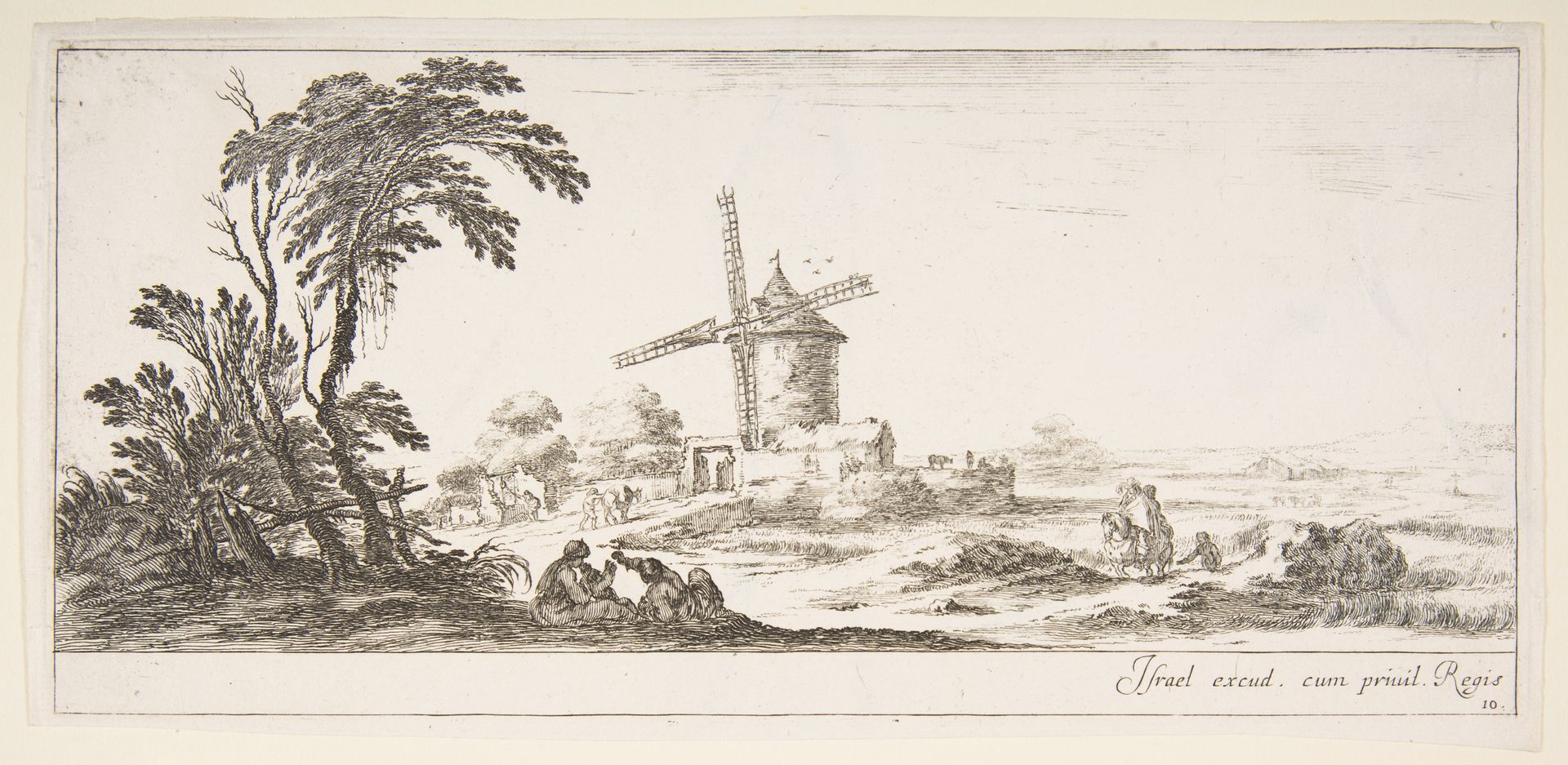
Stefano della Bella created this landscape scene as part of a series called 'Various landscapes.' Della Bella lived in Florence, Italy during the 17th century, a time of significant social hierarchy and artistic patronage. In this print, the landscape is rendered with fine, delicate lines, which capture the pastoral ideal that was popular among the elite. However, if we look closely, the figures in the foreground appear to be peasants, resting by the roadside. Their inclusion brings a sense of the everyday into this otherwise idealized view. Consider how the artist positions these figures. Are they merely part of the scenery, or are they meant to evoke something more? Perhaps della Bella is offering a subtle commentary on the social inequalities of his time, blending the beauty of the landscape with the realities of labor and life for the common person. This piece invites us to reflect on whose stories are told and how they are told within the broader narratives of history.
Plate 10: a family in center foreground, various figures and horses in middleground, a windmill in center background, from 'Various landscapes' (Divers paysages)
1636 - 1646

Stefano della Bella
1610 - 1664
The Metropolitan Museum of Art
Metropolitan Museum of Art, New York, NYArtwork details
- Medium
- drawing, print, etching
- Dimensions
- Sheet (trimmed): 4 15/16 × 10 3/8 in. (12.6 × 26.3 cm)
- Location
- Metropolitan Museum of Art, New York, NY
- Copyright
- Public Domain
Tags
Comments
Share your thoughts
About this artwork
Stefano della Bella created this landscape scene as part of a series called 'Various landscapes.' Della Bella lived in Florence, Italy during the 17th century, a time of significant social hierarchy and artistic patronage. In this print, the landscape is rendered with fine, delicate lines, which capture the pastoral ideal that was popular among the elite. However, if we look closely, the figures in the foreground appear to be peasants, resting by the roadside. Their inclusion brings a sense of the everyday into this otherwise idealized view. Consider how the artist positions these figures. Are they merely part of the scenery, or are they meant to evoke something more? Perhaps della Bella is offering a subtle commentary on the social inequalities of his time, blending the beauty of the landscape with the realities of labor and life for the common person. This piece invites us to reflect on whose stories are told and how they are told within the broader narratives of history.
Comments
Share your thoughts