after 1634
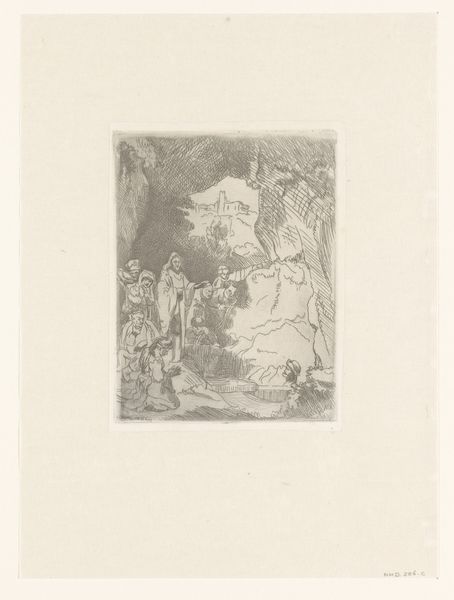
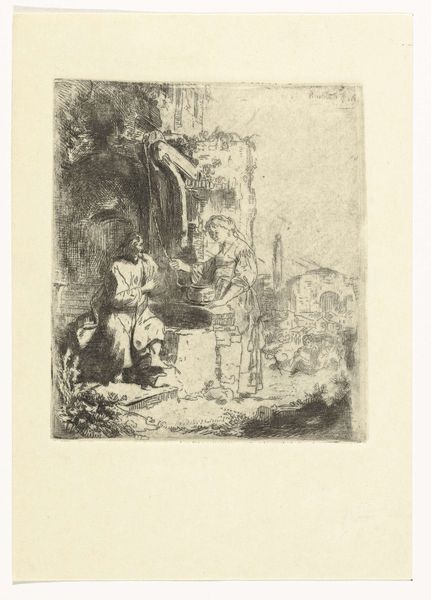
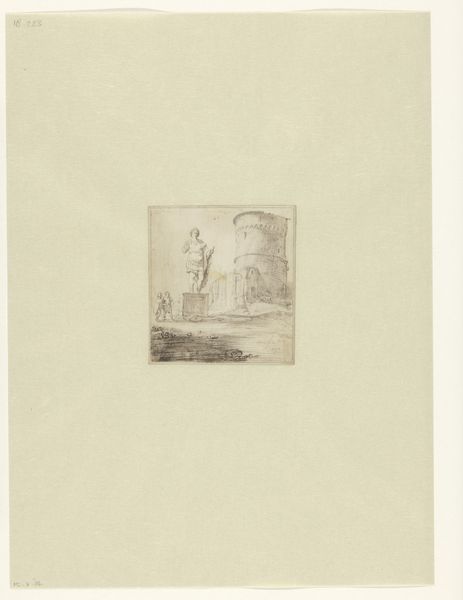
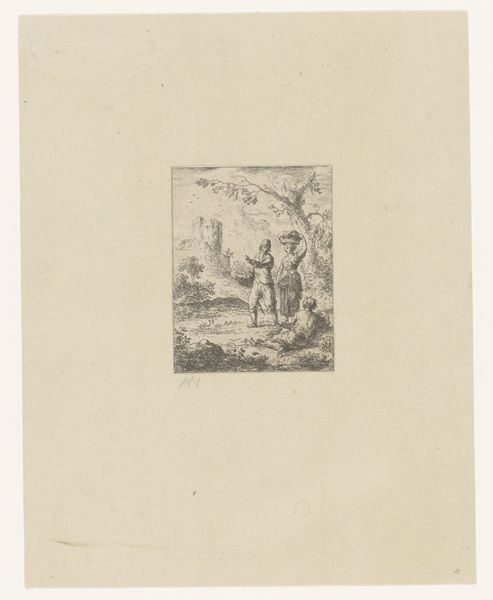
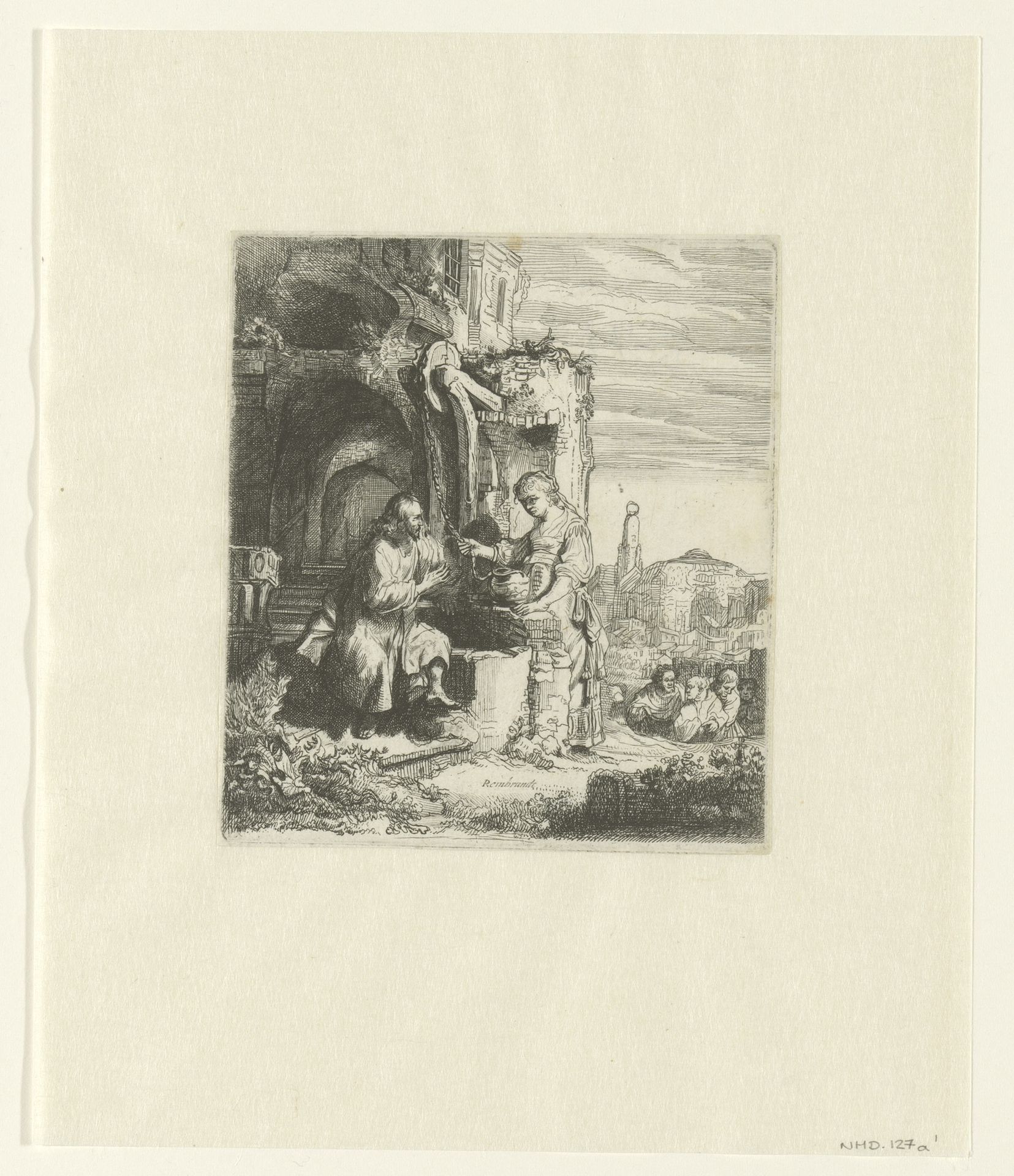
Christ and the woman of Samaria among ruins

Cornelis (I) Danckerts
1604 - 1656Location
RijksmuseumListen to curator's interpretation
Curatorial notes
Cornelis Danckerts etched this image of Christ and the Woman of Samaria amidst classical ruins in the 17th century. Here, the well, a prominent symbol, is not merely a source of physical water, but a fount of spiritual nourishment. The woman offers Christ water in exchange for his wisdom. Notice how this echoes ancient Greek iconography, where offering water signifies hospitality and wisdom, a silent dialogue between two worlds. In earlier times, the well was a sacred place, guarded by nymphs; it was seen as a source of life. The ruins encompassing the figures carry an emotional weight. Ruins represent a fallen golden age, yet, paradoxically, they provide the setting for spiritual renewal. This juxtaposition evokes a deep, subconscious understanding of the cyclical nature of history, where the past constantly informs the present. This scene engages viewers on a profound level, stirring a collective memory of civilizations risen and fallen. The well continues to resurface, evolving from a pagan symbol of life to a Christian emblem of spiritual sustenance. It reflects our enduring quest for meaning and connection, passed down through history, shifting in meaning, yet perpetually relevant.