1582
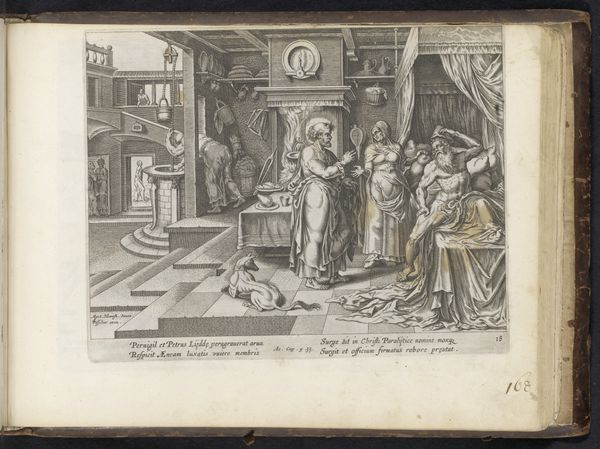
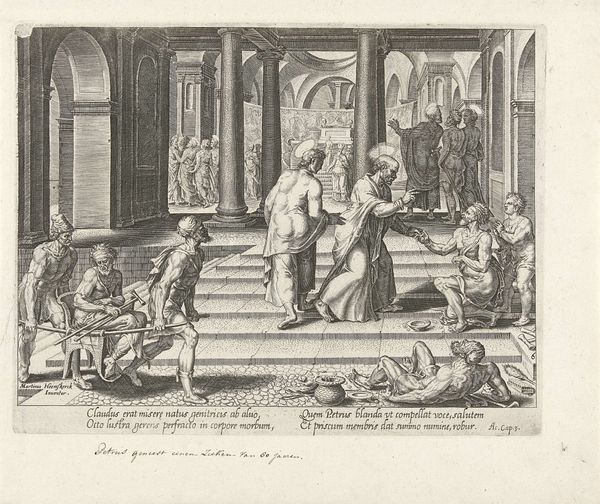
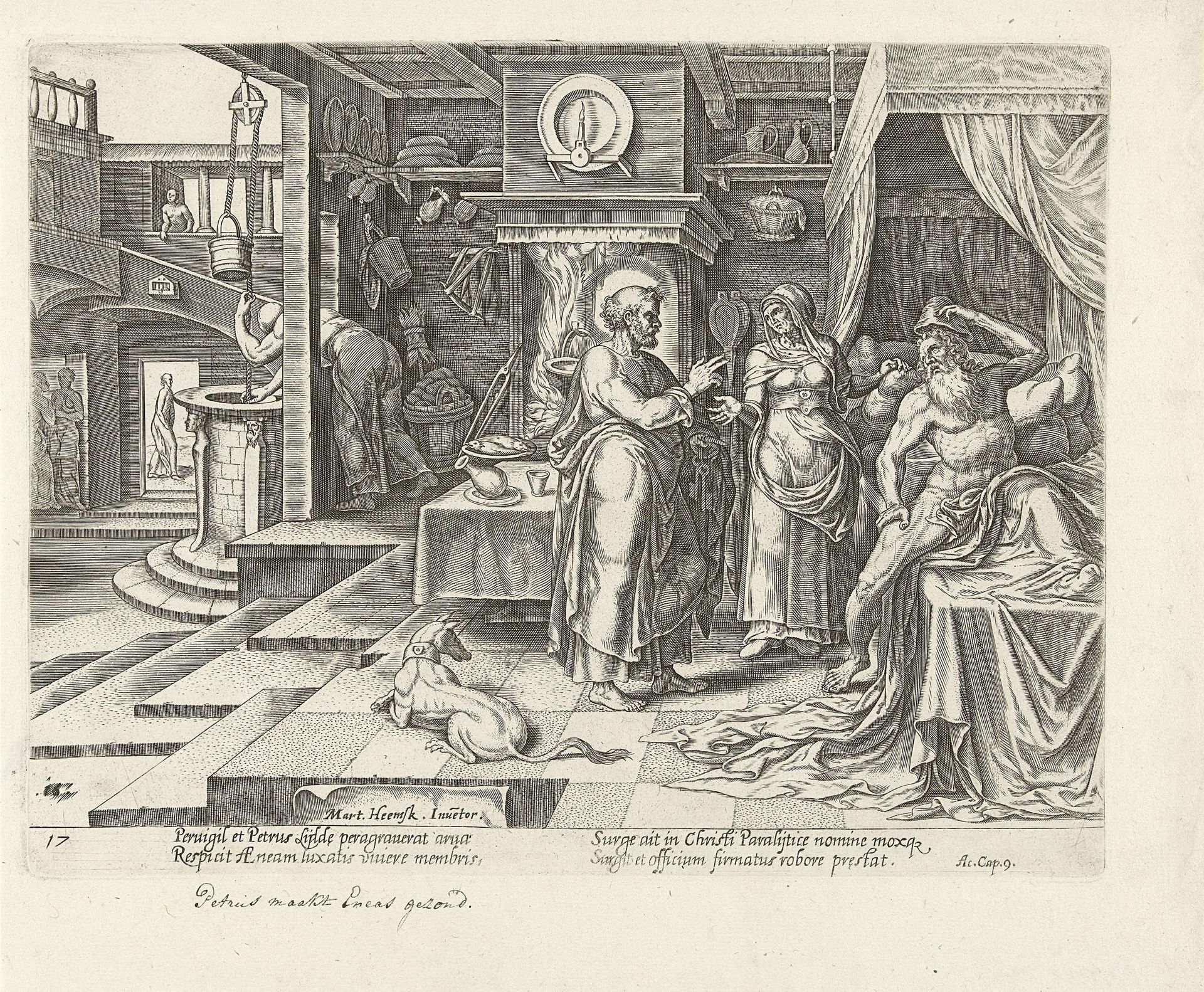
Petrus geneest Eneas

Philips Galle
1537 - 1612Location
RijksmuseumListen to curator's interpretation
Curatorial notes
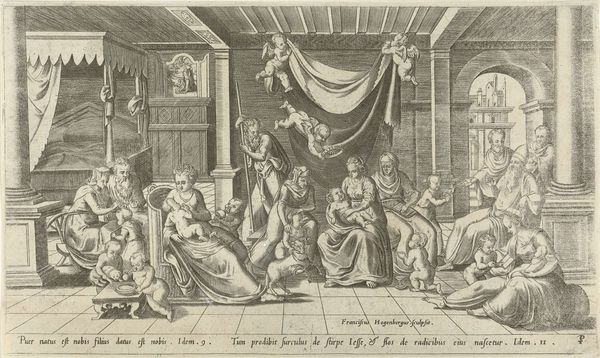
Philips Galle made this print, Petrus geneest Eneas, sometime before 1612. He worked in a medium that was then at the cutting edge: engraving. To make an image like this, the artist would have used a tool called a burin to manually carve lines into a copper plate. Ink would then be applied, and the plate pressed onto paper. Engraving demanded intense concentration and skill. The clarity of line it offered allowed for a very descriptive naturalism, a real selling point in the early modern era. Here, we see not just the biblical scene of Saint Peter healing Aeneas, but also the setting of daily life. Indeed, one might argue that the everyday has become just as important as the miracle itself. Galle has carefully rendered the interior, complete with people drawing water from a well. Prints such as this were luxury goods. Yet they were also relatively accessible, and spread ideas far and wide. Consider the time and labor that went into its production, and the image reveals how an artist could interpret scripture through the technologies of their day.