1864
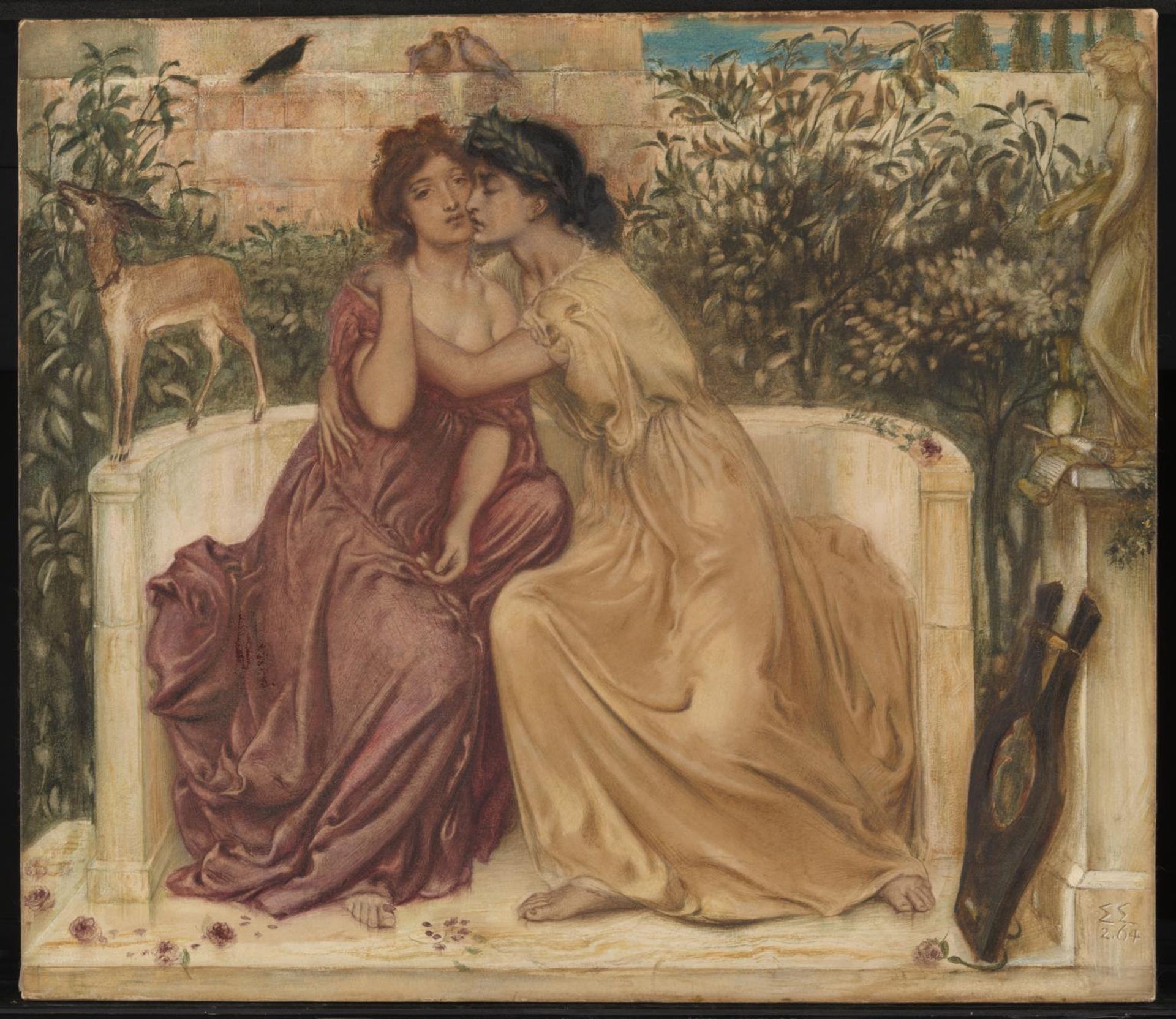
Sappho and Erinna in a Garden at Mytilene


Listen to curator's interpretation
Curatorial notes
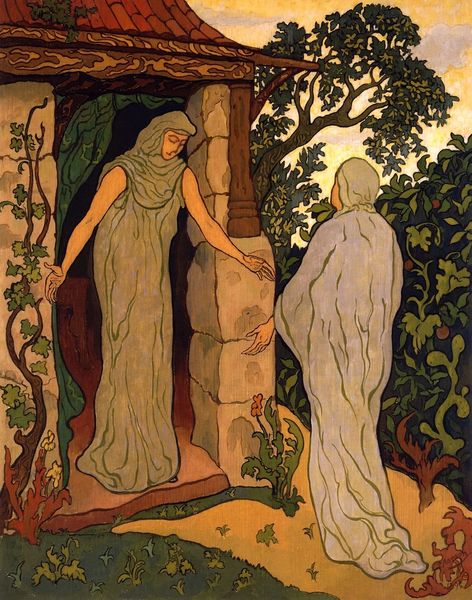
Curator: Simeon Solomon's "Sappho and Erinna in a Garden at Mytilene," housed at the Tate, presents a tender scene. It seems dreamlike, almost muted in its tones. Editor: The use of watercolor and gouache on paperboard is really interesting here, allowing Solomon to achieve that soft, ethereal quality. What’s compelling is how this technique was embraced in a period when Pre-Raphaelite aesthetics valued precision, highlighting the artist's unique approach to materials. Curator: Absolutely. Solomon's work existed within a socio-political landscape deeply concerned with morality and gender roles, so it makes sense that the image itself, the act of depicting Sappho and Erinna in an intimate setting, takes on a historical significance, challenging conventions. Editor: And considering the historical context—Solomon's later personal struggles and social marginalization—the artwork gains even more complexity. The subtle blurring of lines and the emphasis on the intimate connection between the figures speak to a fragility, echoed in his material practice. Curator: It’s interesting to consider how museums display works like this today, reframing historical narratives around sexuality and identity. Editor: Indeed, a testament to how material choices and cultural context can shape our interpretation of art.