About this artwork
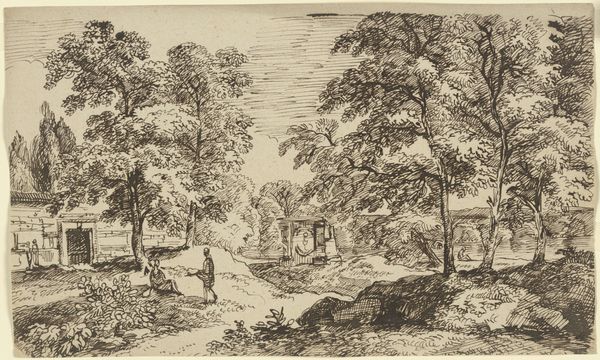
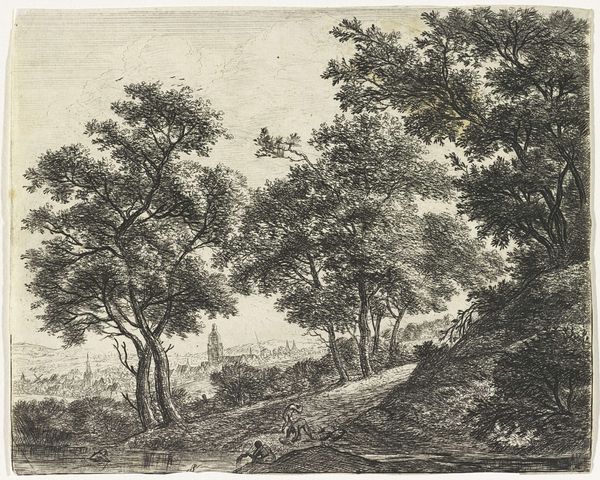
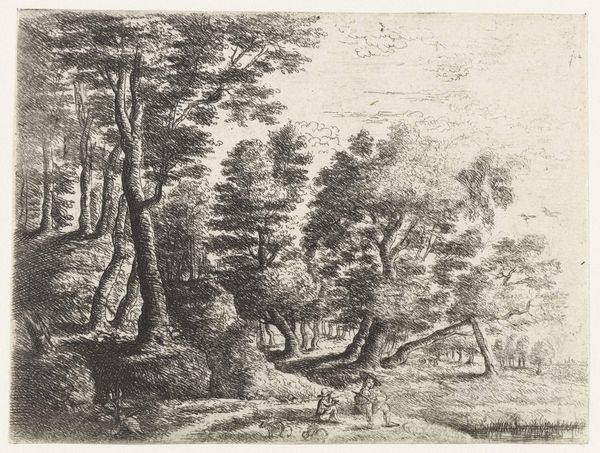
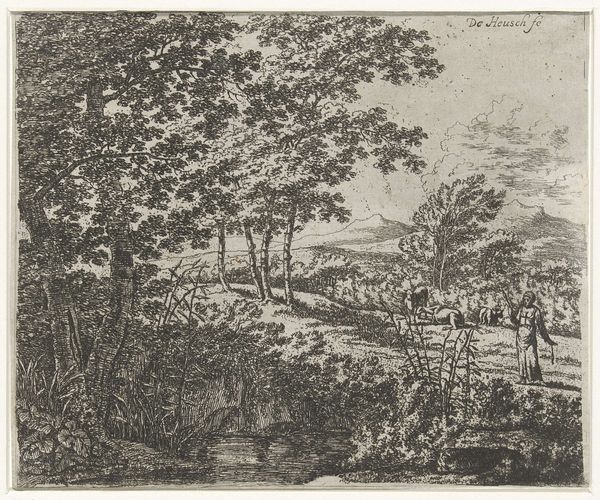
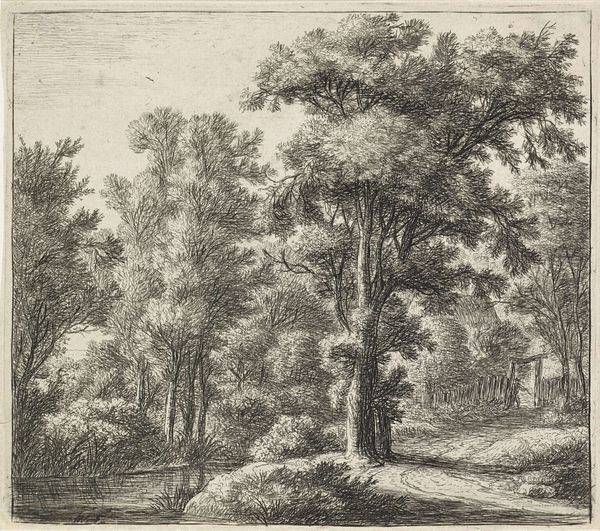
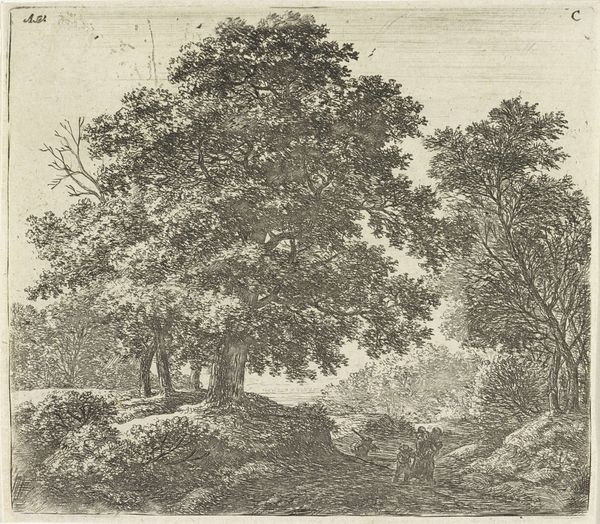
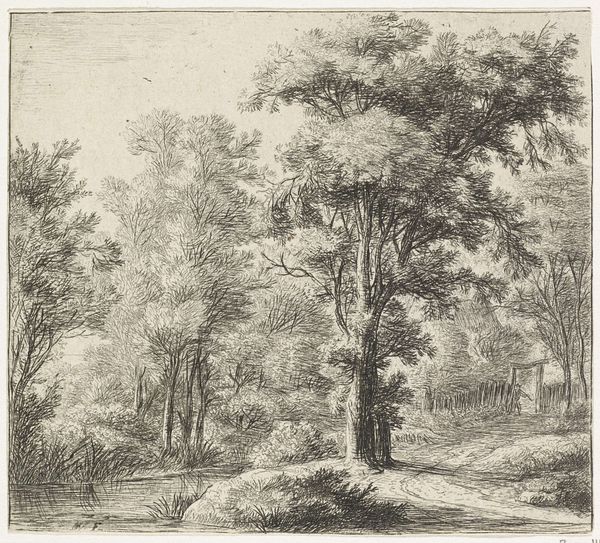
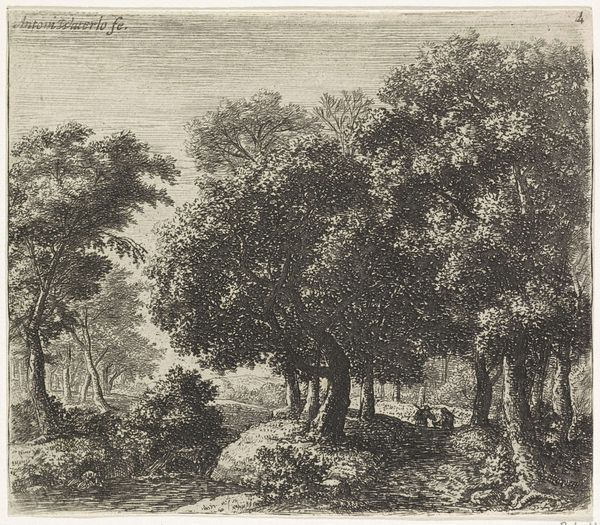
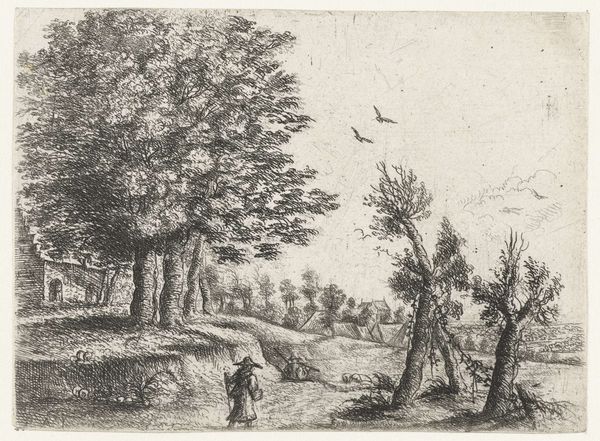
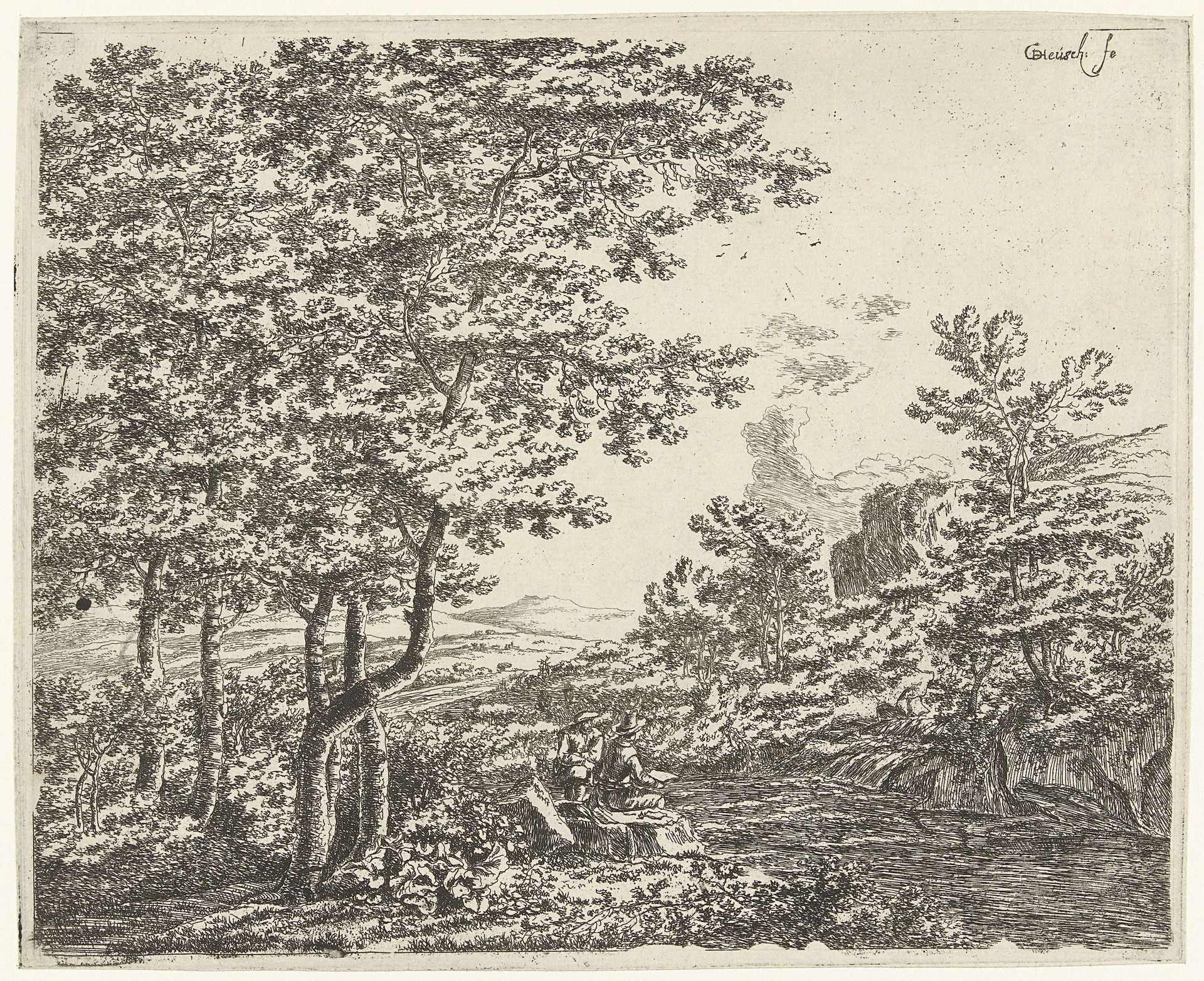
Editor: This is Willem de Heusch's "Landschap met een tekenaar," or "Landscape with a Draftsman," made before 1690. It’s a pen drawing, and the detail achieved with just the pen work is really striking. What's your take on this piece? Curator: For me, it is all about the process. Look at how the landscape becomes both subject and object, the very stuff of art and the environment of its creation collapsing in on one another. Here's an artist within the artwork making art itself, thus self-consciously showing his labour, making the process overt. Where do we see other evidence of labor here? Editor: Well, there’s incredible detail, suggesting painstaking hours. Also, doesn’t the fact that it's a drawing—a medium often considered preparatory— rather than a finished painting also point to an emphasis on the act of creating? Curator: Precisely. And think about the paper itself, its source, its cost in the 17th century. The social context and the means of artistic production meet and speak of materiality as paramount. Consider the consumption implied: who would have been this artwork's consumer? Why such painstaking detail, if it were just a study? Editor: Perhaps it was intended for a collector who appreciated skill and process as much as the final image? Or maybe for personal enjoyment and reflection? It makes me think differently about drawings I’ve seen; what I thought was simple becomes rich with labor. Curator: Yes, this focus on labor and materiality shifts our understanding from just *what* is depicted to *how* and *why* it was made. And that shift informs how we see all art from this era. Editor: I see what you mean. Thinking about the context of production really opens up new ways of understanding the artwork.

Artwork details
- Medium
- drawing, pen
- Dimensions
- height 191 mm, width 235 mm
- Copyright
- Rijks Museum: Open Domain
Tags
landscape illustration sketch
drawing
pen drawing
dutch-golden-age
mechanical pen drawing
pen illustration
pen sketch
pencil sketch
landscape
personal sketchbook
pen-ink sketch
line
pen work
sketchbook drawing
pen
realism
Comments
No comments
About this artwork
Editor: This is Willem de Heusch's "Landschap met een tekenaar," or "Landscape with a Draftsman," made before 1690. It’s a pen drawing, and the detail achieved with just the pen work is really striking. What's your take on this piece? Curator: For me, it is all about the process. Look at how the landscape becomes both subject and object, the very stuff of art and the environment of its creation collapsing in on one another. Here's an artist within the artwork making art itself, thus self-consciously showing his labour, making the process overt. Where do we see other evidence of labor here? Editor: Well, there’s incredible detail, suggesting painstaking hours. Also, doesn’t the fact that it's a drawing—a medium often considered preparatory— rather than a finished painting also point to an emphasis on the act of creating? Curator: Precisely. And think about the paper itself, its source, its cost in the 17th century. The social context and the means of artistic production meet and speak of materiality as paramount. Consider the consumption implied: who would have been this artwork's consumer? Why such painstaking detail, if it were just a study? Editor: Perhaps it was intended for a collector who appreciated skill and process as much as the final image? Or maybe for personal enjoyment and reflection? It makes me think differently about drawings I’ve seen; what I thought was simple becomes rich with labor. Curator: Yes, this focus on labor and materiality shifts our understanding from just *what* is depicted to *how* and *why* it was made. And that shift informs how we see all art from this era. Editor: I see what you mean. Thinking about the context of production really opens up new ways of understanding the artwork.
Comments
No comments