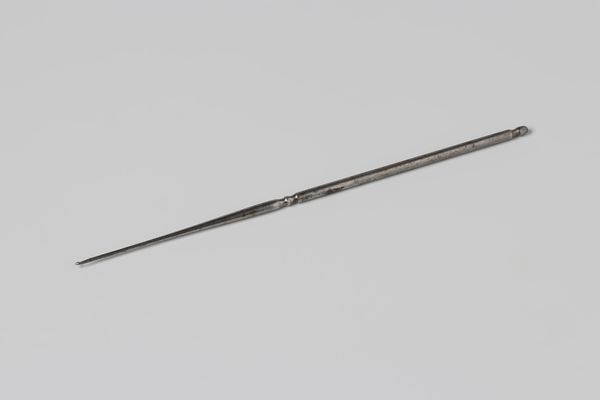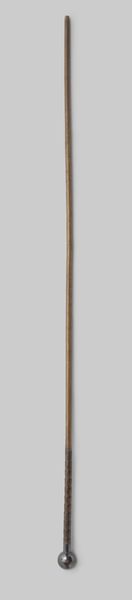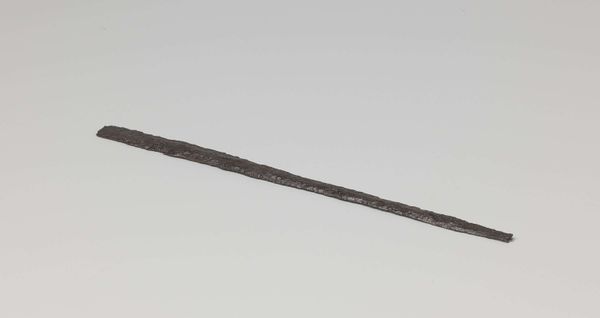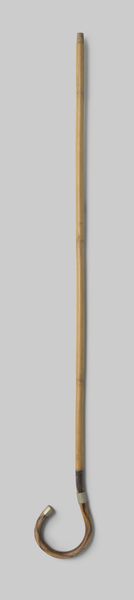
c. 1590 - 1596
Navigation

Listen to curator's interpretation
Curatorial notes
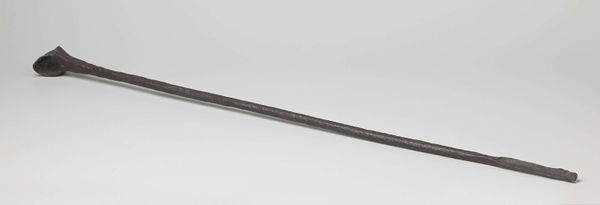
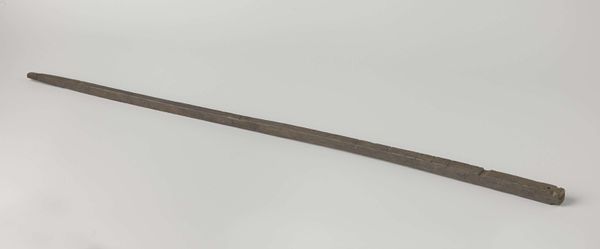
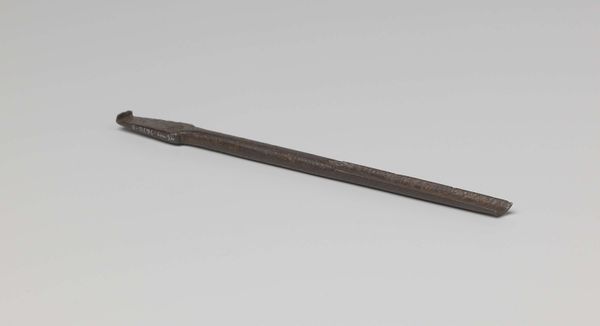
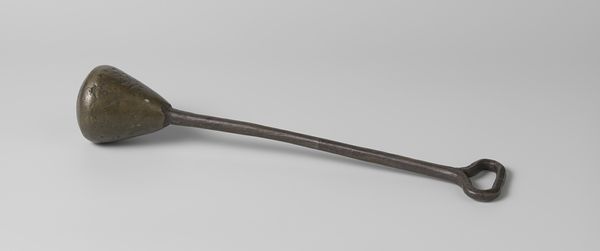
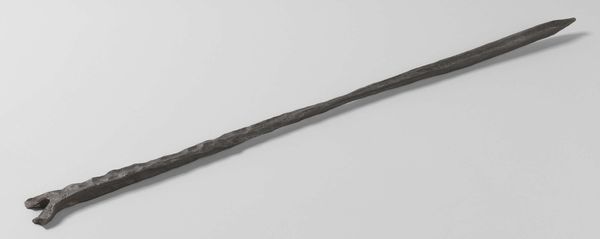
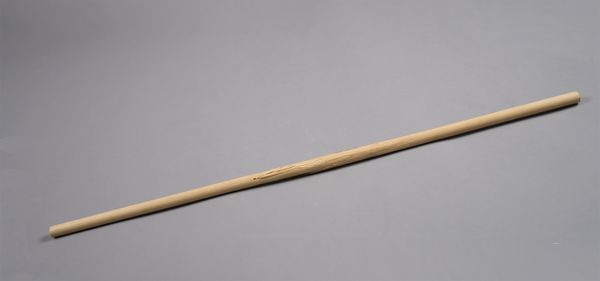
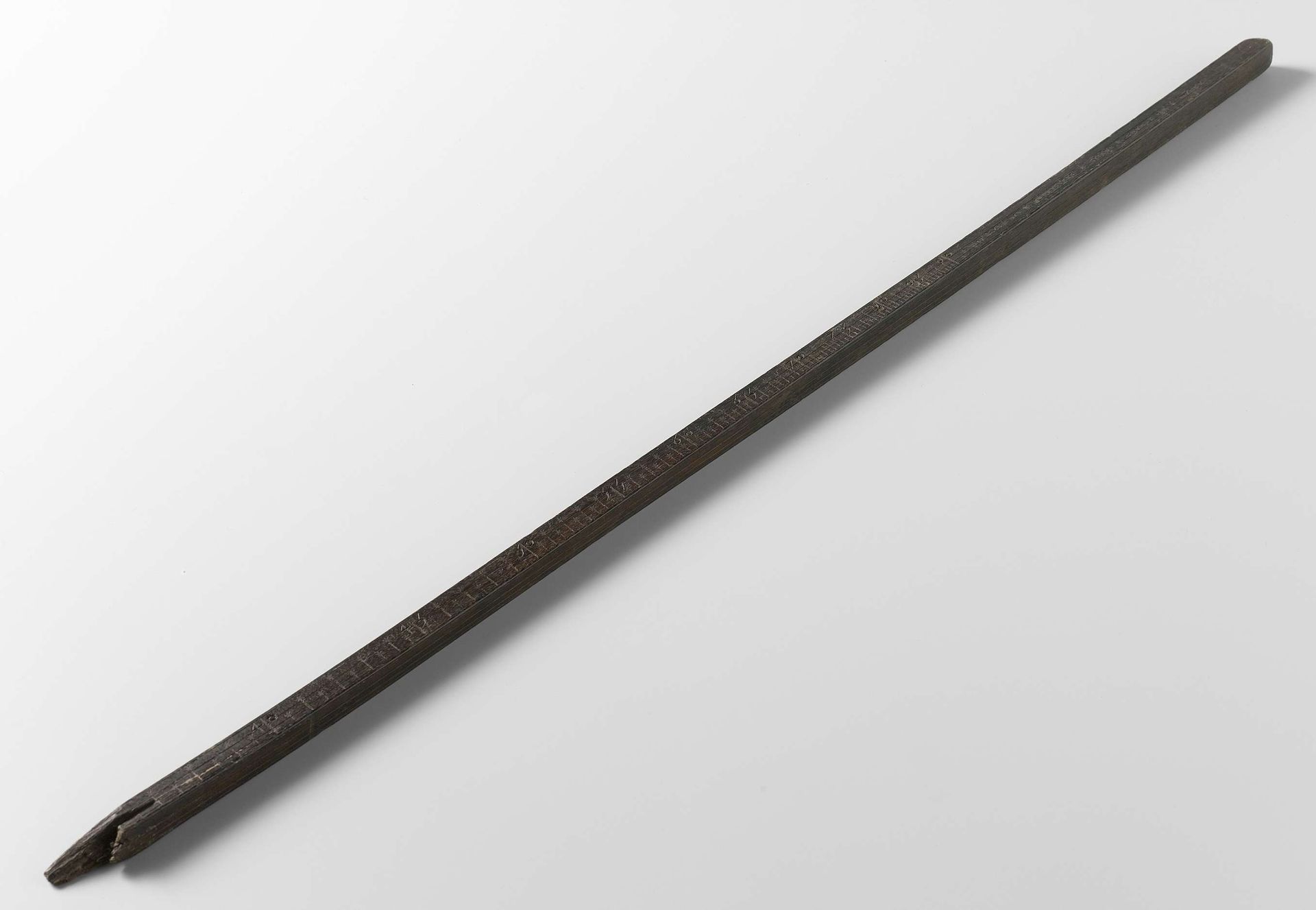
This wooden Jacob’s staff was made by Claes Andrieszoon Goutum, but the exact date of its creation is unknown. Navigation tools like this one reflect the enormous cultural and economic shifts taking place in the early modern period as the Dutch became a dominant force in global maritime trade. This staff would have been used to measure the angle between a celestial body, like the sun or a star, and the horizon. It speaks to the complexities of early navigation, where sailors had to master mathematical concepts and precision while enduring long journeys, often under harsh conditions. What did it feel like for those aboard the ships, as they looked through their instruments up to the skies? The Jacob’s staff also evokes a painful history. These navigation skills enabled the development of trade routes, but also facilitated the transatlantic slave trade and other forms of exploitation. The intimacy of this object—the way it was held and used—forces us to reflect on the human costs of exploration and commerce. It serves as a reminder of how scientific advancement can be entangled with both progress and oppression.