About this artwork
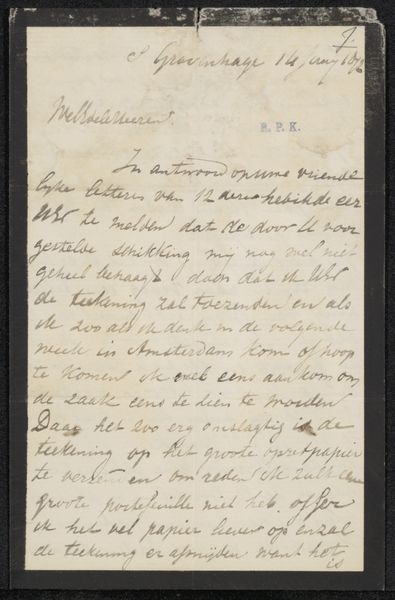
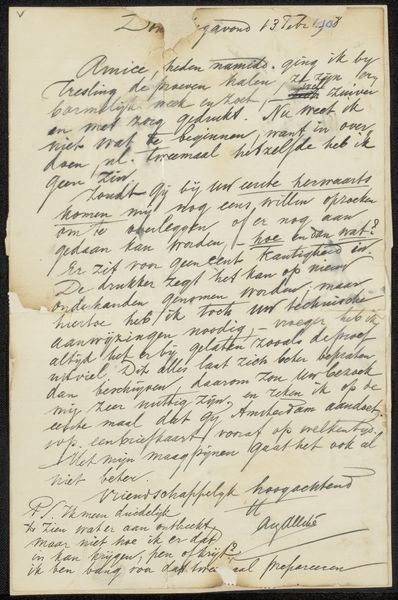
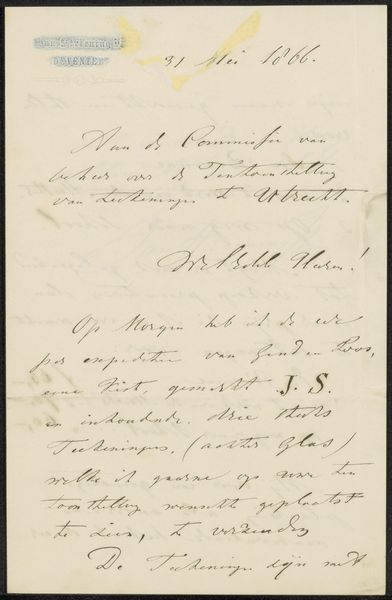
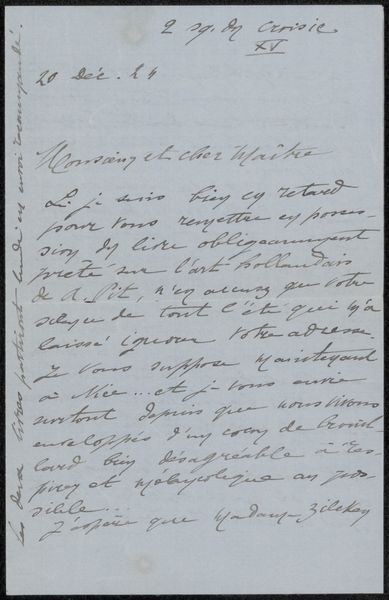
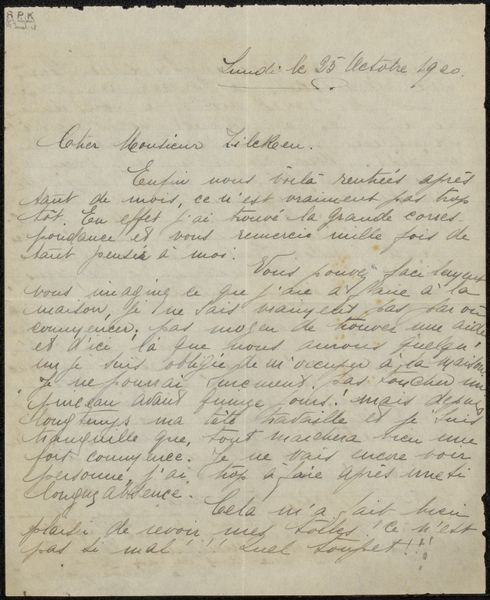
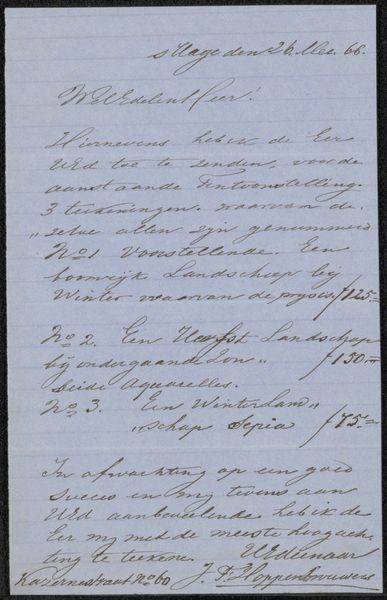
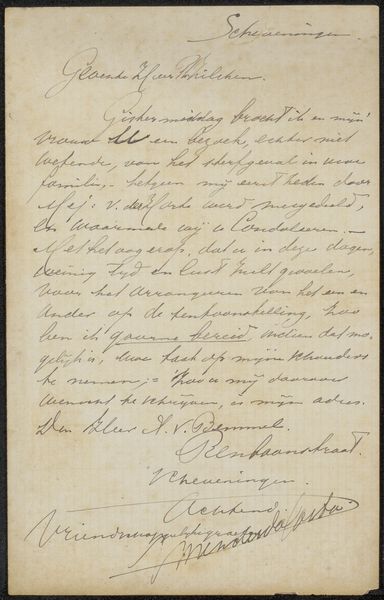
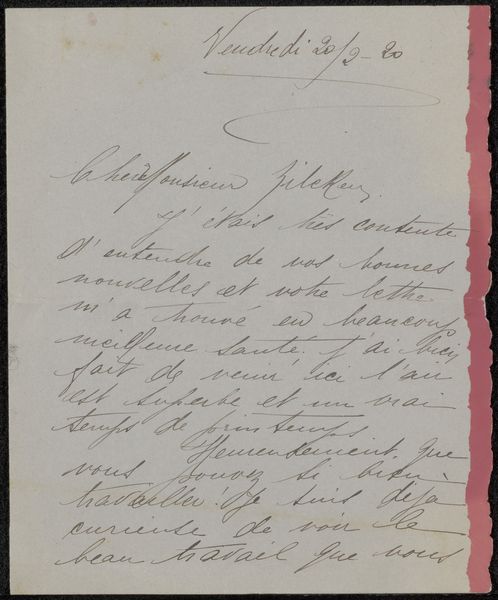
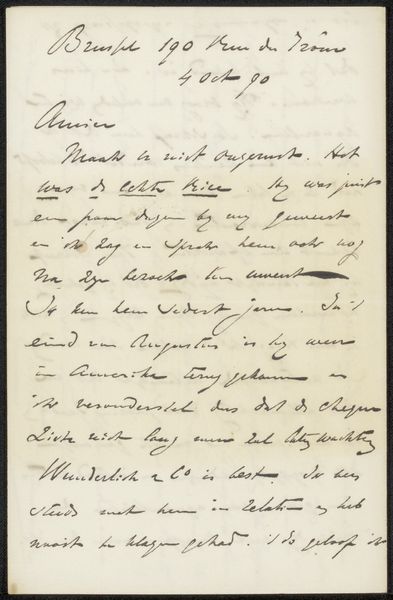
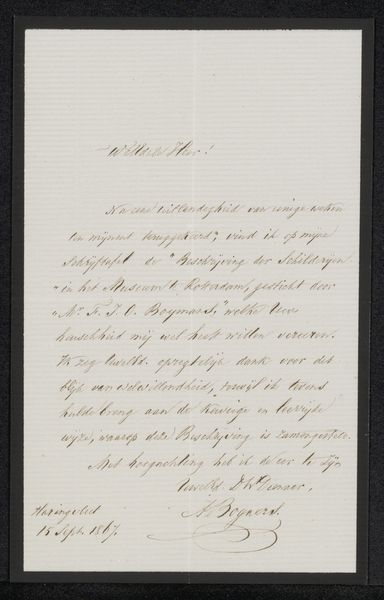
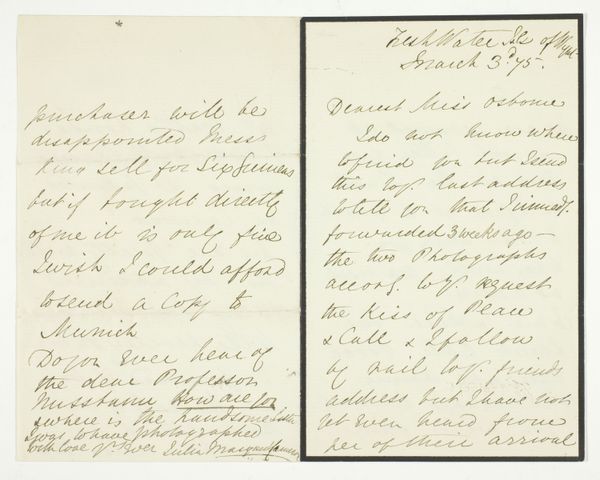
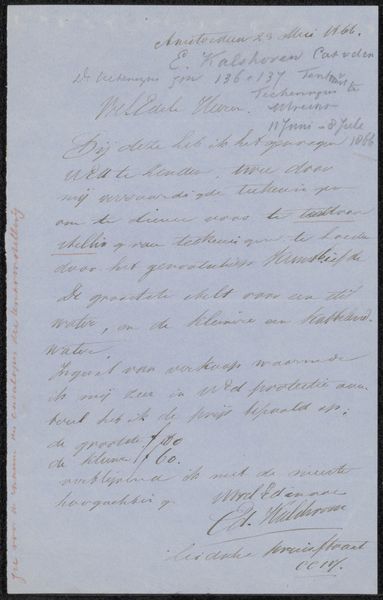
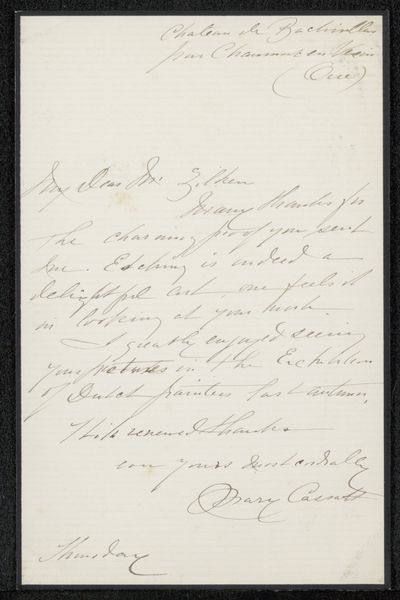
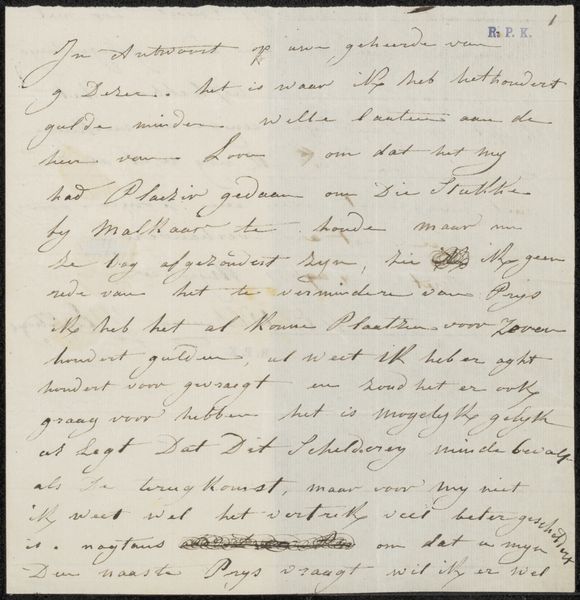
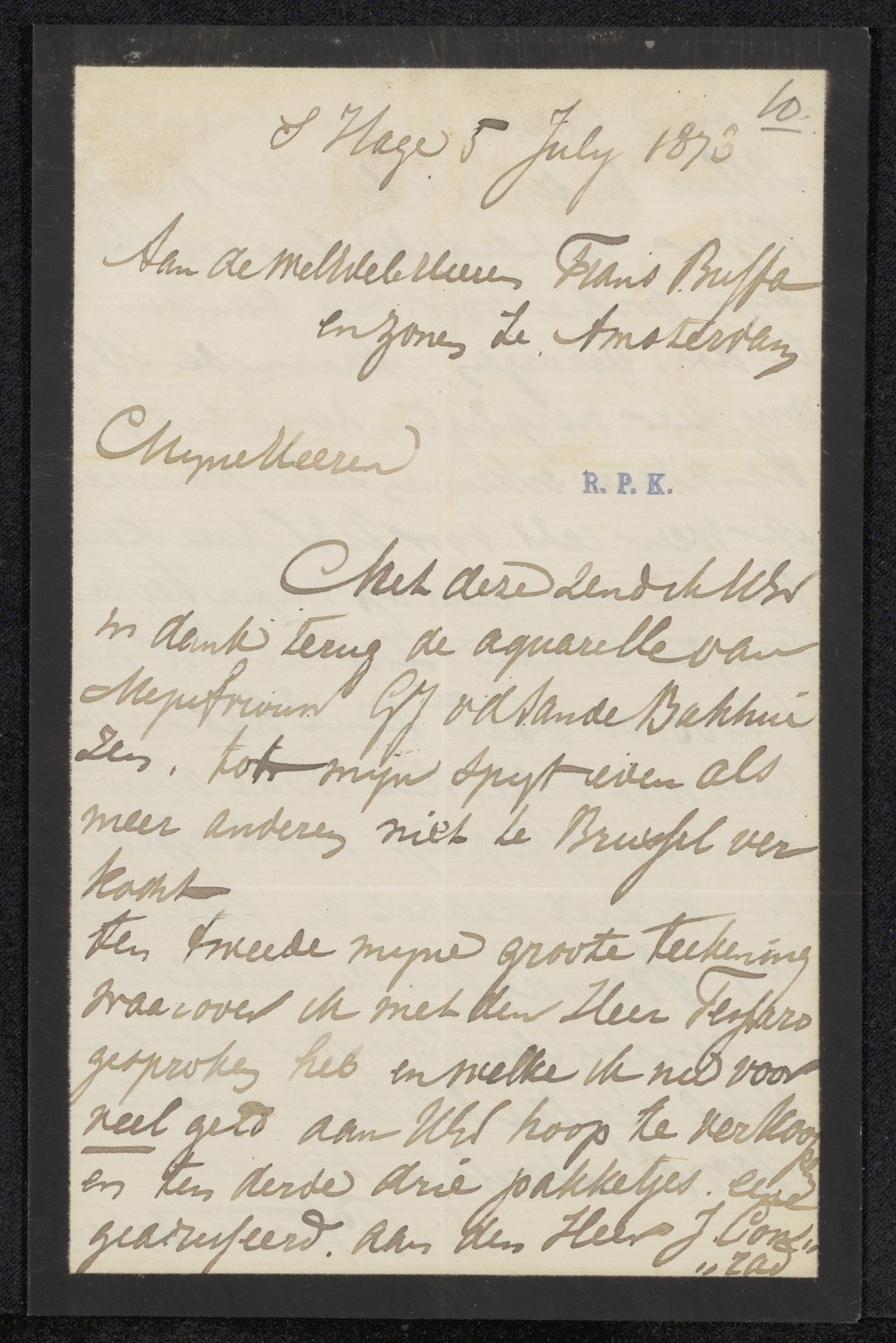
This letter, written by Pieter Stortenbeker on July 5, 1872, captivates us through its linear composition, its subdued coloration and the textural contrast between the paper and the ink. The artist's script sprawls fluidly across the page, with a light brown ink forming looping lines and compact clusters of letters. Consider how the formal elements of the letter—the careful arrangement of text, the precise handwriting—serve not just a communicative function but also an aesthetic one. The lines of the writing, their density and spacing, might be interpreted as a semiotic system, each stroke and curve conveying intention and nuance. The interplay of visual elements challenges the traditional hierarchies of art, where painting or sculpture might be privileged over written correspondence. By presenting a letter in a museum setting, Stortenbeker destabilizes the established categories, inviting viewers to reconsider the artistic potential inherent in everyday forms of communication. It’s a testament to how art can prompt us to question fixed meanings and engage with new ways of thinking about representation.
Brief aan Frans Buffa en Zonen
Possibly 1873 - 1877

Pieter Stortenbeker
1828 - 1898Location
RijksmuseumArtwork details
- Medium
- drawing, paper, ink
- Location
- Rijksmuseum
- Copyright
- Rijks Museum: Open Domain
Tags
portrait
drawing
paper
ink
calligraphy
Comments
Be the first to share your thoughts about this work.
About this artwork
This letter, written by Pieter Stortenbeker on July 5, 1872, captivates us through its linear composition, its subdued coloration and the textural contrast between the paper and the ink. The artist's script sprawls fluidly across the page, with a light brown ink forming looping lines and compact clusters of letters. Consider how the formal elements of the letter—the careful arrangement of text, the precise handwriting—serve not just a communicative function but also an aesthetic one. The lines of the writing, their density and spacing, might be interpreted as a semiotic system, each stroke and curve conveying intention and nuance. The interplay of visual elements challenges the traditional hierarchies of art, where painting or sculpture might be privileged over written correspondence. By presenting a letter in a museum setting, Stortenbeker destabilizes the established categories, inviting viewers to reconsider the artistic potential inherent in everyday forms of communication. It’s a testament to how art can prompt us to question fixed meanings and engage with new ways of thinking about representation.
Comments
Be the first to share your thoughts about this work.