About this artwork
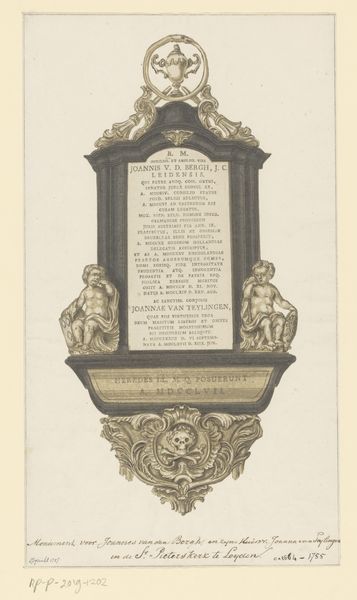
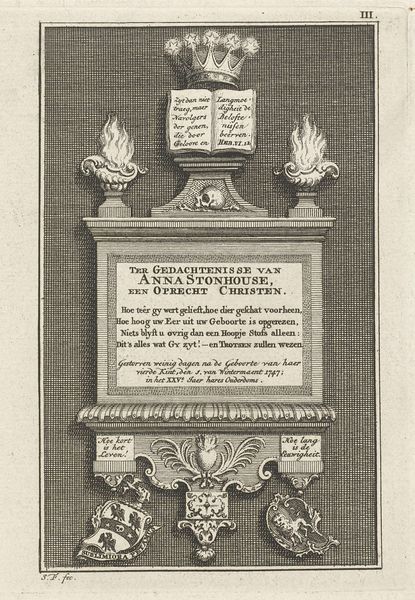
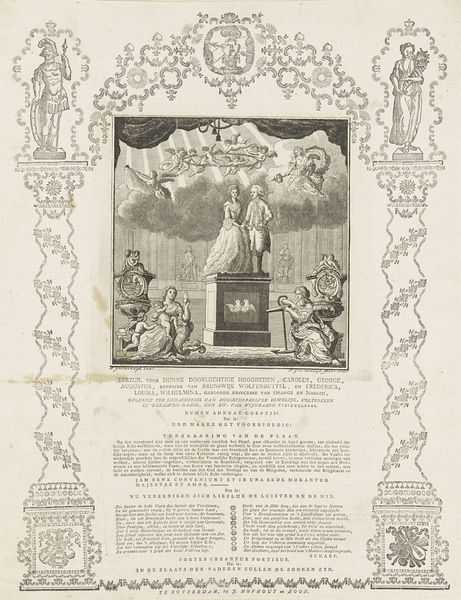
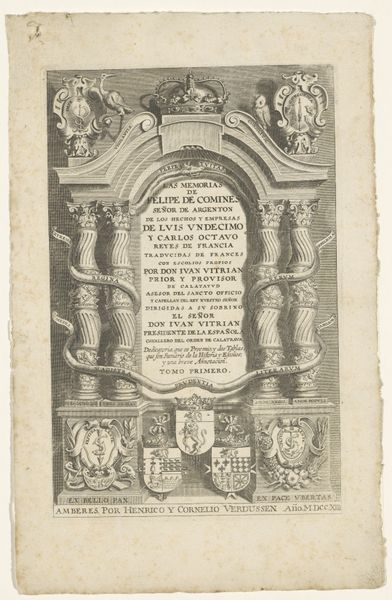
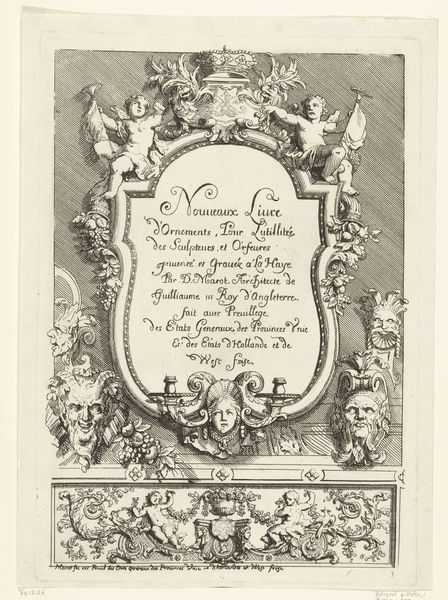
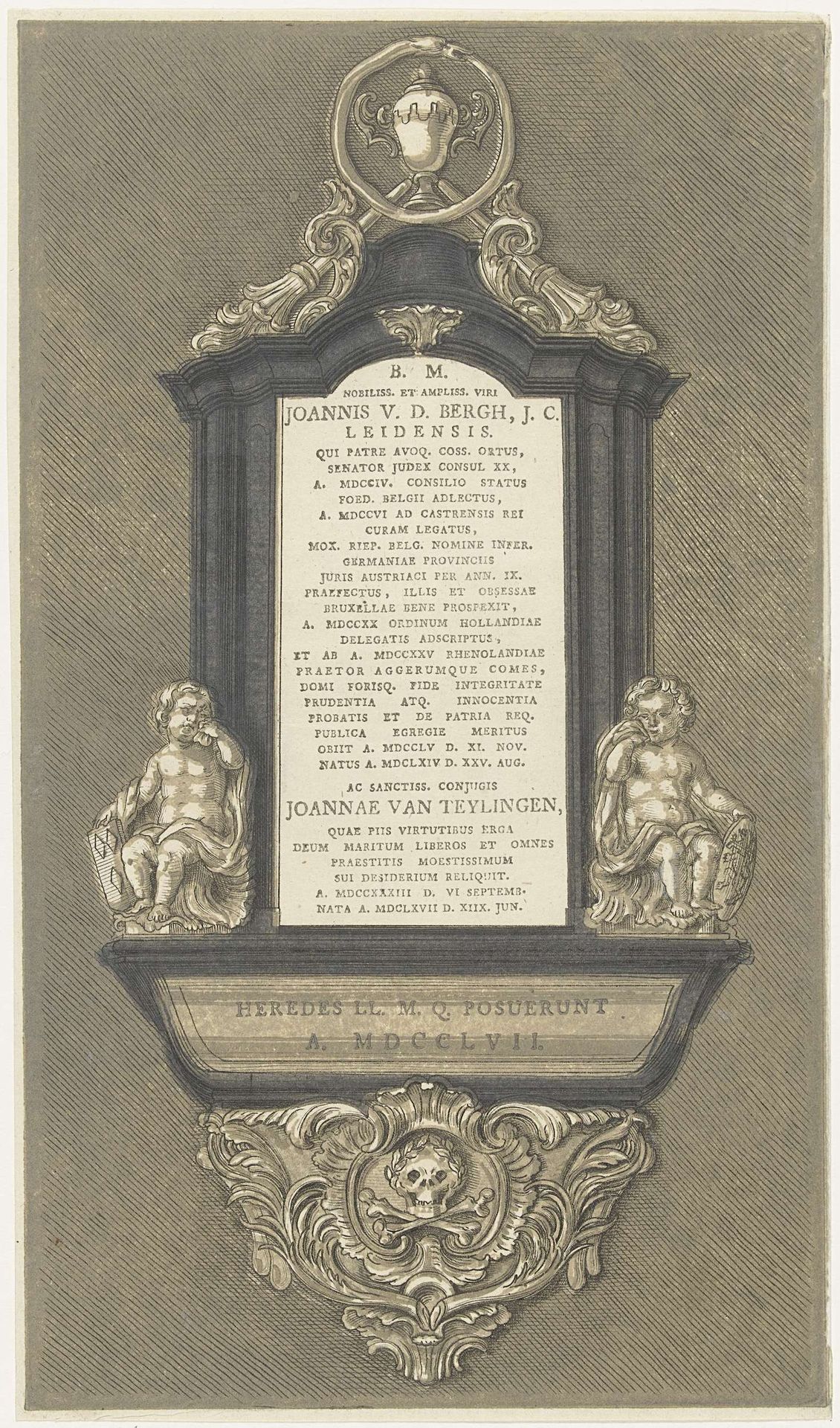
Curator: Here we have "Grafmonument voor Johannes van den Bergh en zijn vrouw Joanna van Teylingen te Leiden," an engraving from the late 18th or early 19th century by Abraham Delfos, currently held at the Rijksmuseum. Editor: This is a rather ornate piece. The skull and crossbones at the bottom give it a somber tone. What can you tell me about this work? Curator: Look closely at the layers of detail and the contrasting textures. This isn't simply an image; it's a record of labor, both artistic and societal. The carving into metal and printmaking processes themselves suggest a hierarchy, reflecting the social structures of the time. What do you think the choice of materials might communicate about Johannes van den Bergh and his wife? Editor: Well, the choice of a print perhaps suggests accessibility, though the elaborate design speaks to wealth. Does the monument commemorate their status or just their lives? Curator: Exactly! The production and consumption of such an elaborate memorial underscores their place in the social order. Consider also the artistic skill involved in creating this level of detail using engraving techniques. Do you see how the "high" art of memorial portraiture intertwines with the skilled labor of craft? Editor: So it is not just about remembrance, but also about demonstrating power and the fruits of one's labor via a complex system of artistic production and consumption? Curator: Precisely. We can analyze how materials and processes in art were deployed to uphold social norms, not just reflect them. Editor: That's a fascinating way to look at it. I never thought about an engraving as being reflective of so many different tiers of production and meaning! Curator: Seeing the artwork through the lens of materials and their manipulation opens up exciting possibilities for interpretation.
Grafmonument voor Johannes van den Bergh en zijn vrouw Joanna van Teylingen te Leiden
1757 - 1820

Abraham Delfos
1731 - 1820Location
RijksmuseumArtwork details
- Dimensions
- height 294 mm, width 171 mm
- Location
- Rijksmuseum
- Copyright
- Rijks Museum: Open Domain
Comments
Share your thoughts
About this artwork
Curator: Here we have "Grafmonument voor Johannes van den Bergh en zijn vrouw Joanna van Teylingen te Leiden," an engraving from the late 18th or early 19th century by Abraham Delfos, currently held at the Rijksmuseum. Editor: This is a rather ornate piece. The skull and crossbones at the bottom give it a somber tone. What can you tell me about this work? Curator: Look closely at the layers of detail and the contrasting textures. This isn't simply an image; it's a record of labor, both artistic and societal. The carving into metal and printmaking processes themselves suggest a hierarchy, reflecting the social structures of the time. What do you think the choice of materials might communicate about Johannes van den Bergh and his wife? Editor: Well, the choice of a print perhaps suggests accessibility, though the elaborate design speaks to wealth. Does the monument commemorate their status or just their lives? Curator: Exactly! The production and consumption of such an elaborate memorial underscores their place in the social order. Consider also the artistic skill involved in creating this level of detail using engraving techniques. Do you see how the "high" art of memorial portraiture intertwines with the skilled labor of craft? Editor: So it is not just about remembrance, but also about demonstrating power and the fruits of one's labor via a complex system of artistic production and consumption? Curator: Precisely. We can analyze how materials and processes in art were deployed to uphold social norms, not just reflect them. Editor: That's a fascinating way to look at it. I never thought about an engraving as being reflective of so many different tiers of production and meaning! Curator: Seeing the artwork through the lens of materials and their manipulation opens up exciting possibilities for interpretation.
Comments
Share your thoughts