About this artwork
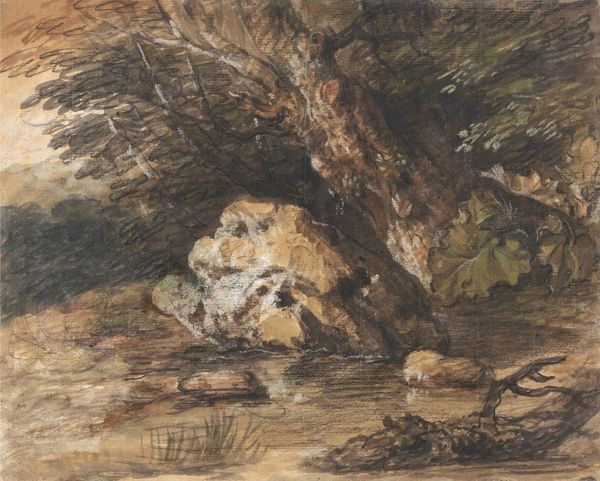
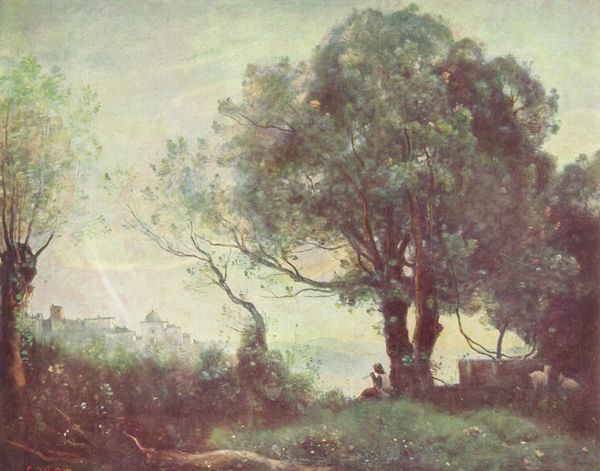
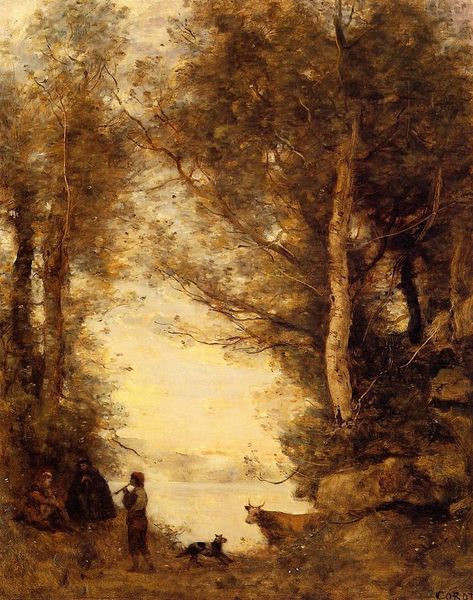
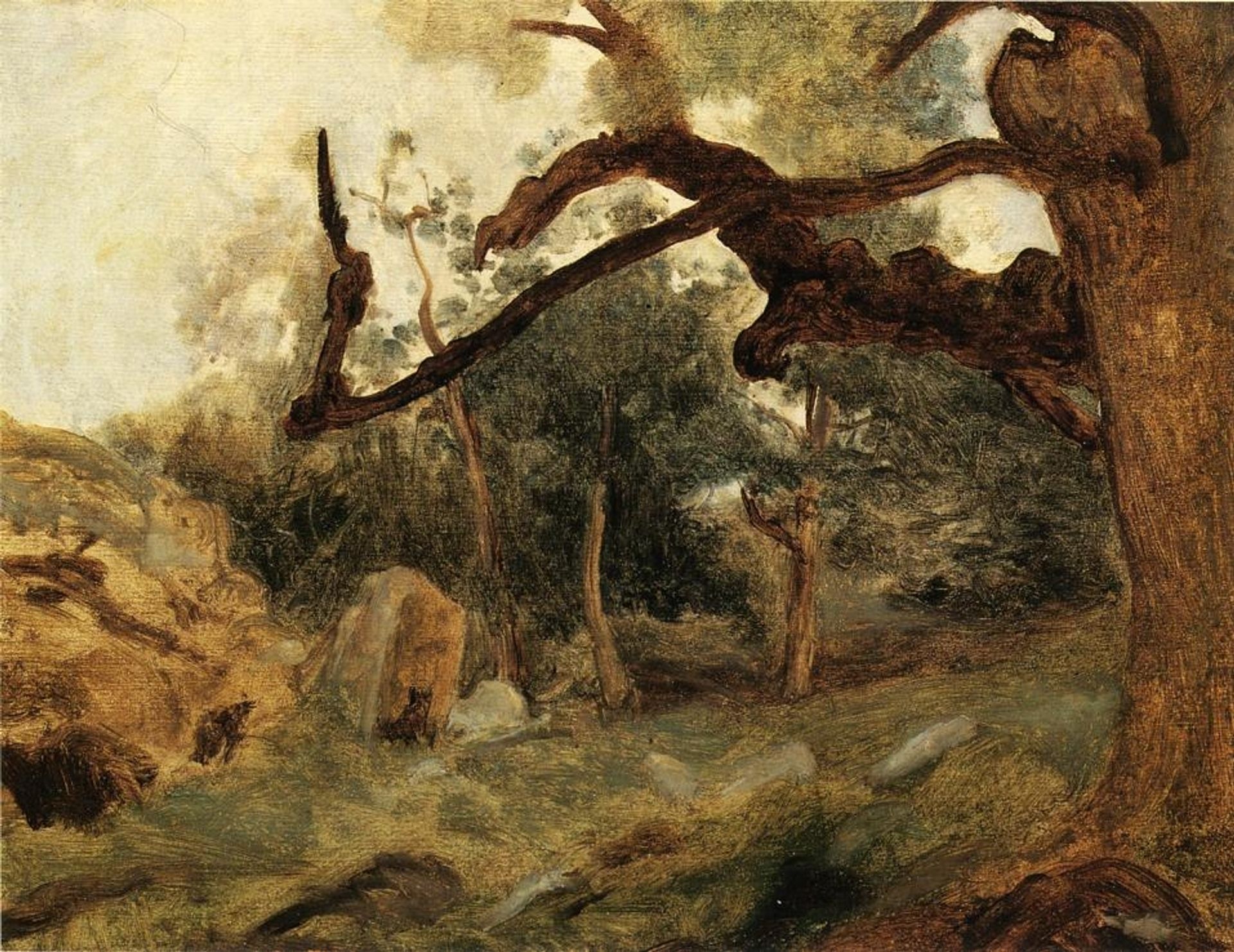
Camille Corot, a 19th-century French painter, captured this view of the Fontainebleau forest, a place of solace and artistic inspiration for many. This painting moves beyond a mere landscape, inviting us to consider the relationship between nature and identity. In a rapidly industrializing world, Corot turns to the forest, a space often associated with freedom. Yet, even here, there is a sense of complexity. The twisted tree in the foreground speaks of time, struggle, and resilience, as if bearing witness to the changing world. Corot’s delicate brushstrokes create a soft and contemplative mood. The forest becomes a place of refuge, a space for introspection. "I never hurry to reach details," Corot once said. "First of all I am interested in the large masses and the general character of a picture.” The painting remains relevant, prompting us to reflect on our connection to nature and the enduring power of art to evoke emotion, memory, and a sense of belonging.
L Arbre Tordu, Les Chenes du Mont Usey, Fontainebleau 1855

Camille Corot
1796 - 1875Location
Private CollectionArtwork details
- Dimensions
- 30.5 x 41.9 cm
- Location
- Private Collection
- Copyright
- Public domain
Comments
No comments
About this artwork
Camille Corot, a 19th-century French painter, captured this view of the Fontainebleau forest, a place of solace and artistic inspiration for many. This painting moves beyond a mere landscape, inviting us to consider the relationship between nature and identity. In a rapidly industrializing world, Corot turns to the forest, a space often associated with freedom. Yet, even here, there is a sense of complexity. The twisted tree in the foreground speaks of time, struggle, and resilience, as if bearing witness to the changing world. Corot’s delicate brushstrokes create a soft and contemplative mood. The forest becomes a place of refuge, a space for introspection. "I never hurry to reach details," Corot once said. "First of all I am interested in the large masses and the general character of a picture.” The painting remains relevant, prompting us to reflect on our connection to nature and the enduring power of art to evoke emotion, memory, and a sense of belonging.
Comments
No comments