About this artwork
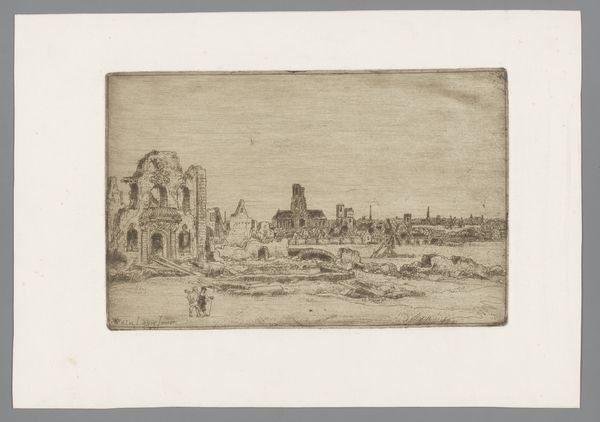
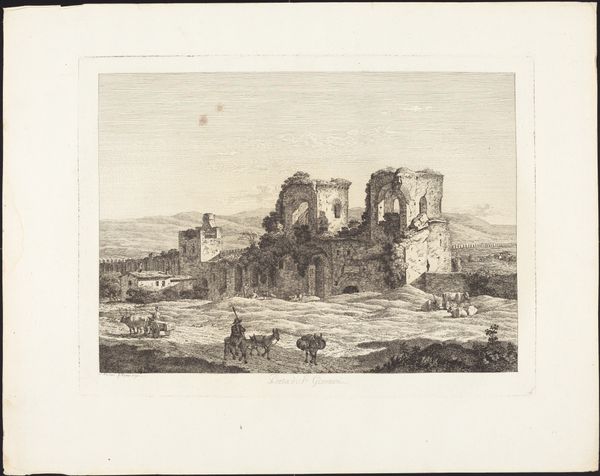
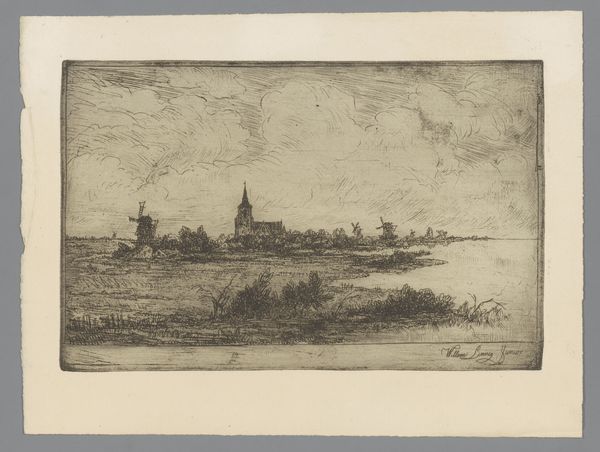
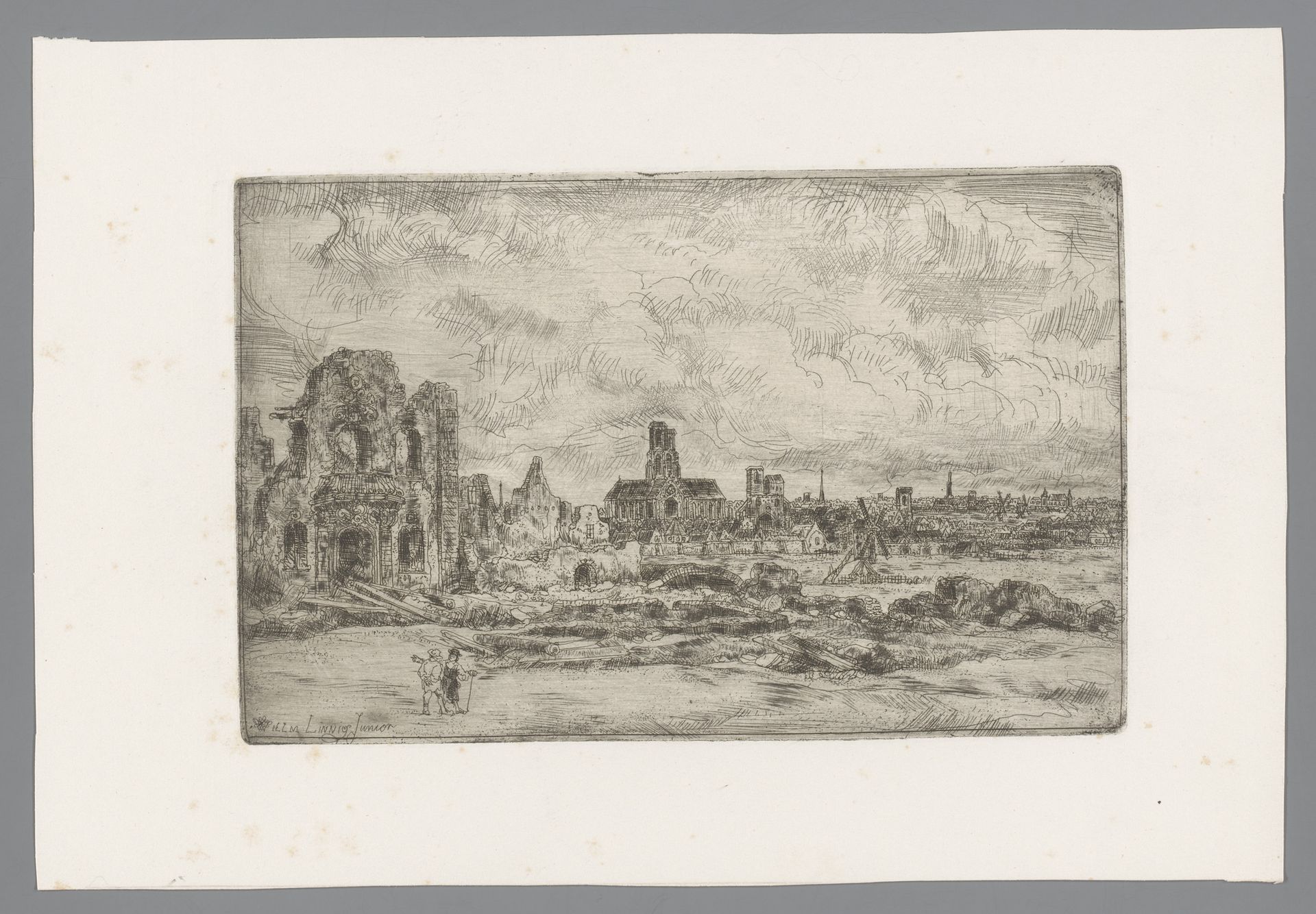
Willem Linnig the Younger created this etching, a cityscape with ruins in the foreground, sometime in the 19th century. Dominating the scene is a ruin, its fractured arches and crumbling walls a stark reminder of time's relentless passage. This ruin, with its palpable sense of decay, speaks volumes. The motif of ruins has long been charged with meaning, surfacing throughout art history. We might recall the Renaissance fascination with classical antiquity, where ruins symbolized both the glory and the ephemerality of human achievement. Yet, here, the emotional resonance is more immediate, more raw. The ruin taps into a deep-seated human fascination with mortality and the transience of earthly power. Consider, too, the figures in the foreground. They are dwarfed by the scale of the devastation, their presence highlighting the human cost of destruction. The ruin is not merely a historical relic; it’s a stage upon which human dramas unfold. The collective memory of such scenes serves as a potent reminder of the cyclical nature of history.
Stadsgezicht met een ruïne en twee figuren op de voorgrond 1852 - 1890

Willem (II) Linnig
1842 - 1890Location
RijksmuseumArtwork details
- Medium
- drawing, print, etching
- Dimensions
- height 137 mm, width 214 mm
- Location
- Rijksmuseum
- Copyright
- Rijks Museum: Open Domain
Tags
drawing
etching
landscape
cityscape
genre-painting
realism
Comments
No comments
About this artwork
Willem Linnig the Younger created this etching, a cityscape with ruins in the foreground, sometime in the 19th century. Dominating the scene is a ruin, its fractured arches and crumbling walls a stark reminder of time's relentless passage. This ruin, with its palpable sense of decay, speaks volumes. The motif of ruins has long been charged with meaning, surfacing throughout art history. We might recall the Renaissance fascination with classical antiquity, where ruins symbolized both the glory and the ephemerality of human achievement. Yet, here, the emotional resonance is more immediate, more raw. The ruin taps into a deep-seated human fascination with mortality and the transience of earthly power. Consider, too, the figures in the foreground. They are dwarfed by the scale of the devastation, their presence highlighting the human cost of destruction. The ruin is not merely a historical relic; it’s a stage upon which human dramas unfold. The collective memory of such scenes serves as a potent reminder of the cyclical nature of history.
Comments
No comments