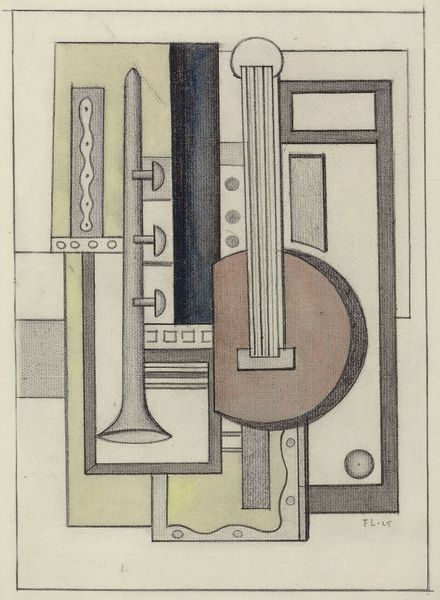
Dimensions: support: 242 x 303 mm frame: 435 x 490 x 20 mm
Copyright: © ADAGP, Paris and DACS, London 2014 | CC-BY-NC-ND 4.0 DEED, Photo: Tate
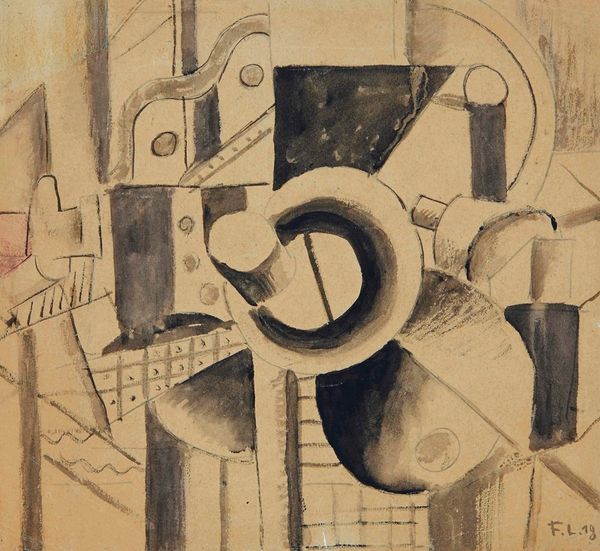
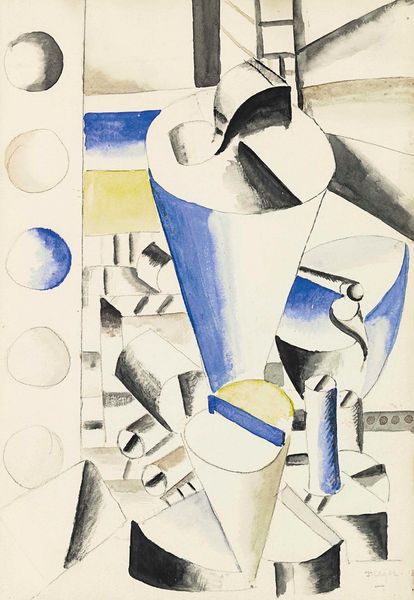
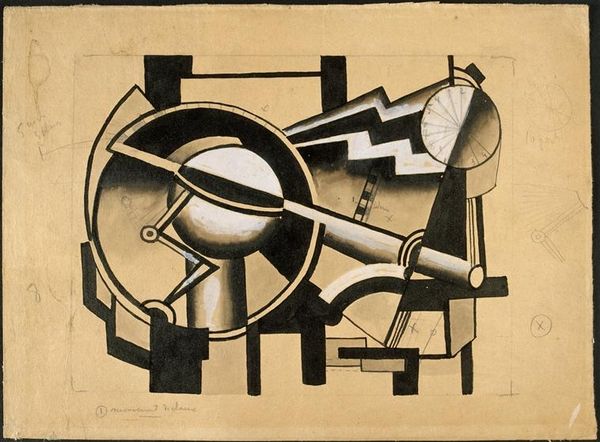
Curator: Fernand Léger's "Mechanical Elements," housed here at the Tate, presents us with a fascinating snapshot of the machine age. Editor: It’s stark, almost cold. But the precision of the lines and the subtle shading are captivating. Curator: Léger was deeply influenced by industrialization. The precise geometric forms and interplay of light and shadow reflect a fascination with the dynamism of machines. This piece really captures that machine aesthetic, doesn't it? Editor: Absolutely. You can almost feel the weight of the metal, the deliberate construction. And I'm curious about the use of pencil – a very deliberate material choice to highlight the process of creation itself. It reminds us that even machines are the product of human labour. Curator: Precisely. In the broader context, Léger's work challenged the traditional hierarchy of art, celebrating the beauty and functionality of the industrial world. Editor: It’s a testament to the beauty found in industry. It's not just about the final product, but about appreciating the craftsmanship, no matter how seemingly mundane. Curator: It's a compelling visual essay on the marriage of art and industry. Editor: A marriage forged in pencil and steel, it seems.
Comments

http://www.tate.org.uk/art/artworks/leger-mechanical-elements-t06798


Join the conversation
Join millions of artists and users on Artera today and experience the ultimate creative platform.
The representation of modern life was a major theme for Léger, who frequently depicted geometrical forms resembling machinery during the late 1910s and 1920s. ‘I have used mechanical elements a lot in my pictures’ he wrote to his dealer Daniel-Henry Kahnweiler. ‘The modern way of life is full of such elements for us; we must know how to use them.’ This drawing is calmer and more restrained than Léger’s earlier Mechanical Elements compositions, perhaps reflecting his close contact in the mid-1920s with the artistic movement known as Purism. Gallery label, March 2008