About this artwork
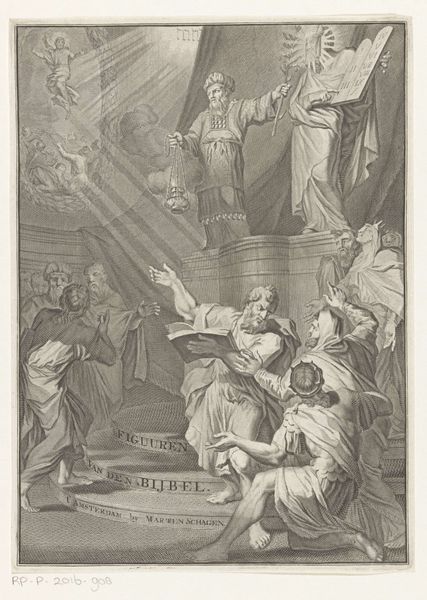
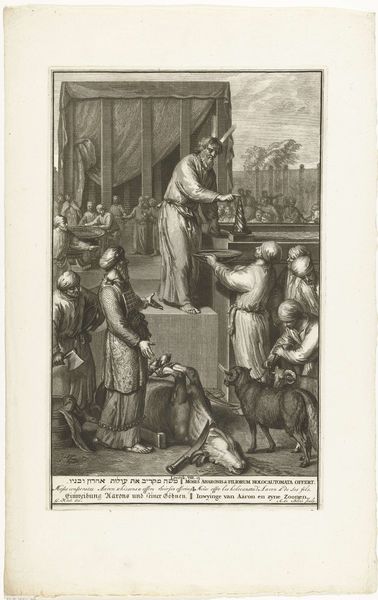
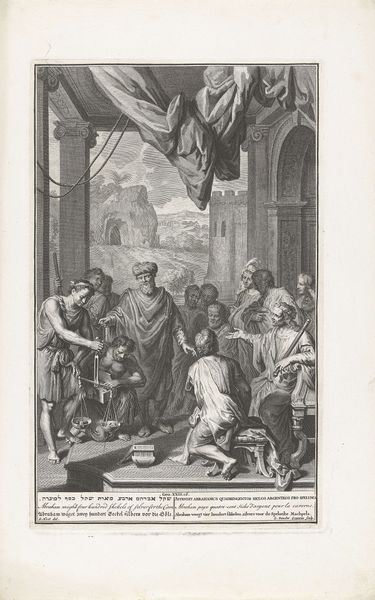
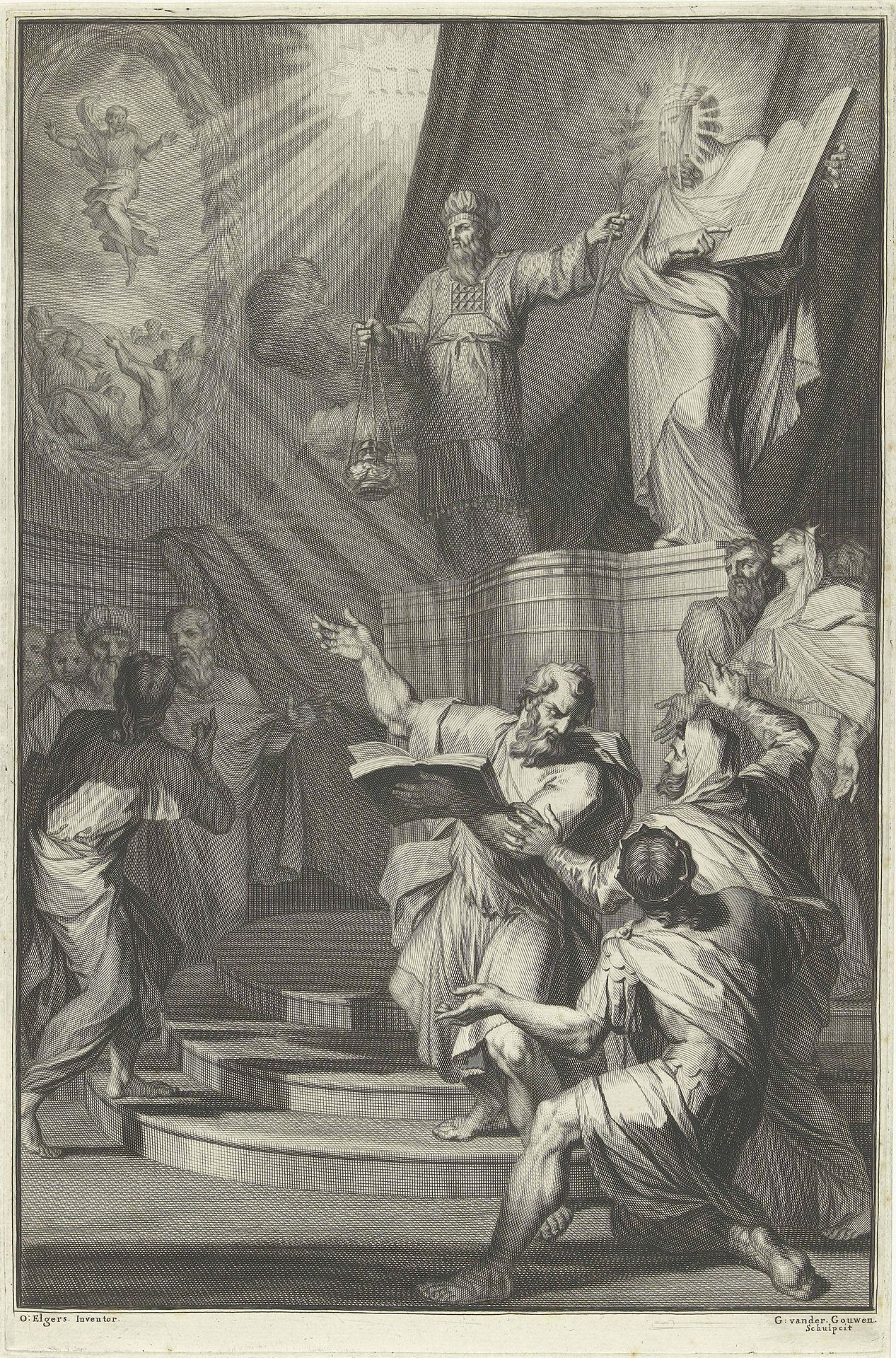
Gilliam van der Gouwen created this print, “Aaron and the Veiled Moses Present the Tablets of the Law to the Israelites,” sometime before his death in 1740. Van der Gouwen was a Dutch engraver, working during a period of significant cultural exchange and religious contemplation. Note the central figure of Moses, whose face is veiled, radiating light. He presents the tablets, a symbol of divine law, to the Israelites. The veil suggests a sense of mystery, perhaps alluding to the inaccessibility of divine knowledge. Aaron, with his priestly garments and censer, mediates between God and the people, reinforcing the hierarchical structure of religious authority. Consider the emotional intensity of the figures: awe, reverence, and perhaps a hint of trepidation. How might the depiction of this moment reflect the societal tensions around religious law and individual interpretation during the 18th century? This image invites us to reflect on the power dynamics inherent in religious narratives and the ways in which these stories shape our understanding of morality and authority.
Aäron en de gesluierde Mozes presenteren de Israelieten de tafelen der wet 1670 - 1740

Gilliam van der Gouwen
1740Location
RijksmuseumArtwork details
- Medium
- print, engraving
- Dimensions
- height 242 mm, width 370 mm
- Location
- Rijksmuseum
- Copyright
- Rijks Museum: Open Domain
Tags
narrative-art
baroque
figuration
line
history-painting
engraving
Comments
No comments
About this artwork
Gilliam van der Gouwen created this print, “Aaron and the Veiled Moses Present the Tablets of the Law to the Israelites,” sometime before his death in 1740. Van der Gouwen was a Dutch engraver, working during a period of significant cultural exchange and religious contemplation. Note the central figure of Moses, whose face is veiled, radiating light. He presents the tablets, a symbol of divine law, to the Israelites. The veil suggests a sense of mystery, perhaps alluding to the inaccessibility of divine knowledge. Aaron, with his priestly garments and censer, mediates between God and the people, reinforcing the hierarchical structure of religious authority. Consider the emotional intensity of the figures: awe, reverence, and perhaps a hint of trepidation. How might the depiction of this moment reflect the societal tensions around religious law and individual interpretation during the 18th century? This image invites us to reflect on the power dynamics inherent in religious narratives and the ways in which these stories shape our understanding of morality and authority.
Comments
No comments