About this artwork
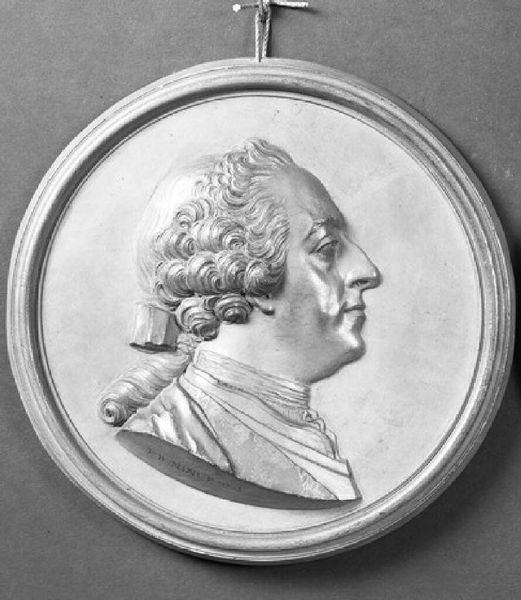
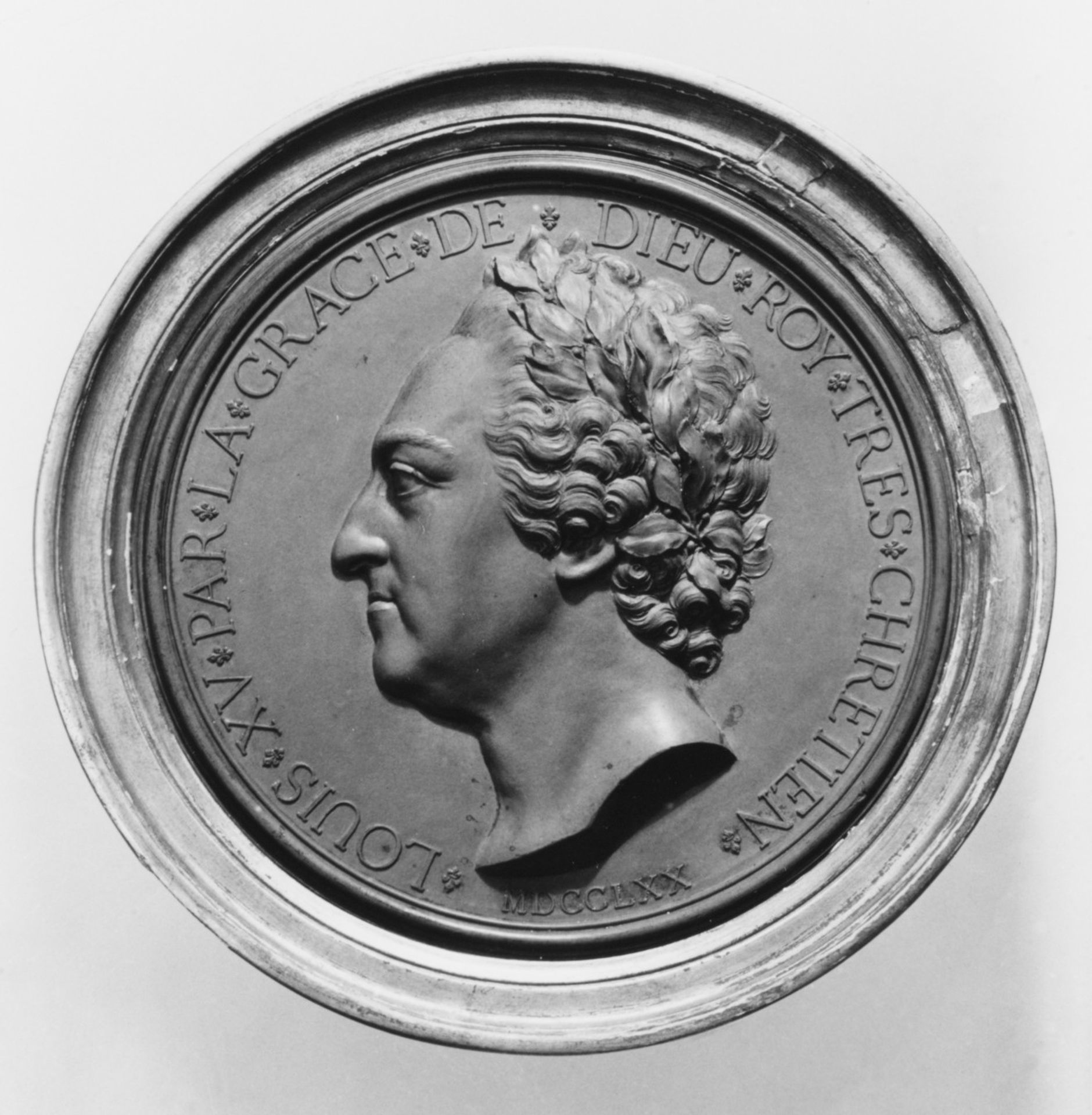
This terracotta medallion portraying Louis XV was crafted by Jean-Baptiste Nini. A wreath of laurel adorns his hair, a symbol dating back to ancient Greece, where it crowned victors and emperors, signifying triumph and honor. This motif echoes through time. Think of Apollo, often depicted with a laurel wreath, embodying reason and artistic inspiration. In this portrait, the laurel serves not merely as decoration but as a declaration of Louis XV's authority and prestige. This symbolic headdress, once reserved for gods and heroes, now encircles the head of a king, thus emphasizing his divine right. Consider the psychological weight of such symbols. The collective memory of their power subtly influences our perception of authority, evoking a deep, subconscious recognition of leadership. This symbol is not static; it evolves, adapting to new contexts while retaining its core essence of power and reverence.
Louis XV (1710–1774)
1770


Artwork details
- Medium
- relief, sculpture
- Dimensions
- Diameter (without frame): 6 1/2 in. (16.5 cm)
- Location
- Metropolitan Museum of Art, New York, NY
- Copyright
- Public Domain
Tags
Comments
Share your thoughts
About this artwork
This terracotta medallion portraying Louis XV was crafted by Jean-Baptiste Nini. A wreath of laurel adorns his hair, a symbol dating back to ancient Greece, where it crowned victors and emperors, signifying triumph and honor. This motif echoes through time. Think of Apollo, often depicted with a laurel wreath, embodying reason and artistic inspiration. In this portrait, the laurel serves not merely as decoration but as a declaration of Louis XV's authority and prestige. This symbolic headdress, once reserved for gods and heroes, now encircles the head of a king, thus emphasizing his divine right. Consider the psychological weight of such symbols. The collective memory of their power subtly influences our perception of authority, evoking a deep, subconscious recognition of leadership. This symbol is not static; it evolves, adapting to new contexts while retaining its core essence of power and reverence.
Comments
Share your thoughts