About this artwork
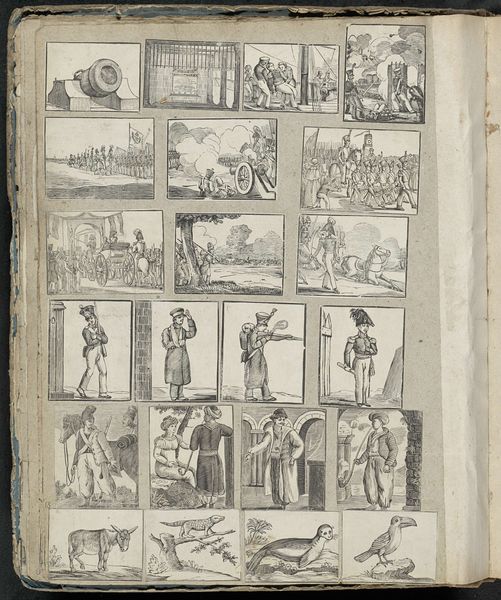
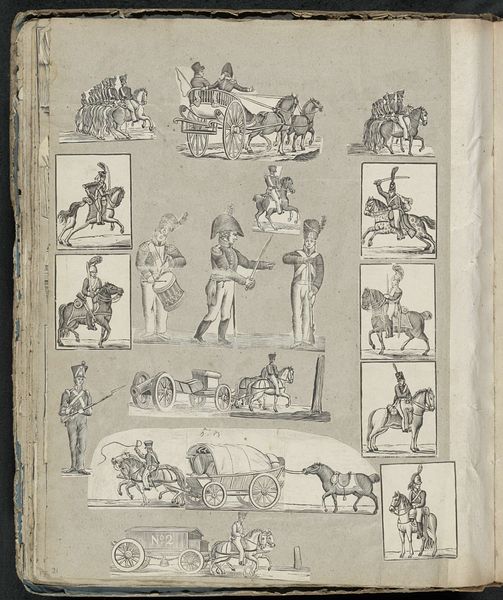
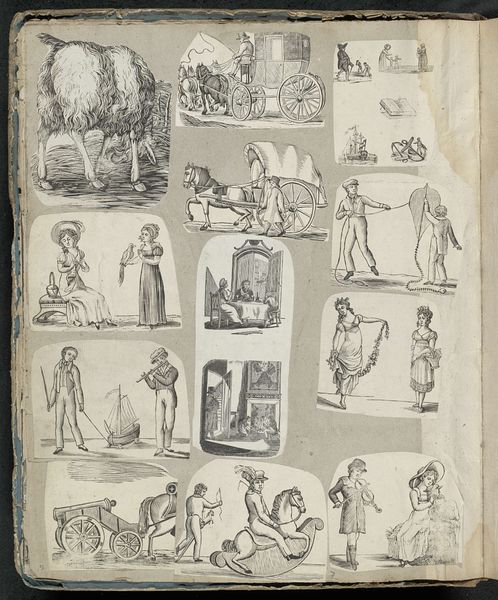
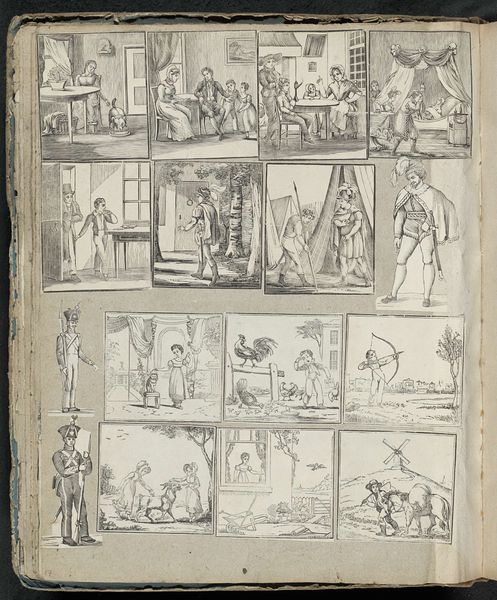
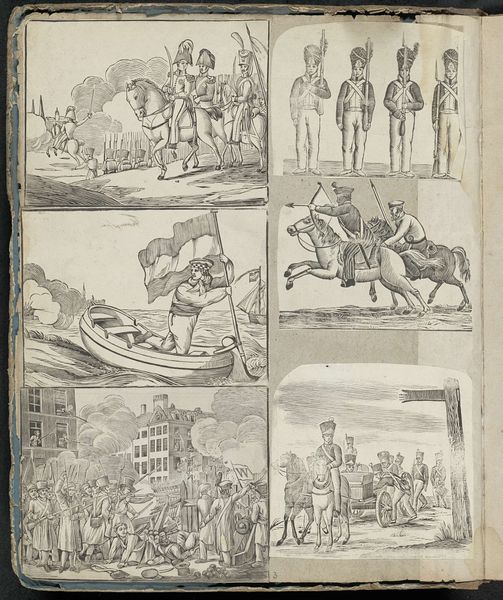
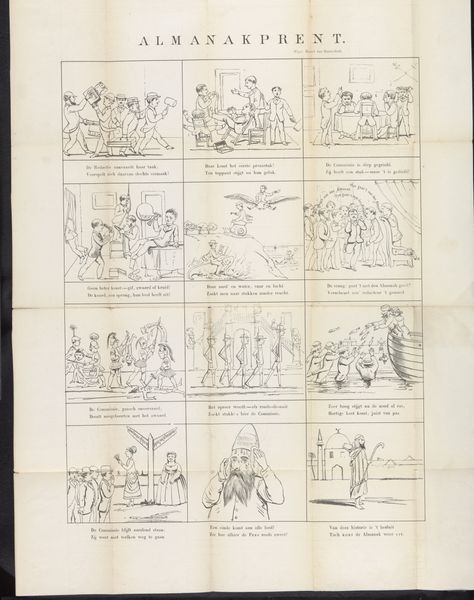
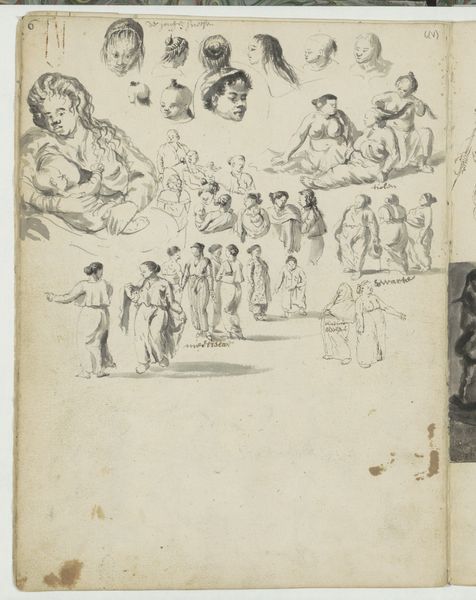
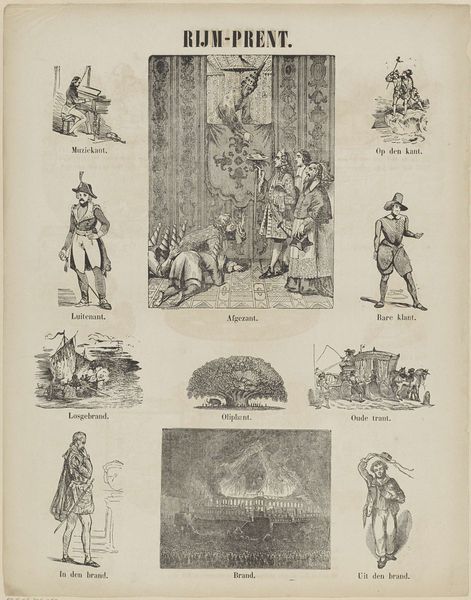
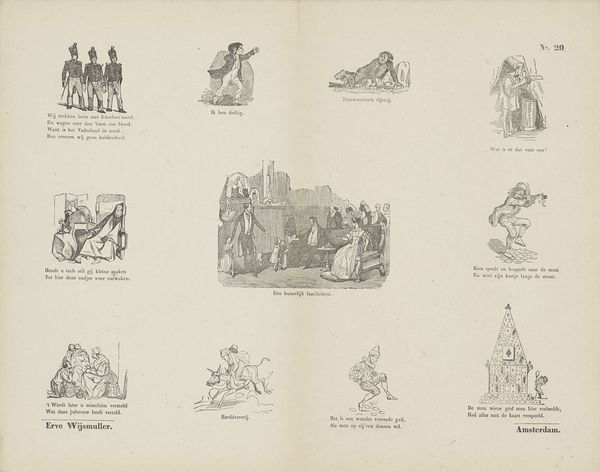
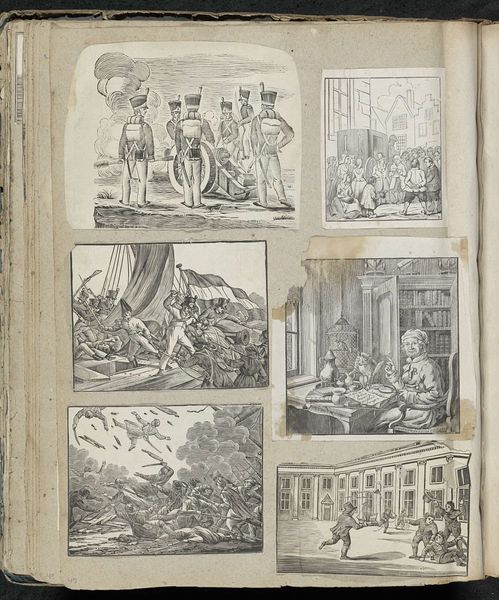
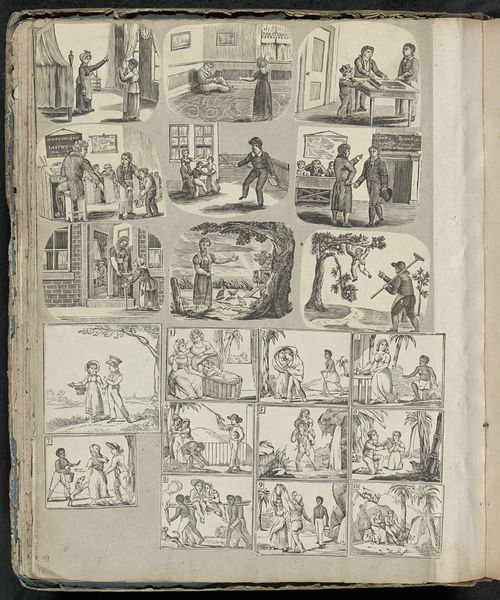
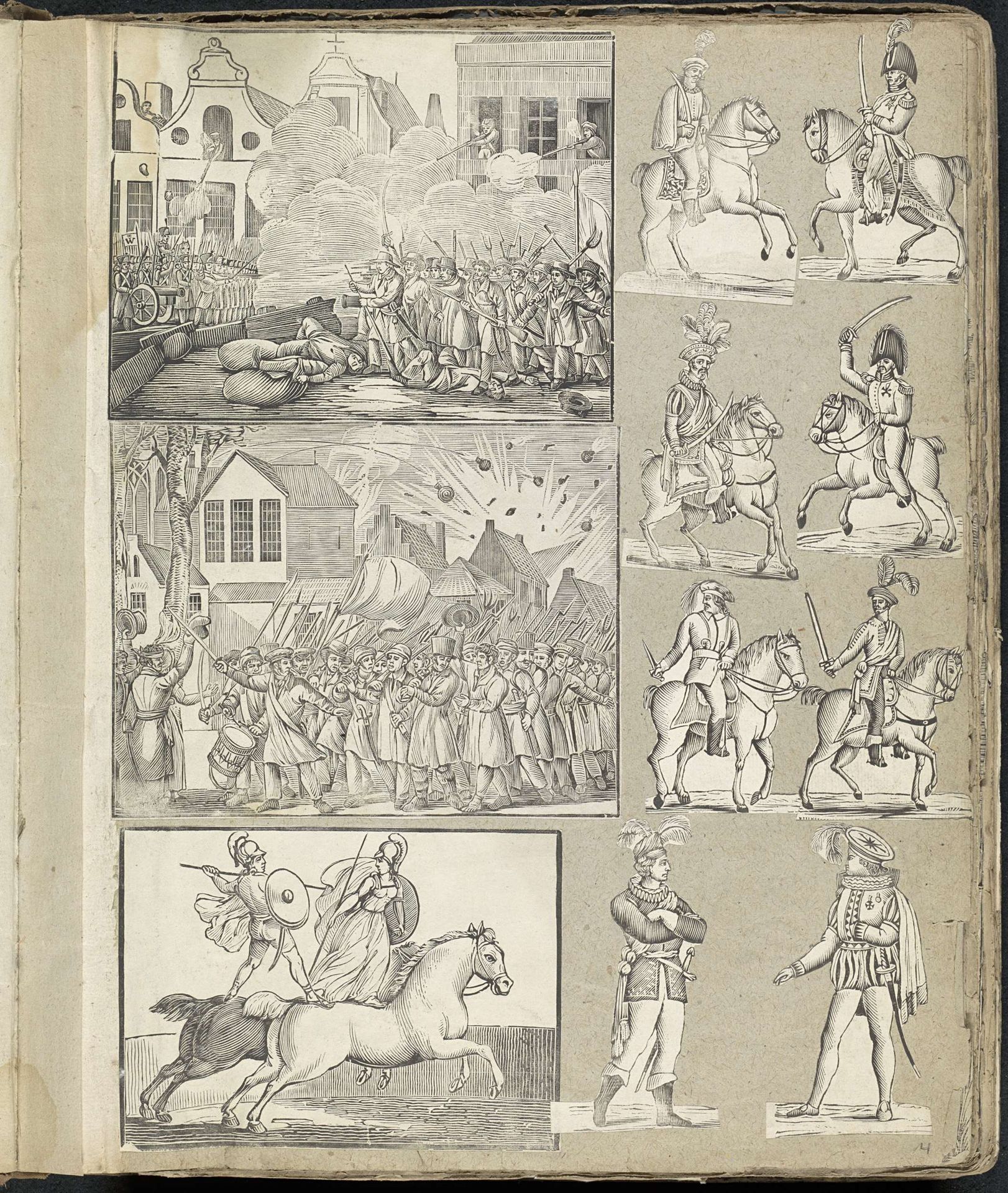
Editor: This is "Albumblad met diverse voorstellingen," a page from Alexander Cranendoncq's sketchbook, made with ink on paper between 1814 and 1869. The scenes seem to depict various historical and military events. It has an unfinished, almost frenetic quality. What stands out to you? Curator: Well, I’m drawn to consider the materiality of this "Albumblad." We must recognize paper, ink, the very act of drawing as labor. It seems these materials aren’t simply neutral tools but actively shape the representations we see. What do these repeated scenes of conflict tell us about the paper, about Cranendoncq's practice of reproduction of labor, of consumption? Editor: That’s interesting. So you see the materials and process as central to understanding the work’s meaning, rather than focusing on the historical narratives it might be illustrating? Curator: Precisely. Consider the implications of this being in a sketchbook, implying repetitive actions. What type of labour is reproduced? Also the drawing style itself – the rapid lines, the apparent lack of refinement - how does that influence our interpretation of historical depictions? It does raise the question, in what context where those sketches circulating and influencing a wider public? Editor: So it's less about "what" is being depicted and more about "how" it was made and what those choices signify about the artist's relationship to his materials and, maybe, to historical events as commodity? Curator: Exactly. It reframes our understanding. The album isn't simply a record of historical moments, but the very labor it took and materials used reflects economic and historical modes. What this piece reveal about consumer habits during its time, from paper production to dissemination? Editor: I never thought about a drawing like this. I usually look to recognize symbols, and imagine cultural circumstances. This emphasis on materials gives me something concrete to look at. Thank you for a new angle.
Albumblad met diverse voorstellingen
1814 - 1869

Alexander Cranendoncq
1799 - 1869Location
RijksmuseumArtwork details
- Medium
- drawing, paper, ink
- Dimensions
- height 397 mm, width 331 mm
- Location
- Rijksmuseum
- Copyright
- Rijks Museum: Open Domain
Tags
Comments
Share your thoughts
About this artwork
Editor: This is "Albumblad met diverse voorstellingen," a page from Alexander Cranendoncq's sketchbook, made with ink on paper between 1814 and 1869. The scenes seem to depict various historical and military events. It has an unfinished, almost frenetic quality. What stands out to you? Curator: Well, I’m drawn to consider the materiality of this "Albumblad." We must recognize paper, ink, the very act of drawing as labor. It seems these materials aren’t simply neutral tools but actively shape the representations we see. What do these repeated scenes of conflict tell us about the paper, about Cranendoncq's practice of reproduction of labor, of consumption? Editor: That’s interesting. So you see the materials and process as central to understanding the work’s meaning, rather than focusing on the historical narratives it might be illustrating? Curator: Precisely. Consider the implications of this being in a sketchbook, implying repetitive actions. What type of labour is reproduced? Also the drawing style itself – the rapid lines, the apparent lack of refinement - how does that influence our interpretation of historical depictions? It does raise the question, in what context where those sketches circulating and influencing a wider public? Editor: So it's less about "what" is being depicted and more about "how" it was made and what those choices signify about the artist's relationship to his materials and, maybe, to historical events as commodity? Curator: Exactly. It reframes our understanding. The album isn't simply a record of historical moments, but the very labor it took and materials used reflects economic and historical modes. What this piece reveal about consumer habits during its time, from paper production to dissemination? Editor: I never thought about a drawing like this. I usually look to recognize symbols, and imagine cultural circumstances. This emphasis on materials gives me something concrete to look at. Thank you for a new angle.
Comments
Share your thoughts