1936
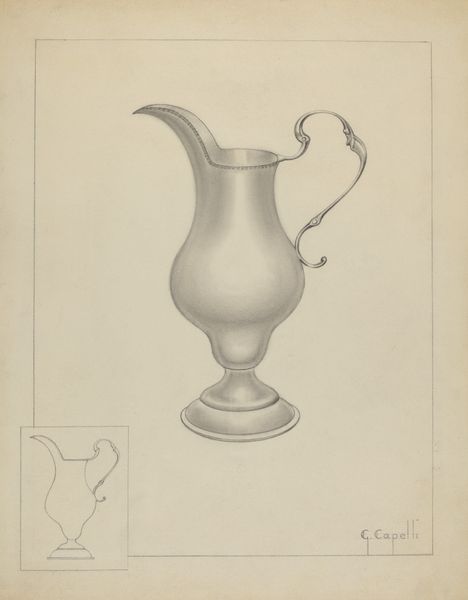
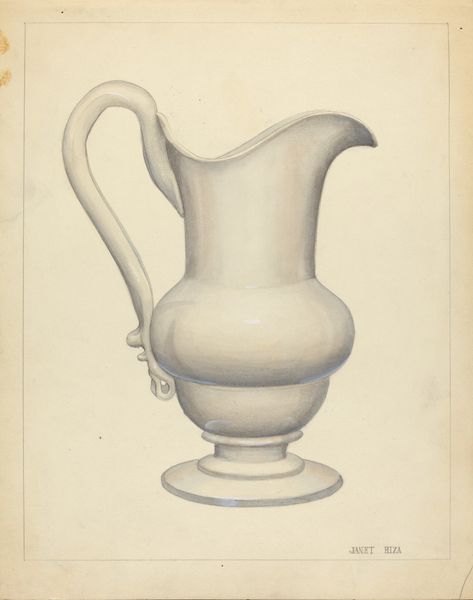
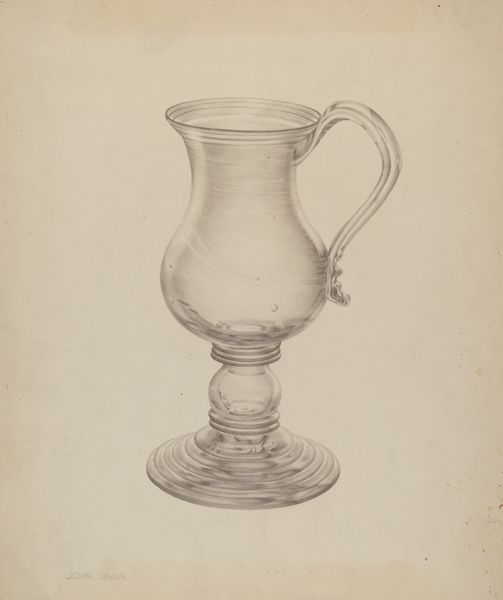
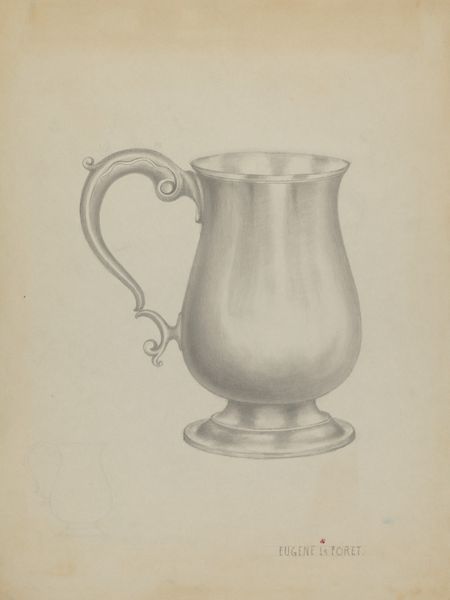
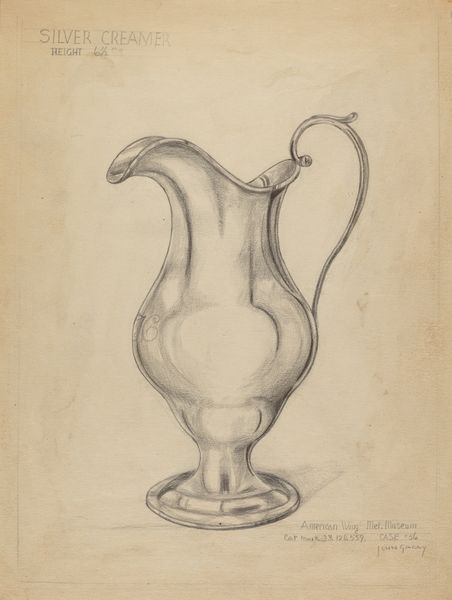
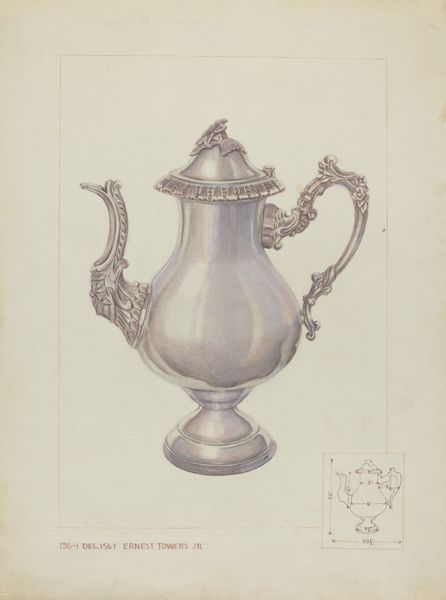
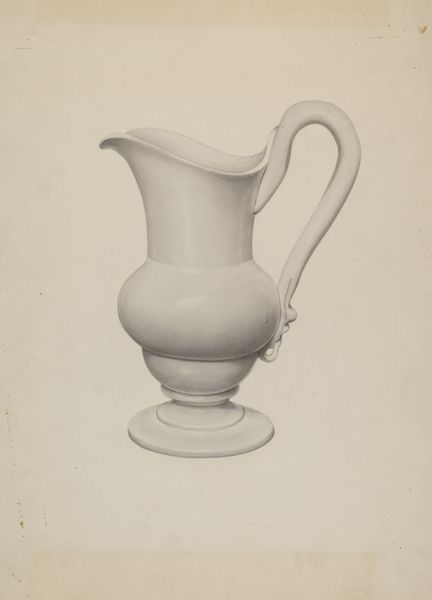
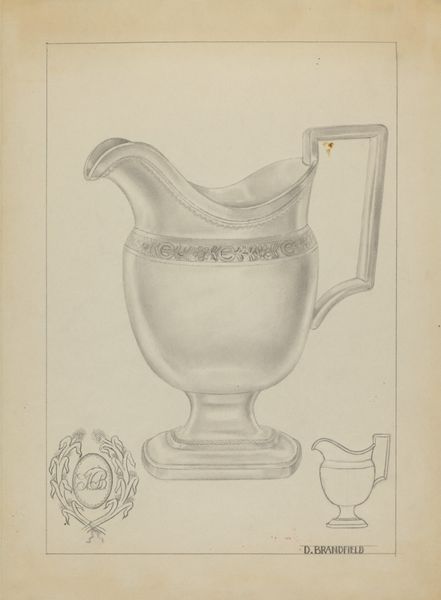
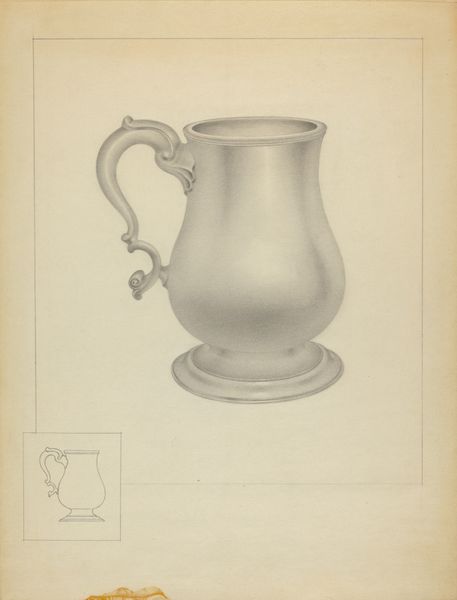
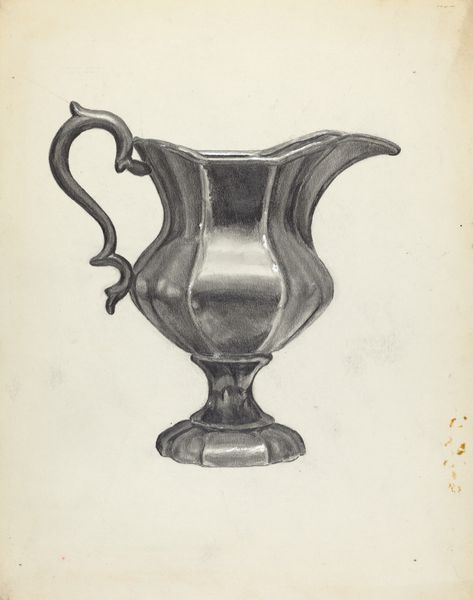
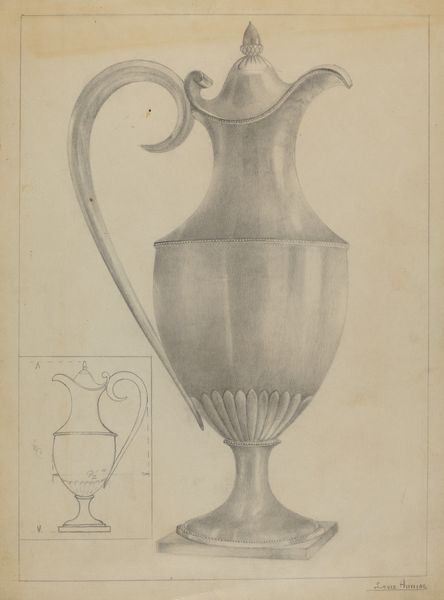
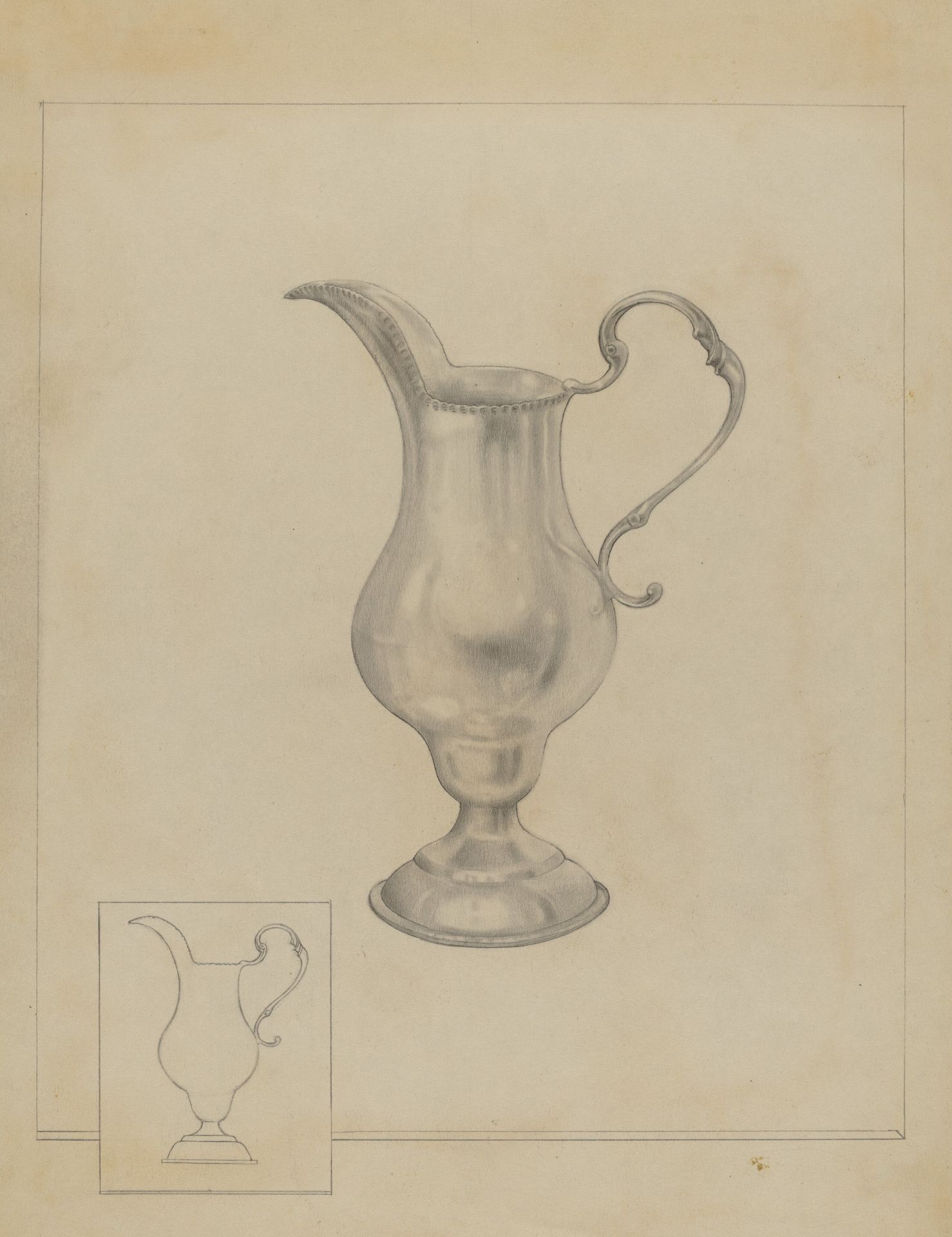
Silver Pitcher


Listen to curator's interpretation
Curatorial notes
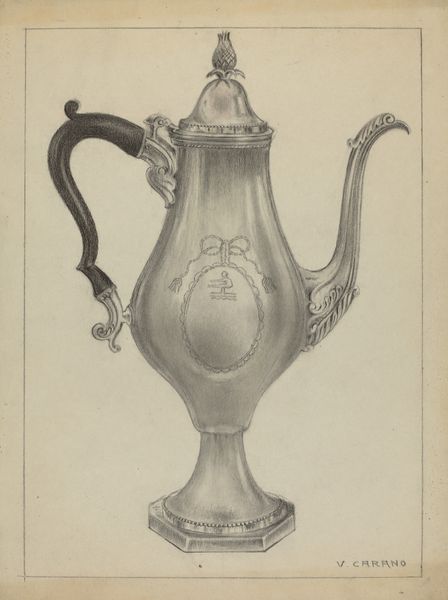
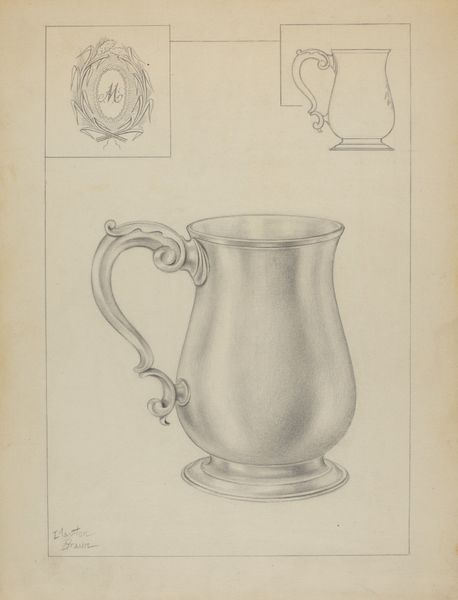
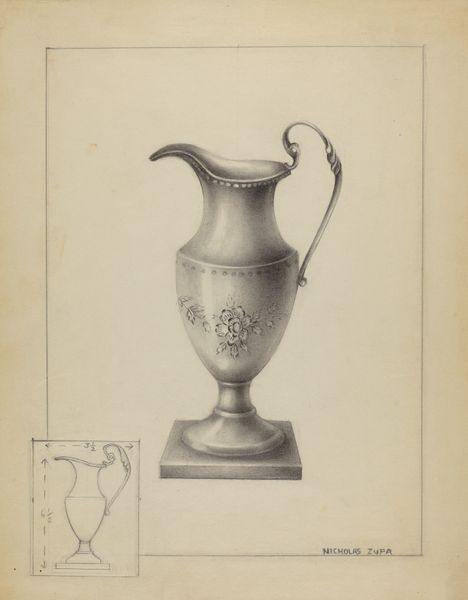
Editor: This drawing, titled "Silver Pitcher" is from 1936 by Isidore Steinberg. It appears to be a preparatory study, delicately rendered in pencil. I’m struck by the quiet precision of the lines, the way it captures the light reflecting off a metal surface. What can you tell me about the cultural context of a work like this? Curator: Considering the social history, the 1930s were a period marked by economic hardship in America. The aesthetic choices during this time – even in preparatory drawings – were often influenced by this austerity. The pitcher as a domestic object... what do you make of the artist's focus here? Editor: Well, the drawing does seem to elevate this ordinary object, making it something worthy of artistic attention. It almost feels like a celebration of everyday life during difficult times, or perhaps a subtle commentary on simple elegance. Curator: Exactly. And thinking about art institutions, drawings like this were often commissioned or created for applied arts or design programs. Silverware represented a level of attainable luxury, aspirations made during a period of constraints. Does knowing this shape how you interpret it? Editor: Yes, it casts a new light on it! It wasn’t just about creating a pretty picture, but possibly about documenting or planning a design, tied to commerce and social aspiration. Curator: Precisely! The 'politics of imagery,' even in something as seemingly straightforward as a silver pitcher, speaks volumes. Editor: I hadn't really thought about it that way, it’s interesting how an artwork like this becomes embedded in larger social dialogues. Curator: These layers of historical context enrich our understanding, proving that art's public role often extends far beyond mere aesthetics.