About this artwork
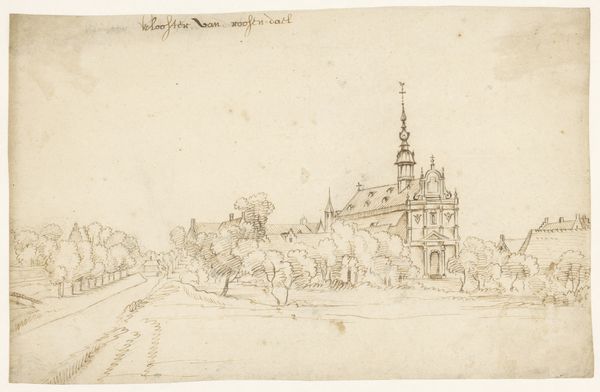
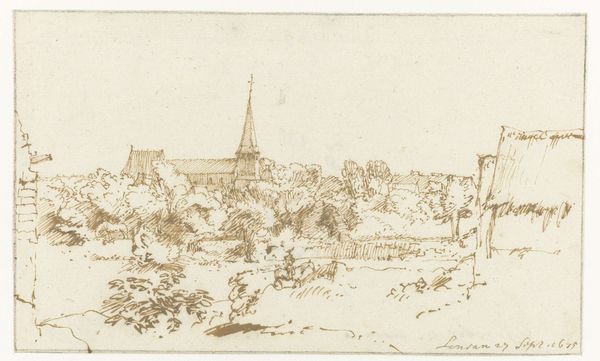
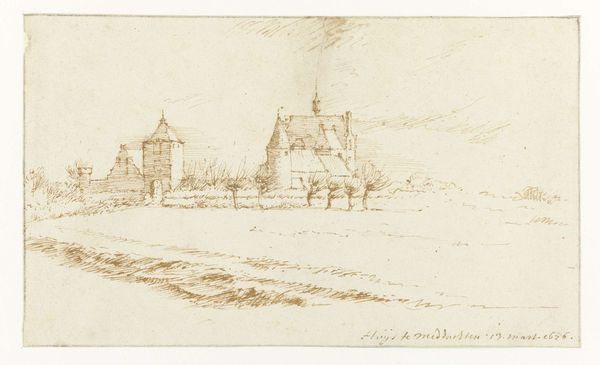
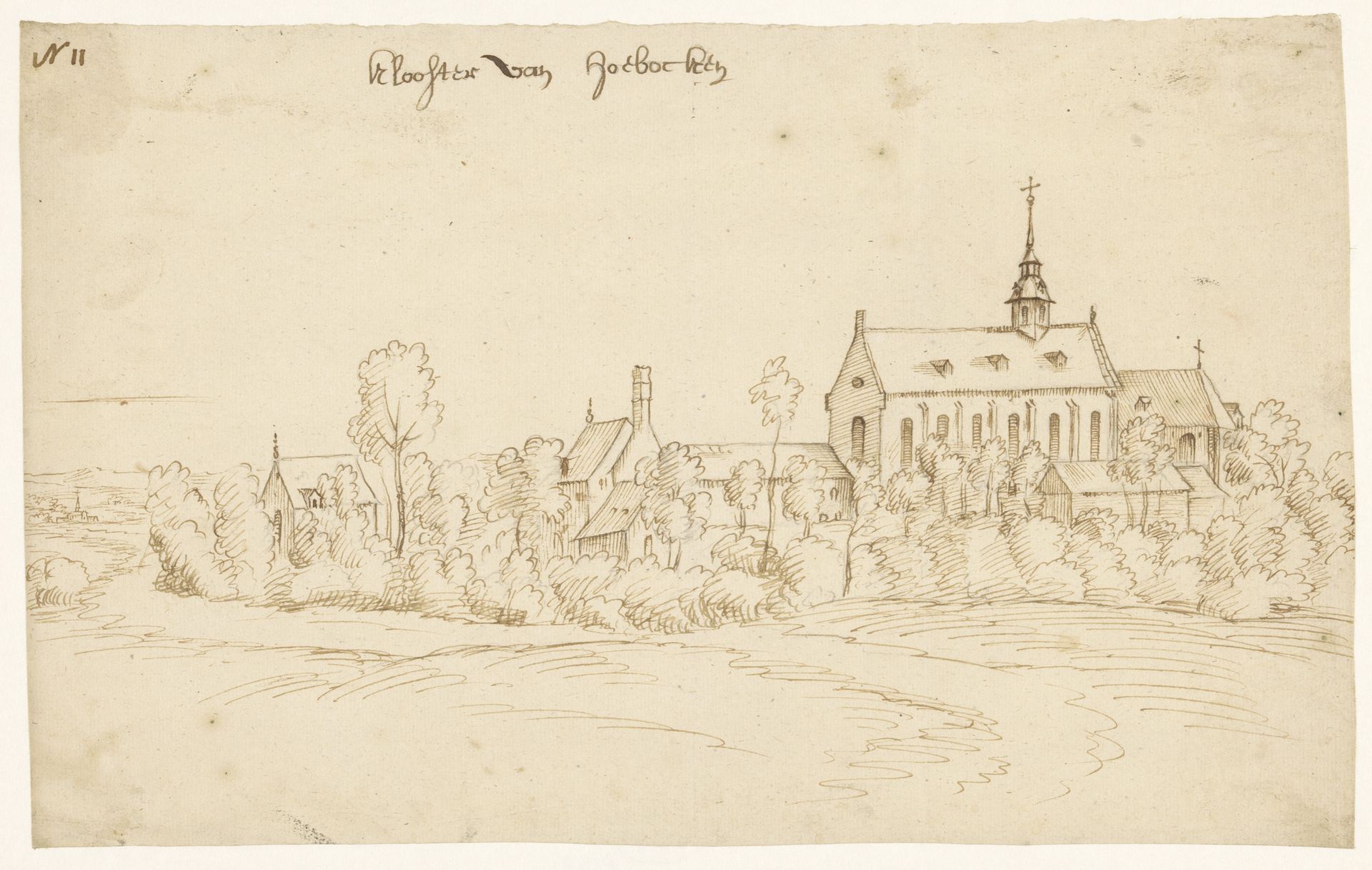
H. van Wel’s drawing, ‘Het klooster van Hoboken’, presents us with a landscape dominated by the architectural structure of a monastery, rendered with delicate pen strokes in sepia ink. The composition, while seemingly straightforward, plays with depth and perspective, inviting a closer look at its underlying structure. The monastery, nestled amidst trees, becomes a study in contrasts. The orderly lines of the architecture juxtapose the organic forms of nature, creating a visual tension. The hatching and cross-hatching techniques used to delineate the foliage introduce a textural complexity that complements the smoother surfaces of the buildings. This piece invites us to consider the interplay between form and content, between the constructed and the natural. It does not merely represent a place but engages with the semiotics of space, prompting reflections on the cultural and philosophical meanings embedded within our perception of landscape.

Artwork details
- Medium
- drawing, print, etching, ink, pen, architecture
- Dimensions
- height 185 mm, width 300 mm
- Copyright
- Rijks Museum: Open Domain
Tags
Comments
Share your thoughts
About this artwork
H. van Wel’s drawing, ‘Het klooster van Hoboken’, presents us with a landscape dominated by the architectural structure of a monastery, rendered with delicate pen strokes in sepia ink. The composition, while seemingly straightforward, plays with depth and perspective, inviting a closer look at its underlying structure. The monastery, nestled amidst trees, becomes a study in contrasts. The orderly lines of the architecture juxtapose the organic forms of nature, creating a visual tension. The hatching and cross-hatching techniques used to delineate the foliage introduce a textural complexity that complements the smoother surfaces of the buildings. This piece invites us to consider the interplay between form and content, between the constructed and the natural. It does not merely represent a place but engages with the semiotics of space, prompting reflections on the cultural and philosophical meanings embedded within our perception of landscape.
Comments
Share your thoughts