About this artwork
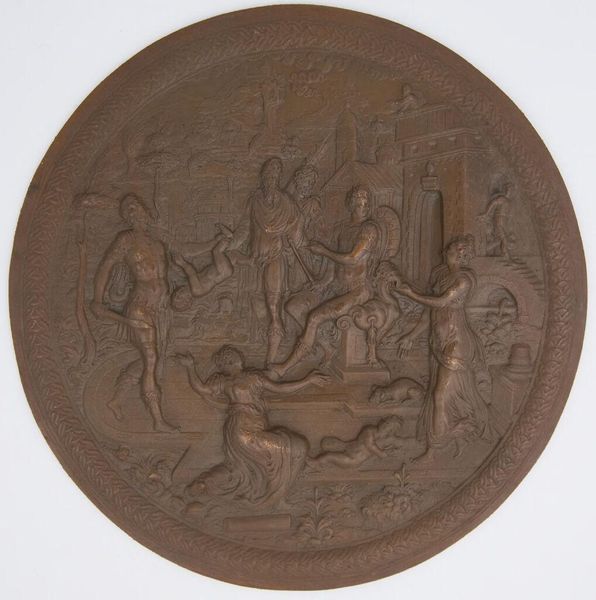
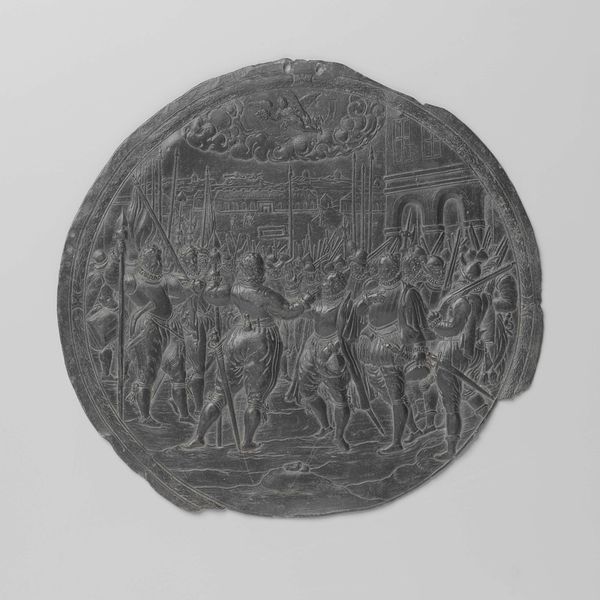
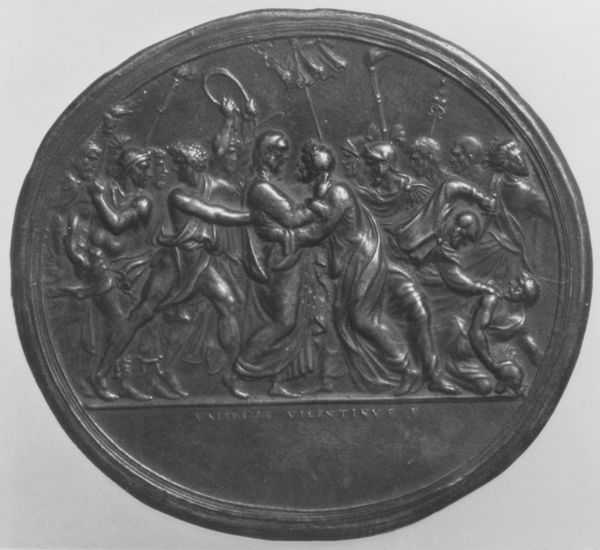
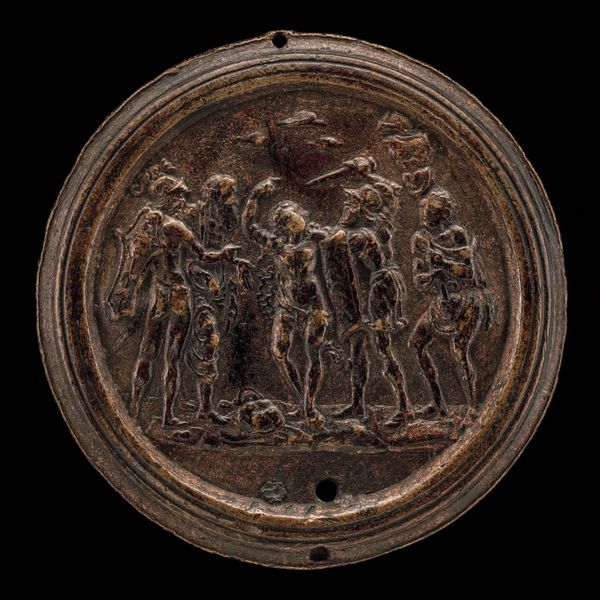
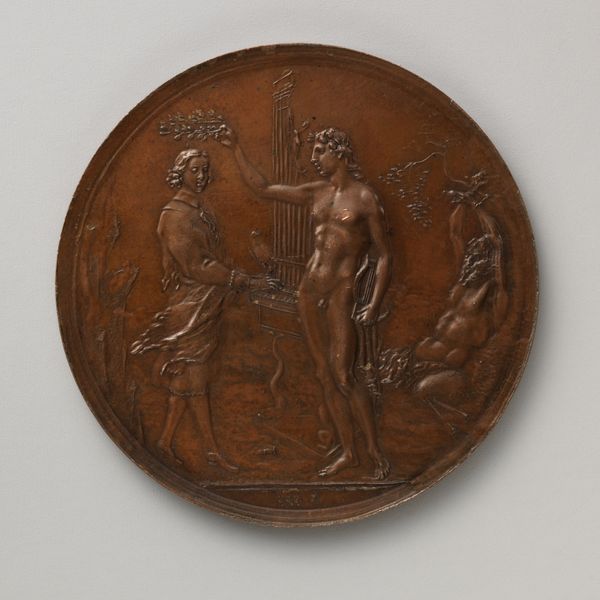
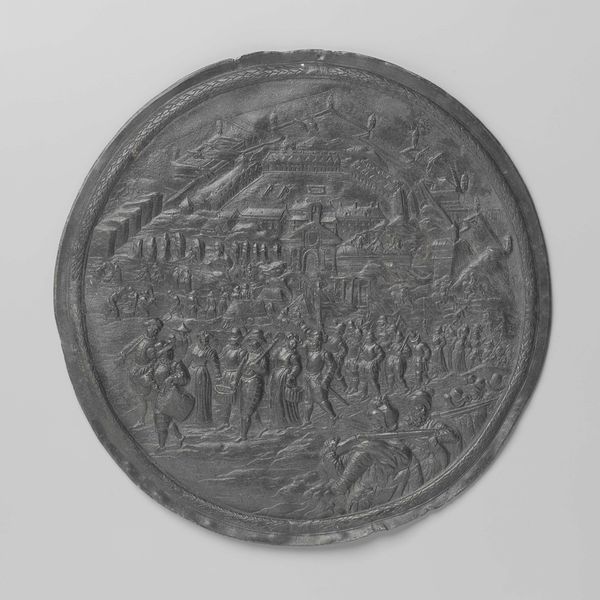
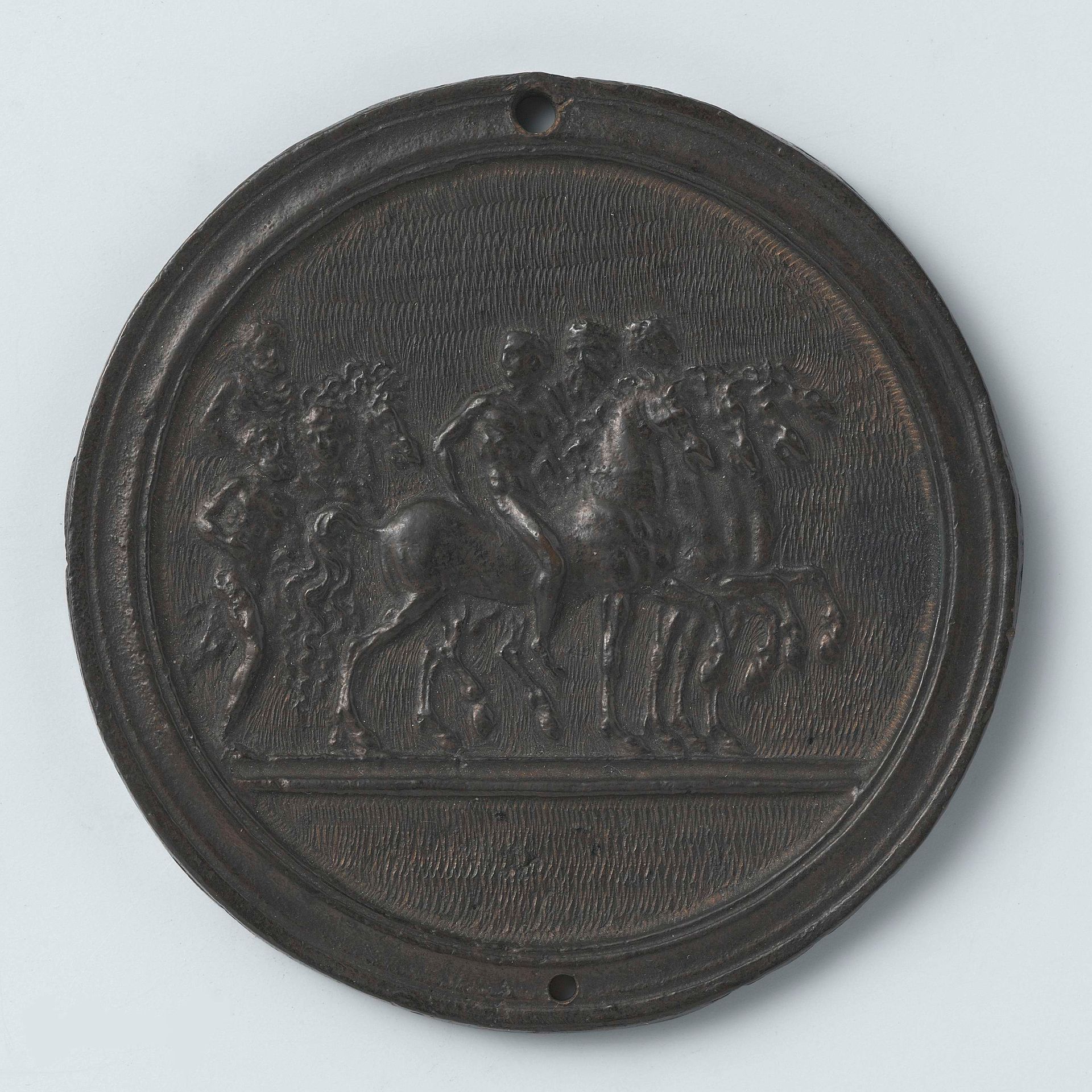
This bronze relief, ‘Coriolanus Leaving Rome’, was created by the Master of Coriolanus. The casting process used to create this artwork is remarkable. Molten bronze was poured into a mold, allowed to cool and solidify, and then carefully removed. After a process of refining the surface, what remains is a scene in remarkably low relief; the riders and their horses barely raised from the flat surface. The material, bronze, lends a sense of permanence and gravitas to the scene, evoking the historical importance of the event depicted. The work is deeply intertwined with traditions of craftsmanship and design. The artist would have engaged with the techniques of bronze casting and relief sculpture, skillfully manipulating the material to create depth and detail within the limited space. The circular format is typical of Renaissance medals, which functioned as both miniature sculptures and portable signifiers of status. By understanding the materials, making, and historical context of this relief, we can appreciate its value as a work of art that transcends traditional distinctions between fine art and craft.

Artwork details
- Medium
- relief, bronze
- Dimensions
- diameter 6.5 cm, thickness 0.4 cm
- Copyright
- Rijks Museum: Open Domain
Tags
sculpture
relief
bronze
figuration
11_renaissance
history-painting
italian-renaissance
Comments
Be the first to share your thoughts about this work.
About this artwork
This bronze relief, ‘Coriolanus Leaving Rome’, was created by the Master of Coriolanus. The casting process used to create this artwork is remarkable. Molten bronze was poured into a mold, allowed to cool and solidify, and then carefully removed. After a process of refining the surface, what remains is a scene in remarkably low relief; the riders and their horses barely raised from the flat surface. The material, bronze, lends a sense of permanence and gravitas to the scene, evoking the historical importance of the event depicted. The work is deeply intertwined with traditions of craftsmanship and design. The artist would have engaged with the techniques of bronze casting and relief sculpture, skillfully manipulating the material to create depth and detail within the limited space. The circular format is typical of Renaissance medals, which functioned as both miniature sculptures and portable signifiers of status. By understanding the materials, making, and historical context of this relief, we can appreciate its value as a work of art that transcends traditional distinctions between fine art and craft.
Comments
Be the first to share your thoughts about this work.