About this artwork
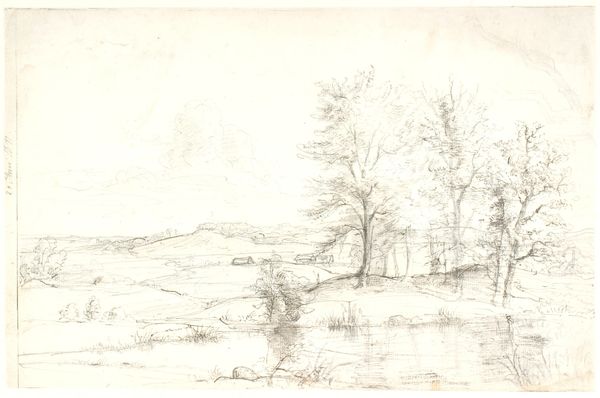
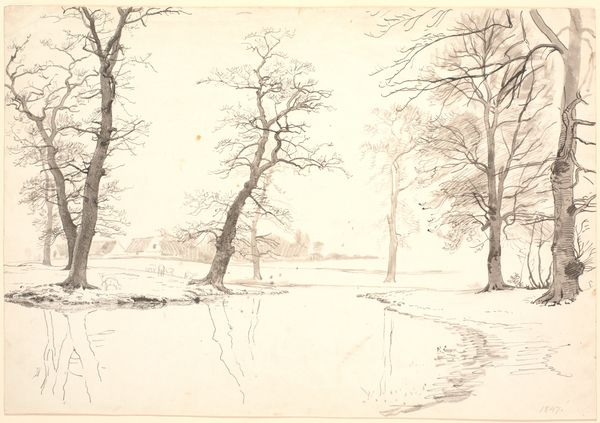
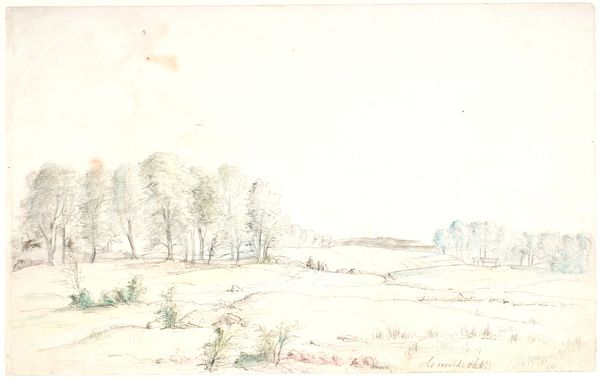
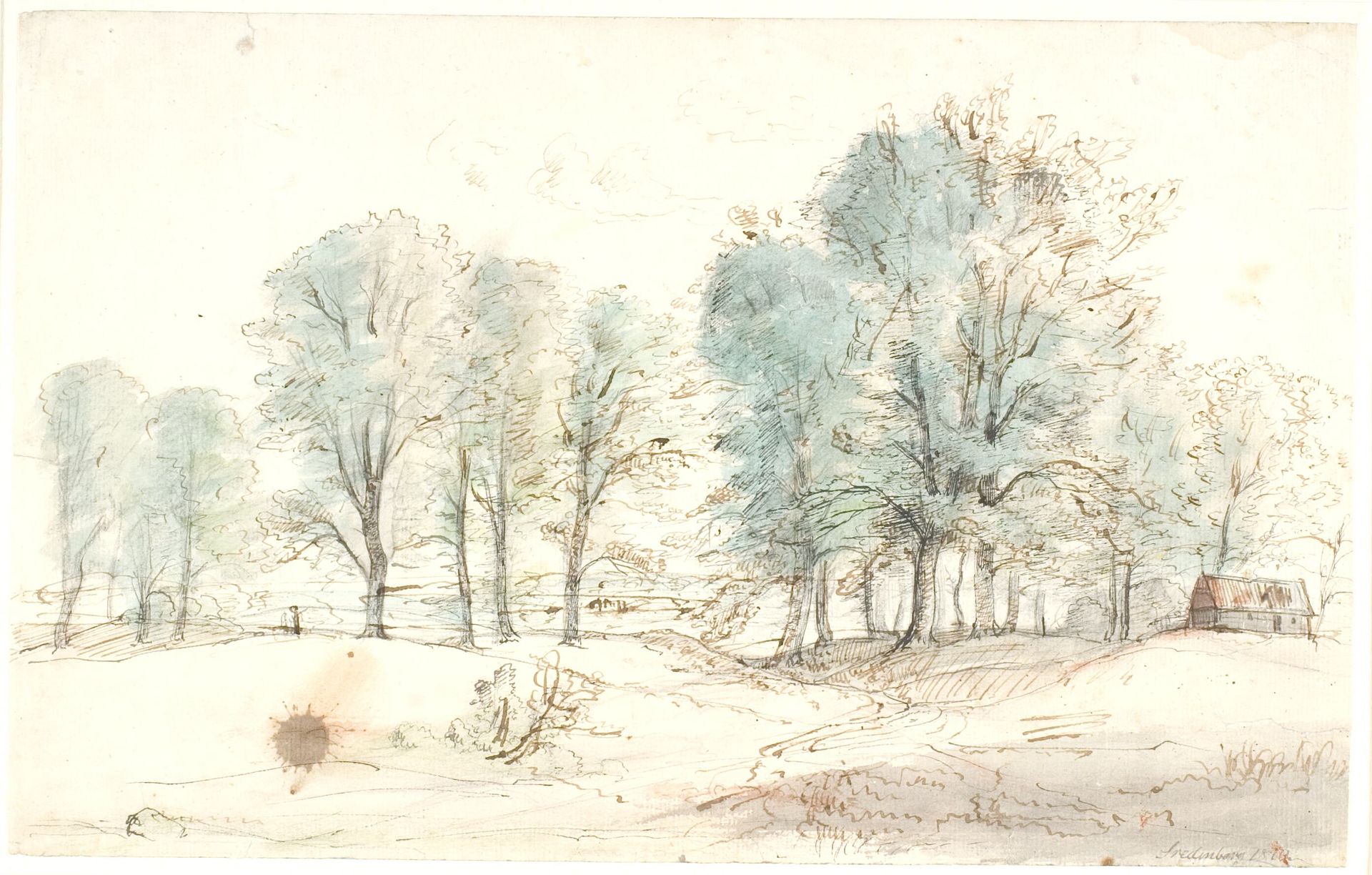
Dankvart Dreyer rendered this landscape near Fredensborg with pencil and brown and gray wash. Dreyer painted during the Danish Golden Age, a time of national romanticism. Artists sought to define and celebrate Danish identity through depictions of local landscapes. Though landscapes may appear neutral, they are always seen through the socio-political lens of the artist. In this drawing, the delicate rendering of the Danish countryside idealizes rural life, resonating with the period’s emphasis on national pride and cultural identity. This artwork, by creating a vision of serene and harmonious nature, invites viewers into a shared understanding of Danishness that is rooted in the land. Dreyer's delicate washes and careful linework evoke a sense of tranquility, inviting us to reflect on how landscapes shape our sense of belonging and cultural narrative.
Landskab ved Fredensborg
1840


Artwork details
- Medium
- drawing, plein-air, watercolor
- Dimensions
- 212 mm (height) x 334 mm (width) (bladmaal)
- Location
- SMK - Statens Museum for Kunst
Tags
drawing
plein-air
landscape
watercolor
romanticism
watercolor
Comments
Be the first to share your thoughts about this work.
About this artwork
Dankvart Dreyer rendered this landscape near Fredensborg with pencil and brown and gray wash. Dreyer painted during the Danish Golden Age, a time of national romanticism. Artists sought to define and celebrate Danish identity through depictions of local landscapes. Though landscapes may appear neutral, they are always seen through the socio-political lens of the artist. In this drawing, the delicate rendering of the Danish countryside idealizes rural life, resonating with the period’s emphasis on national pride and cultural identity. This artwork, by creating a vision of serene and harmonious nature, invites viewers into a shared understanding of Danishness that is rooted in the land. Dreyer's delicate washes and careful linework evoke a sense of tranquility, inviting us to reflect on how landscapes shape our sense of belonging and cultural narrative.
Comments
Be the first to share your thoughts about this work.