

1871 - 1877
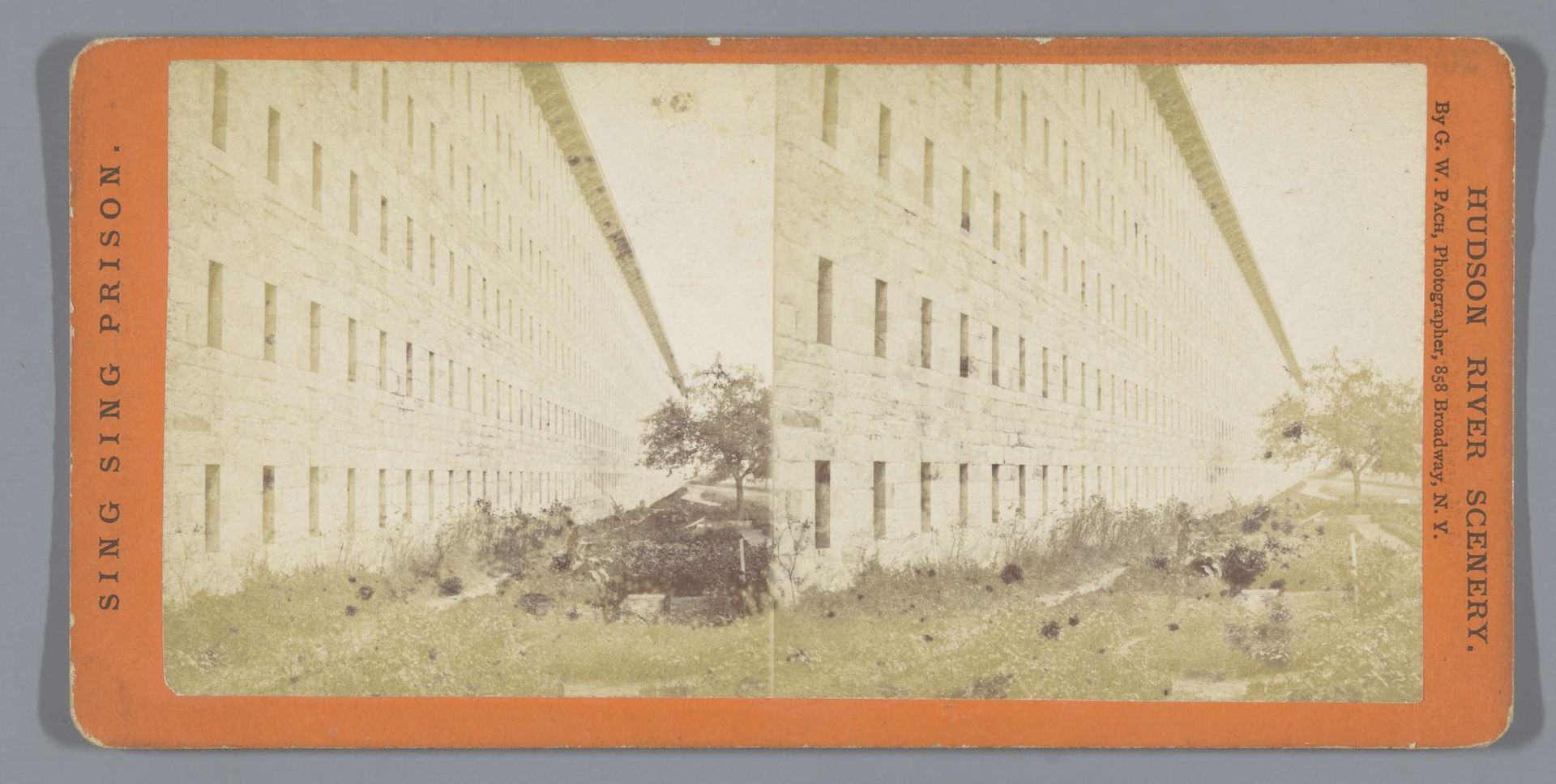
Gezicht op Sing Sing Correctional Facility

Listen to curator's interpretation
Curatorial notes
Curator: This is "Gezicht op Sing Sing Correctional Facility," a photograph dating from around 1871-1877, captured by G.W. Pach using the albumen print technique. Editor: Whoa, talk about imposing. My first thought? A concrete leviathan rising from the earth, dwarfing those little scrub trees in the foreground. Curator: The perspective certainly amplifies its monumentality. Stereoscopic images like these were popular ways to document landmarks, and the artist may have hoped to both educate and intimidate. Prisons as an apparatus of social control become the de facto face of the Hudson River School’s Romantic idealism. Editor: See, and I instantly go to the lives contained within. That stark facade, rows and rows of identical windows... it's less a picture of architecture and more a portrait of incarceration. I think about Foucault and how this image represents power made visible—discipline, surveillance, the stripping away of individuality. Each window like a locked mind. Curator: Absolutely, it's impossible to separate the physical structure from its function. What's striking is that a contemporary photographer of the Hudson River School is depicting not just natural beauty, but this very blunt expression of societal structure. Does it serve to illustrate an inevitable relationship of power within the burgeoning United States at this time? Does the choice to position this within a typically sublime framing, to essentially co-opt that sense of wonder, serve to legitimize this function? Editor: Perhaps unintentionally. Or maybe Pach believed in what he was documenting—prison reform, perhaps? I’m intrigued by the shadow cutting across the prison walls. Curator: And it bisects the sky, the implication being that even what lies beyond is framed, influenced. One almost feels the walls could stretch endlessly toward the sky like the never ending pursuit of justice. It creates a powerful dichotomy between the natural and constructed environments. Editor: It’s a chilling, beautiful collision of nature and industrial force, and an uncomfortably revealing moment in social history. One might forget this structure while looking out on the great views. But such a landscape would remind a prisoner.