About this artwork
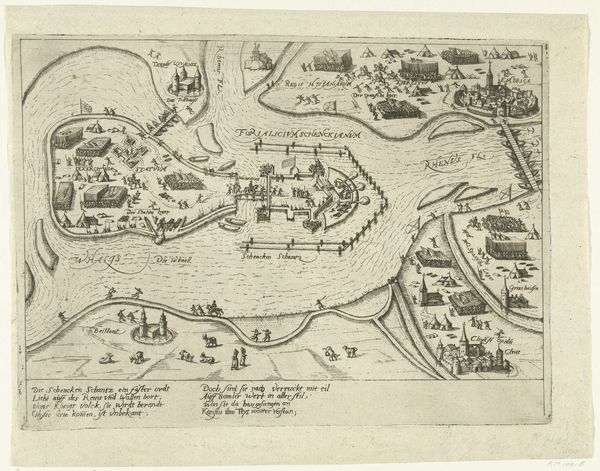
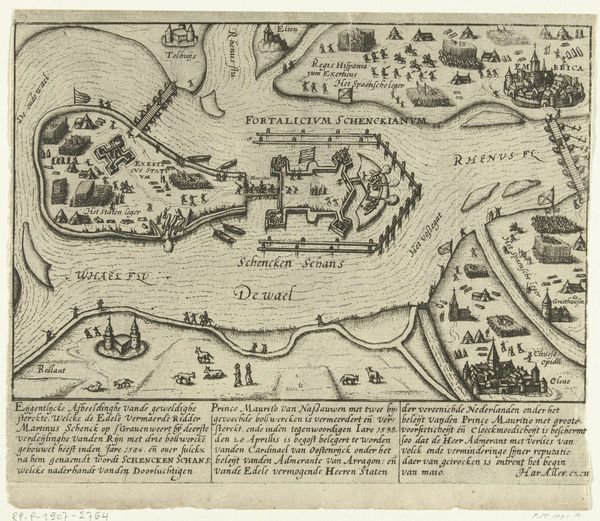
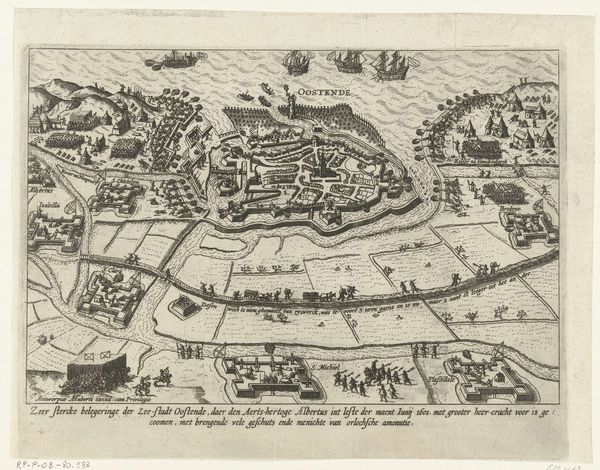
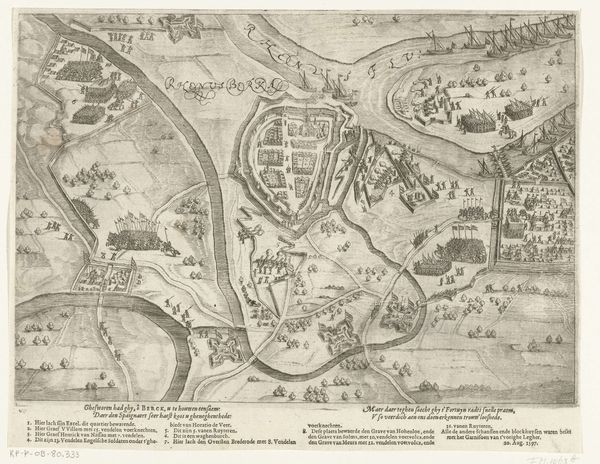
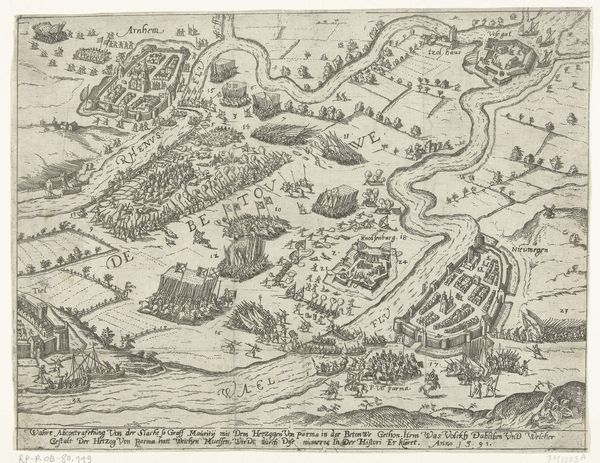
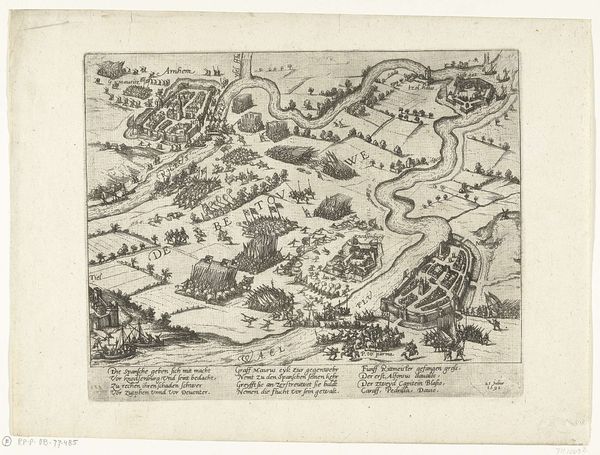
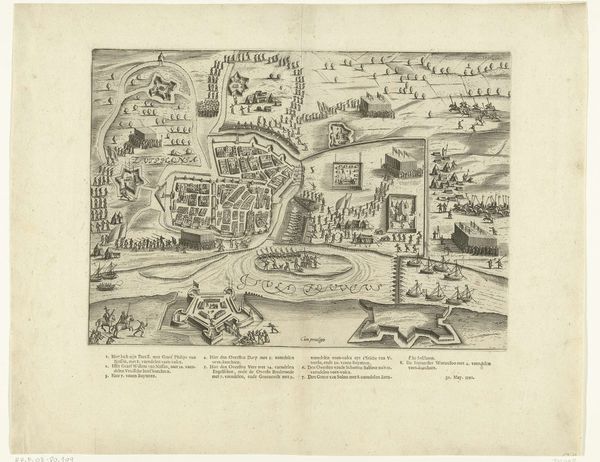
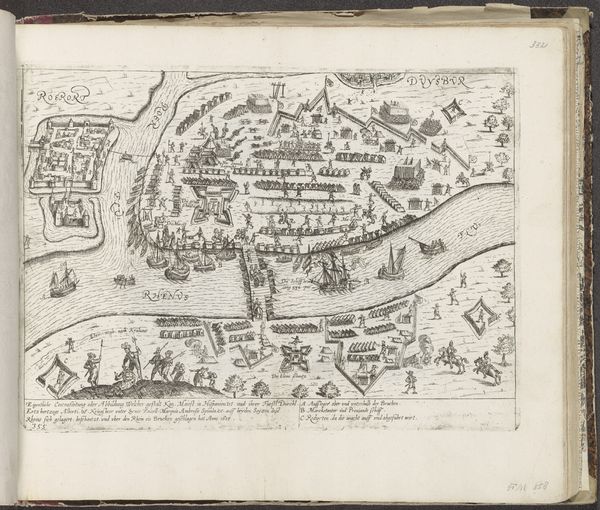
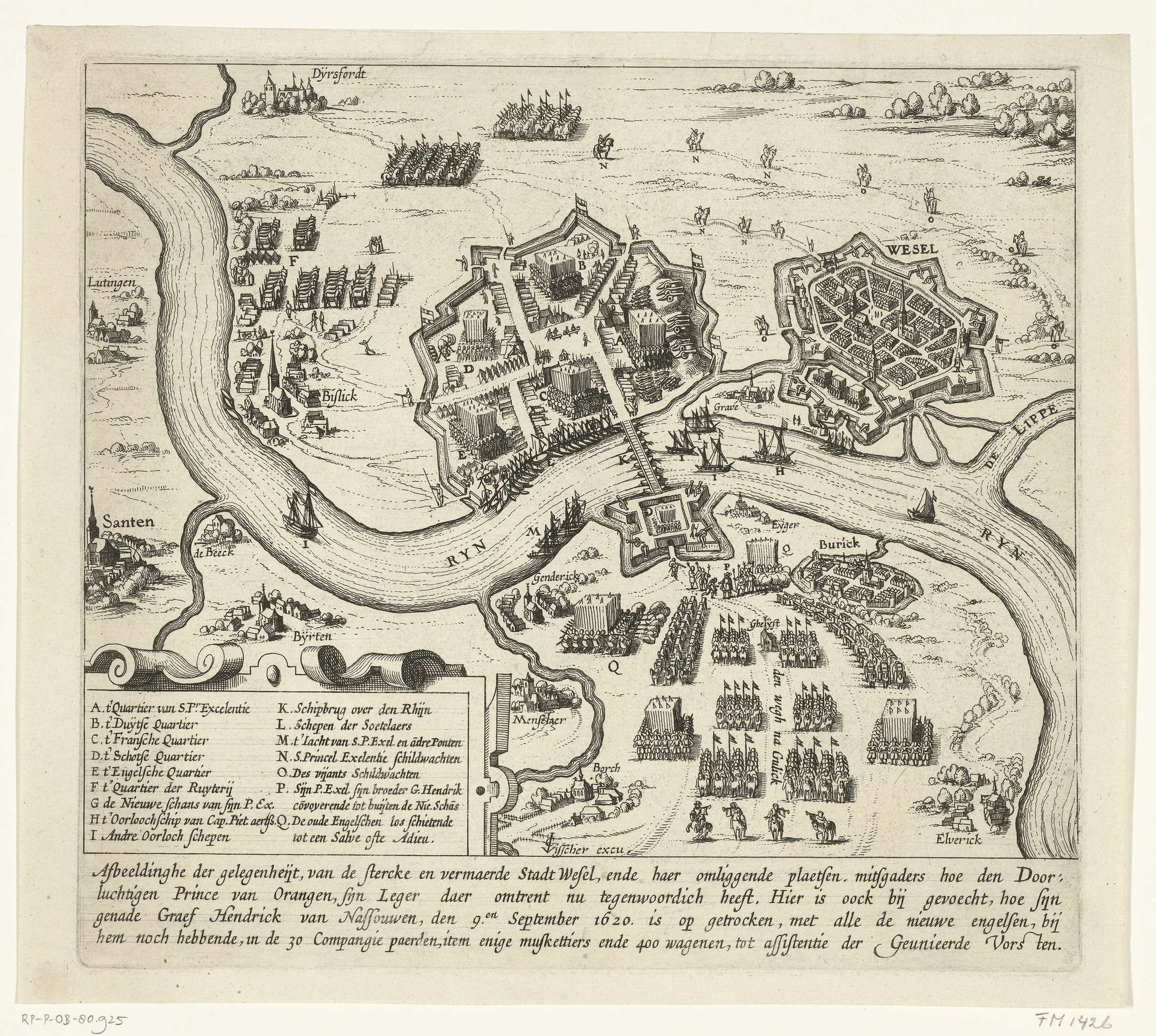
Claes Jansz. Visscher's engraving from 1620 depicts the State Army under Maurits encamped near Wesel, capturing a pivotal moment in the Dutch Republic's struggle for independence during the Eighty Years' War. The image presents more than just military strategy; it reflects the complex interplay of power, religion, and national identity in 17th-century Europe. The detailed map illustrates the landscape but also tells a story of cultural and political tensions. Wesel, strategically important, embodies the conflict between Protestant Dutch forces and Catholic Spanish control. The presence of the "new Englishmen" within Prince Maurits’ army underscores the international dimensions of this conflict, highlighting alliances and shared religious and political interests. The print serves as both a historical record and a piece of propaganda, carefully constructed to assert dominance and legitimize the Dutch cause. It evokes a sense of national pride and resolve. The engraving provides a window into a world shaped by war, faith, and the forging of national identity.
Het Staatse leger onder Maurits gelegerd bij Wesel, 1620
1620

Claes Jansz. Visscher
1586 - 1652Location
RijksmuseumArtwork details
- Medium
- drawing, print, ink, engraving
- Dimensions
- height 253 mm, width 279 mm
- Location
- Rijksmuseum
- Copyright
- Rijks Museum: Open Domain
Tags
drawing
medieval
pen illustration
old engraving style
ink line art
ink
line
pen work
cityscape
engraving
Comments
Be the first to share your thoughts about this work.
About this artwork
Claes Jansz. Visscher's engraving from 1620 depicts the State Army under Maurits encamped near Wesel, capturing a pivotal moment in the Dutch Republic's struggle for independence during the Eighty Years' War. The image presents more than just military strategy; it reflects the complex interplay of power, religion, and national identity in 17th-century Europe. The detailed map illustrates the landscape but also tells a story of cultural and political tensions. Wesel, strategically important, embodies the conflict between Protestant Dutch forces and Catholic Spanish control. The presence of the "new Englishmen" within Prince Maurits’ army underscores the international dimensions of this conflict, highlighting alliances and shared religious and political interests. The print serves as both a historical record and a piece of propaganda, carefully constructed to assert dominance and legitimize the Dutch cause. It evokes a sense of national pride and resolve. The engraving provides a window into a world shaped by war, faith, and the forging of national identity.
Comments
Be the first to share your thoughts about this work.