About this artwork
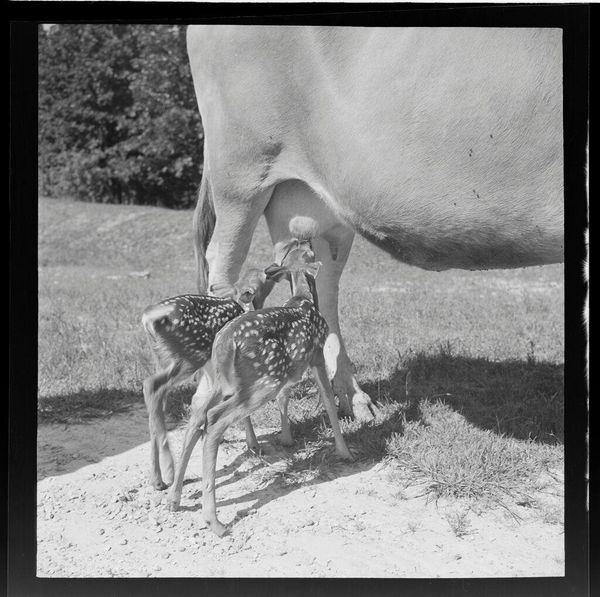
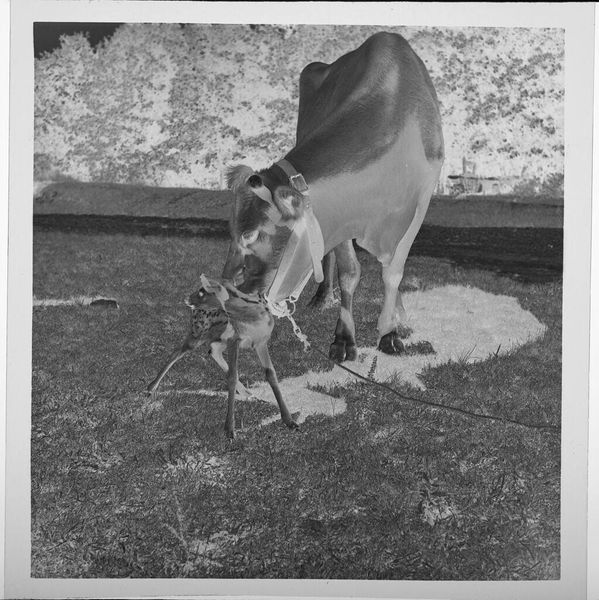
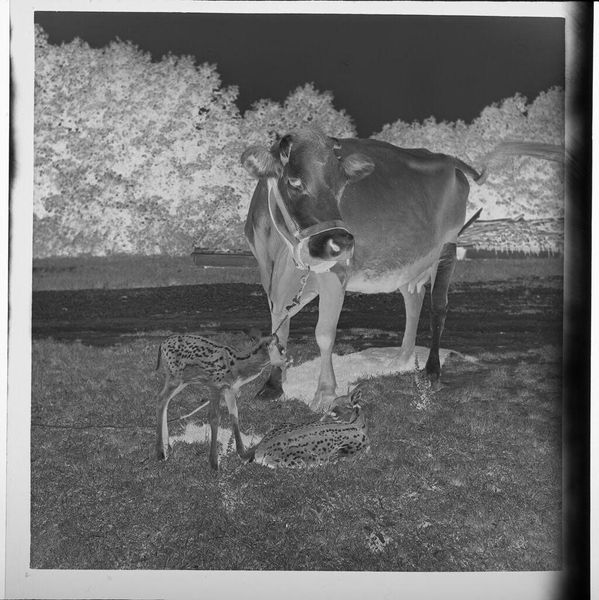
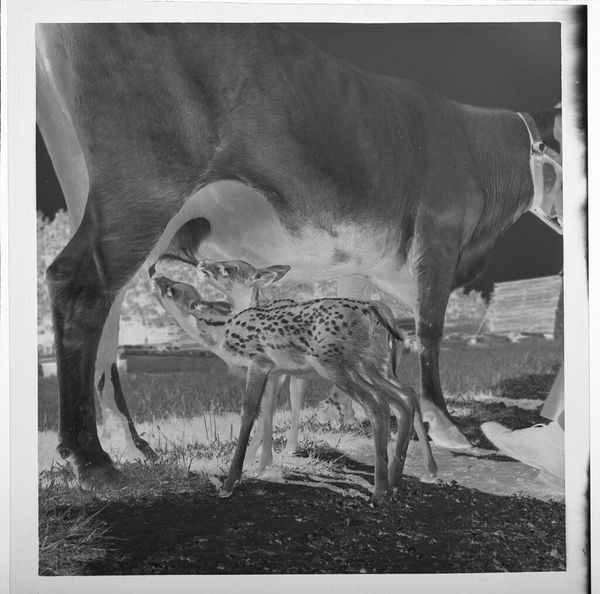
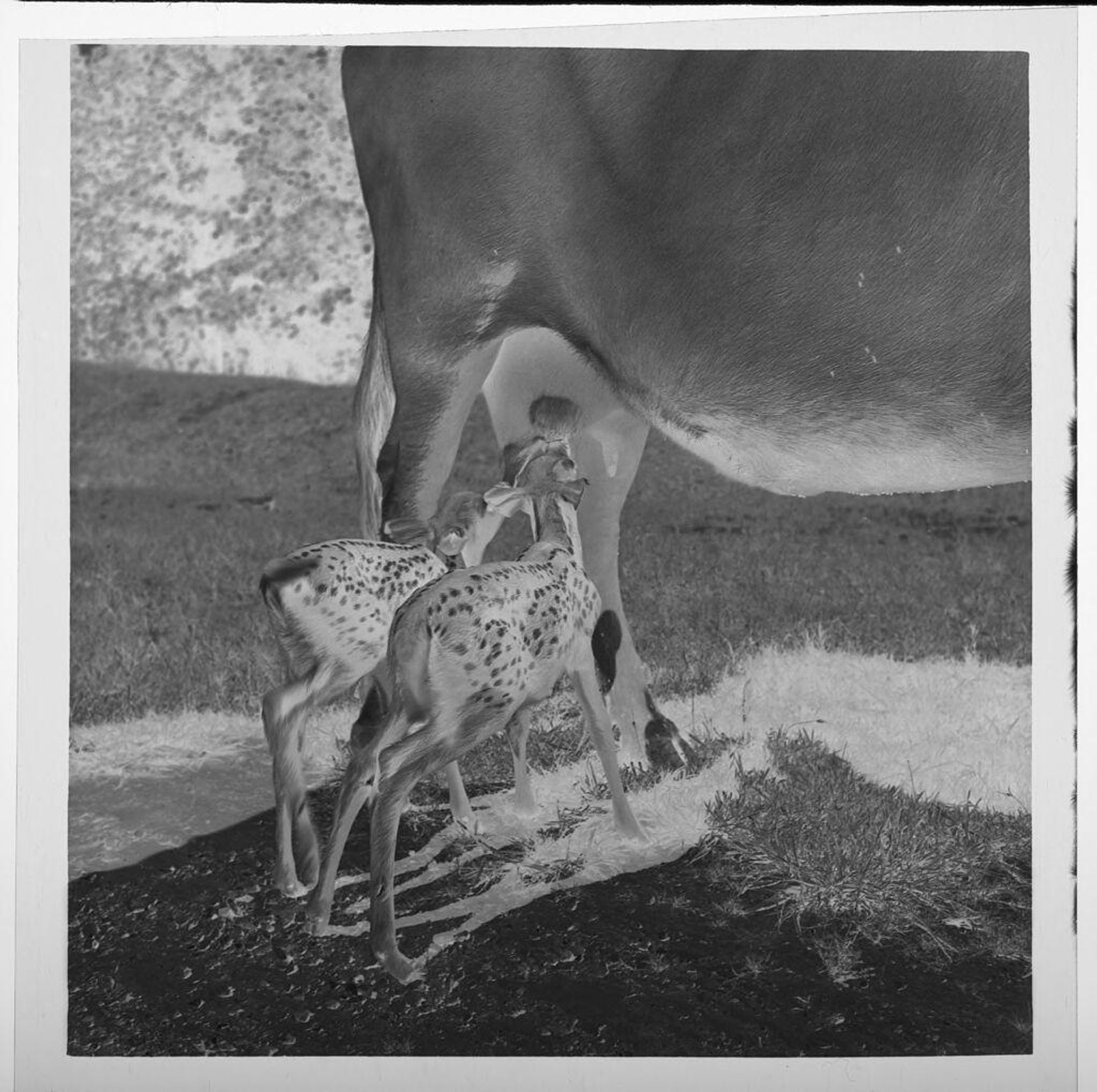
Curator: This evocative photograph by Jack Gould presents us with an unusual scene: baby fawns nursing from a cow. It's a small work, only about 6 x 6 cm. Editor: My first impression is one of vulnerability, but also of profound connection. This image challenges our assumptions about motherhood and species boundaries. Curator: The juxtaposition of deer and cow—wild and domestic—immediately brings to mind ancient myths of nurturing and transformation, a very old motif of interspecies fostering. Editor: Absolutely, and it highlights how "natural" behavior is shaped and defined by circumstance, raising questions about what we consider normal or acceptable in a world increasingly impacted by environmental changes. Curator: It leaves me pondering the universal need for maternal care, transcending these constructed boundaries. Editor: Yes, ultimately it prompts us to reflect on our responsibilities toward all living beings and the artificial constraints we've created.
Untitled (baby fawns nursing from cow)
c. 1950

Artwork details
- Dimensions
- 6 x 6 cm (2 3/8 x 2 3/8 in.)
- Location
- Harvard Art Museums
- Copyright
- CC0 1.0
Comments
Share your thoughts
About this artwork
Curator: This evocative photograph by Jack Gould presents us with an unusual scene: baby fawns nursing from a cow. It's a small work, only about 6 x 6 cm. Editor: My first impression is one of vulnerability, but also of profound connection. This image challenges our assumptions about motherhood and species boundaries. Curator: The juxtaposition of deer and cow—wild and domestic—immediately brings to mind ancient myths of nurturing and transformation, a very old motif of interspecies fostering. Editor: Absolutely, and it highlights how "natural" behavior is shaped and defined by circumstance, raising questions about what we consider normal or acceptable in a world increasingly impacted by environmental changes. Curator: It leaves me pondering the universal need for maternal care, transcending these constructed boundaries. Editor: Yes, ultimately it prompts us to reflect on our responsibilities toward all living beings and the artificial constraints we've created.
Comments
Share your thoughts