Dimensions: image: 640 x 420 mm
Copyright: © Helmut Federle | CC-BY-NC-ND 4.0 DEED, Photo: Tate
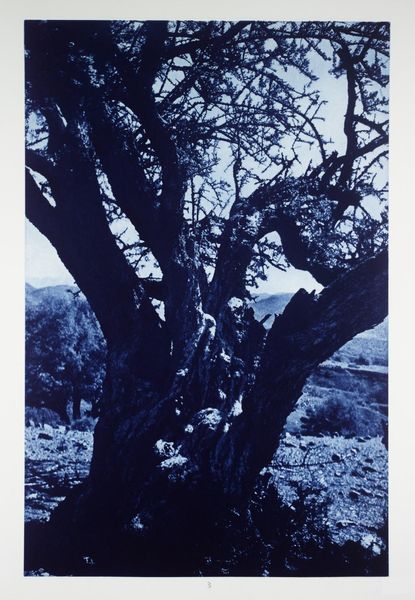
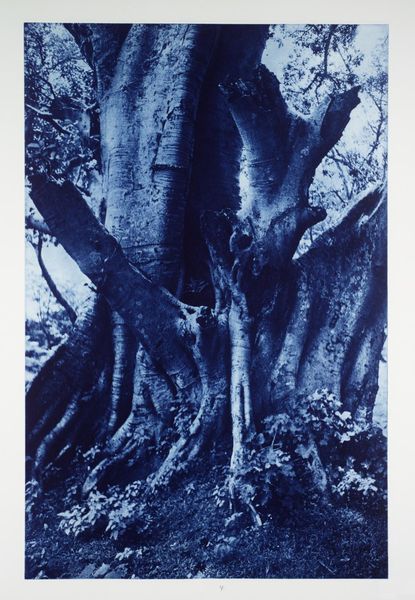
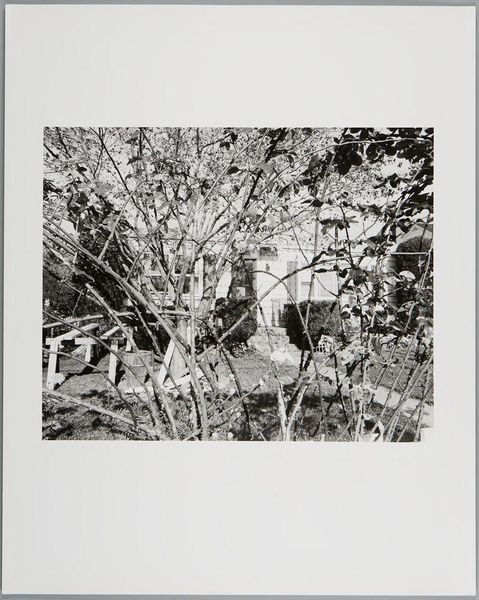
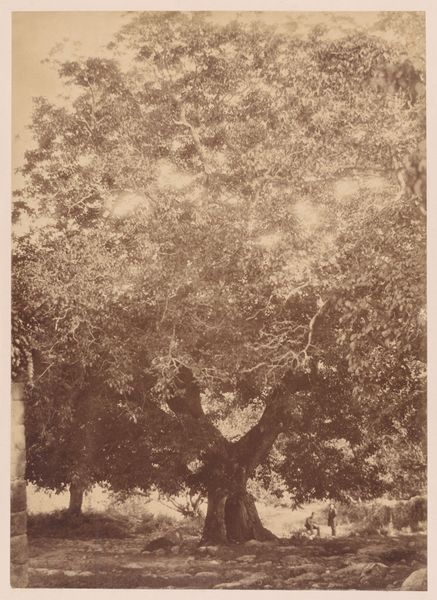
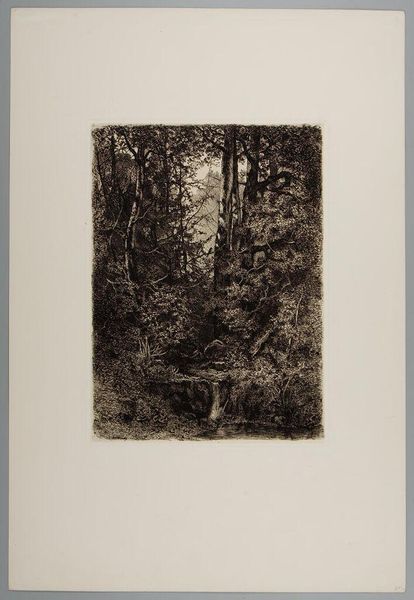
Curator: This is Helmut Federle's "Galisteo, New Mexico," held here at the Tate. Editor: It's overwhelmingly blue, isn't it? Like stepping into a memory, or a dream of a forest. Curator: It's a cyanotype, a photographic printing process that gives that distinctive cyan-blue print. These were first created in the 1840s. It became known as a predominantly feminine technique due to Anna Atkins, who was known for her botanical impressions. Editor: Yes, I see the botanical echoes. The branches arching overhead feel protective, almost maternal. The color lends it a timeless, almost spiritual quality. Curator: Interesting to think of this quiet scene carrying that association. In the context of photographic history, it's speaking to the gendering of the technique. Editor: I wonder about the setting itself, Galisteo. New Mexico has long been a draw for artists. Curator: Yes, Federle is Swiss, but he clearly felt a pull to that American landscape, embedding the history of the place into his work. Editor: Seeing the way the shadows play, one can understand the allure for generations. Curator: Absolutely. A simple method, with a wealth of artistic history.
Comments

tate 12 months ago
⋮
http://www.tate.org.uk/art/artworks/federle-galisteo-new-mexico-p78637


Join the conversation
Join millions of artists and users on Artera today and experience the ultimate creative platform.
tate 12 months ago
⋮
Blue Sisters, Structures of Deviance is a portfolio of ten prints executed in blue ink on white paper. Five are photogravures depicting trees. The other five are soft ground etching and aquatint on paper; these images are abstract and have a smaller plate size than the photogravures. The prints were produced at Druckatelier Kurt Zein in Vienna, where the artist lives and works. They were published in an edition of thirty-five with ten artist’s and publisher’s proofs; Tate owns number eleven in the edition.
 Collect
More like this