About this artwork
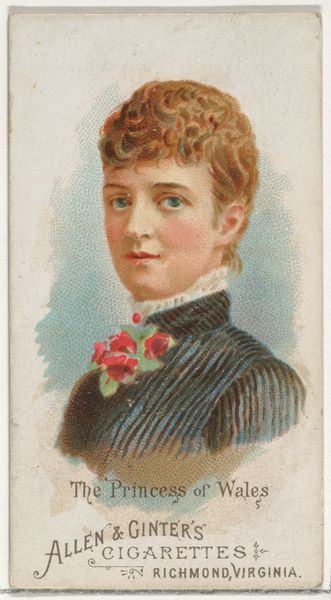
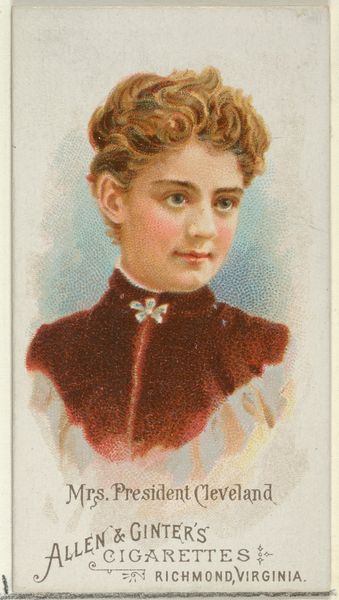
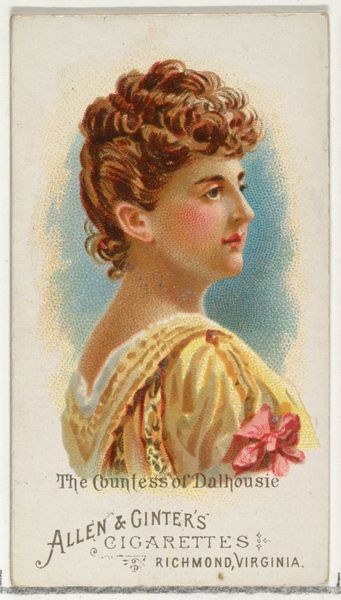
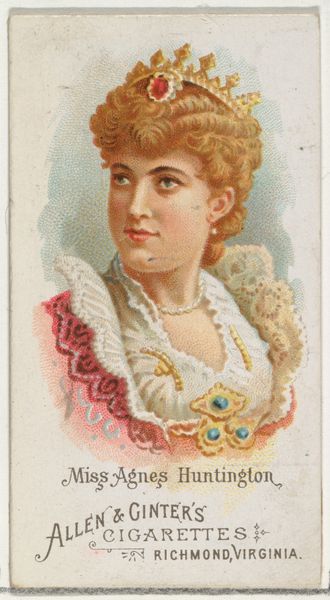
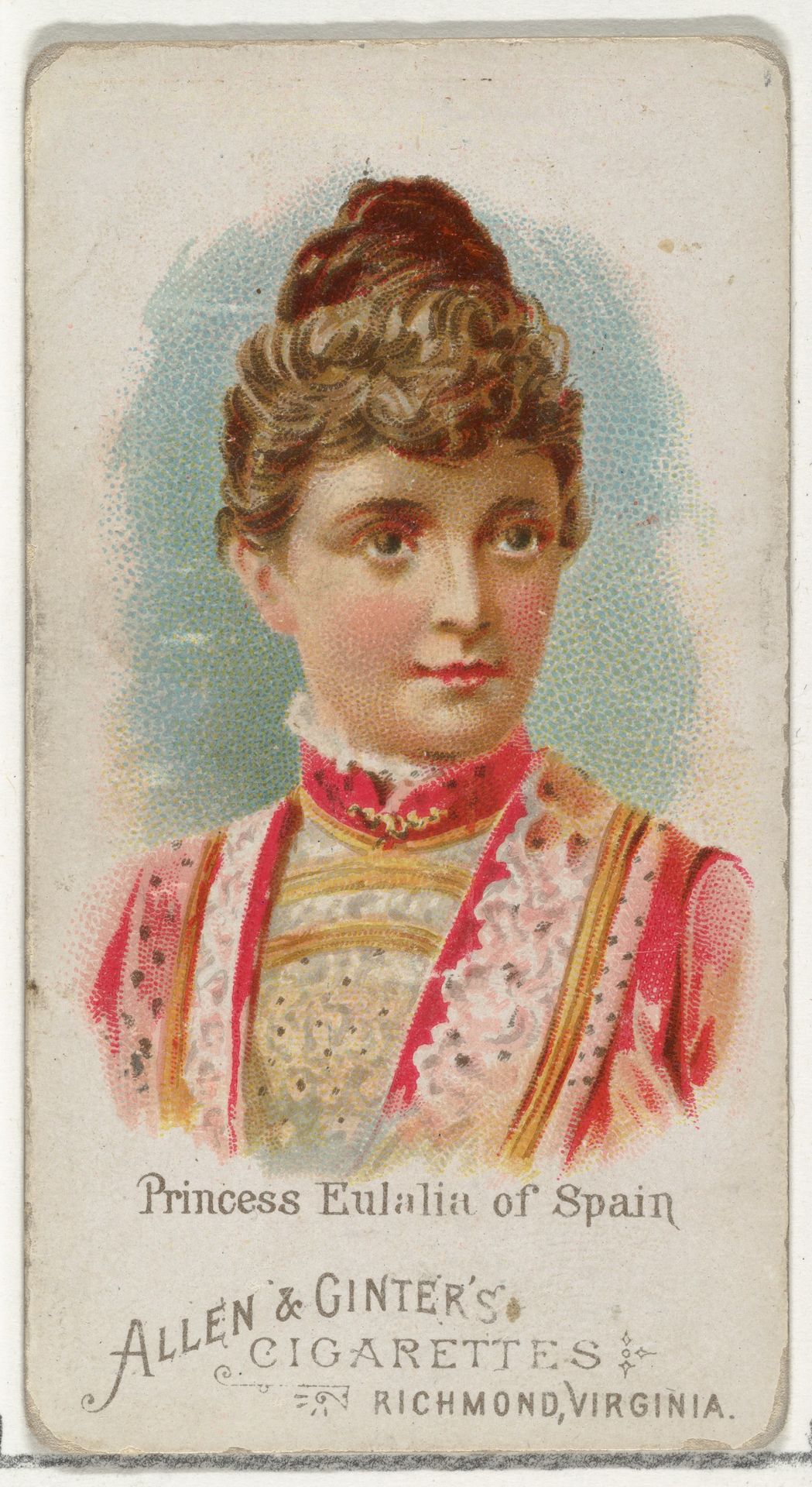
This small chromolithograph, a promotional card for Allen & Ginter Cigarettes, presents Princess Eulalia of Spain amidst a constellation of signs and cultural values. The composition is neatly divided. The Princess’s idealized visage occupies the upper two-thirds, framed by soft blues. Below, the company's branding asserts commercial dominance. Consider how the artist uses color: pinks and golds soften what could be a rigid, hierarchical portrait. These colors and the lacy details undermine expectations; rather than a stern royal, Eulalia appears approachable, packaged for mass consumption. Here, the semiotic structure operates on multiple levels. The image signifies royalty and beauty, yet it also represents a commodity in an emerging consumer culture. The card itself, a small, mass-produced object, embodies a tension between aristocracy and accessibility. It invites us to reflect on how images circulate and accumulate meaning within society.
Princess Eulalia of Spain, from World's Beauties, Series 1 (N26) for Allen & Ginter Cigarettes
1888


Artwork details
- Medium
- Dimensions
- Sheet: 2 3/4 x 1 1/2 in. (7 x 3.8 cm)
- Location
- Metropolitan Museum of Art, New York, NY
- Copyright
- Public Domain
Tags
Comments
Share your thoughts
About this artwork
This small chromolithograph, a promotional card for Allen & Ginter Cigarettes, presents Princess Eulalia of Spain amidst a constellation of signs and cultural values. The composition is neatly divided. The Princess’s idealized visage occupies the upper two-thirds, framed by soft blues. Below, the company's branding asserts commercial dominance. Consider how the artist uses color: pinks and golds soften what could be a rigid, hierarchical portrait. These colors and the lacy details undermine expectations; rather than a stern royal, Eulalia appears approachable, packaged for mass consumption. Here, the semiotic structure operates on multiple levels. The image signifies royalty and beauty, yet it also represents a commodity in an emerging consumer culture. The card itself, a small, mass-produced object, embodies a tension between aristocracy and accessibility. It invites us to reflect on how images circulate and accumulate meaning within society.
Comments
Share your thoughts