About this artwork
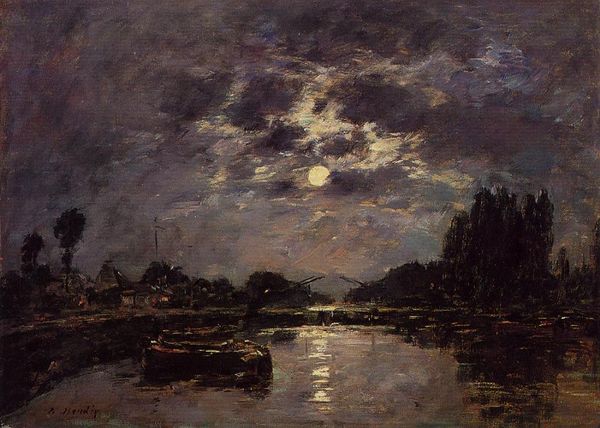
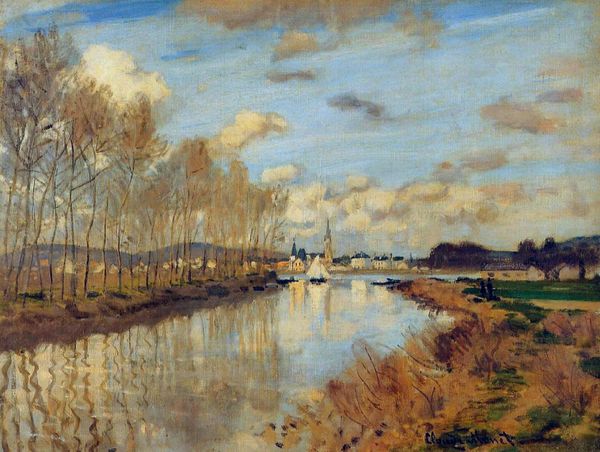
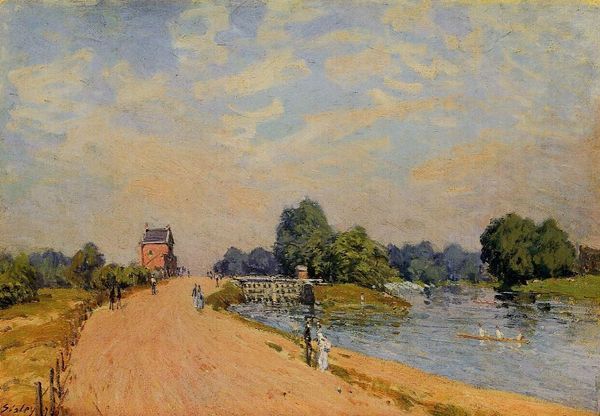
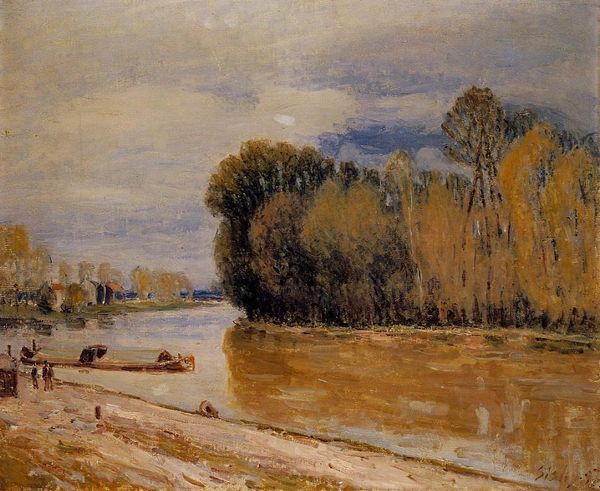
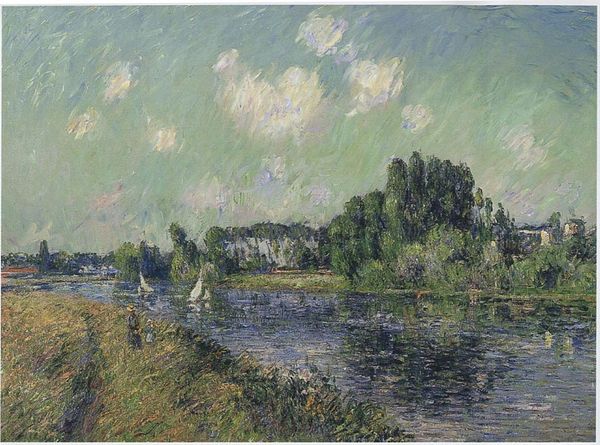
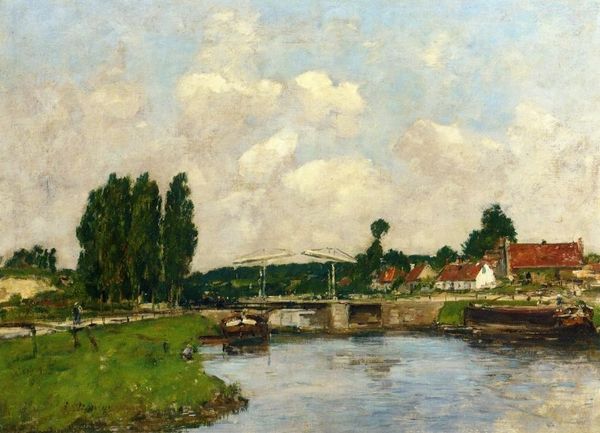
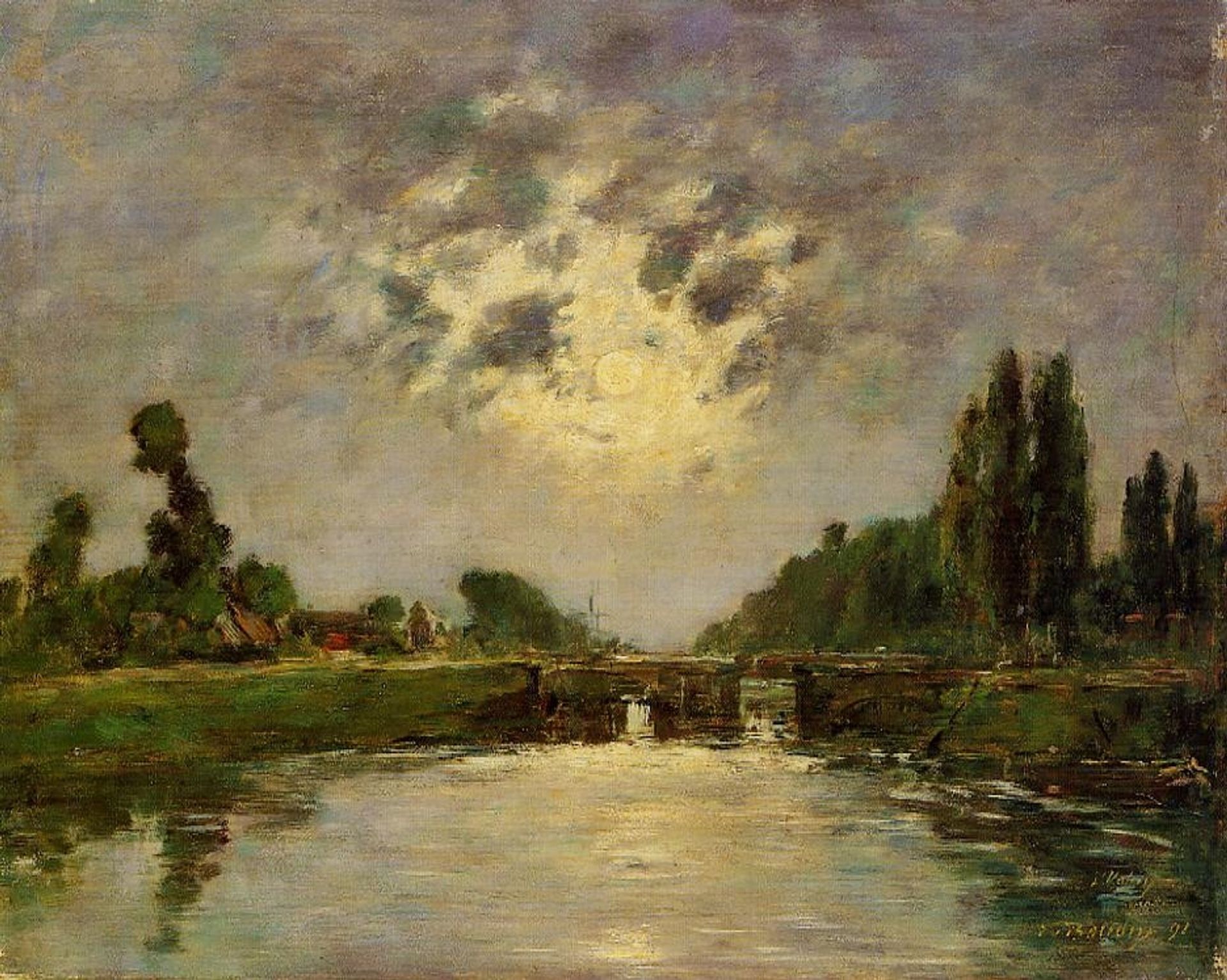
Eugène Boudin painted this view of Saint-Valery-sur-Somme, the Bridge on the Lock, in an era defined by France's rapid industrialization and social change. Boudin, a precursor to Impressionism, captured the transient effects of light and atmosphere, reflecting a shift away from traditional academic painting toward a more direct engagement with the lived experience of modernity. Consider the cultural context: the mid-19th century was a time of increasing urbanization and the rise of the bourgeoisie, who sought leisure and escape in the coastal towns depicted by artists like Boudin. His seascapes and landscapes offered an alternative to the rigid social structures of the time. Boudin once said his goal was "to capture the beauty of nature." In this painting, the hazy light and reflective water invite us to contemplate the relationship between nature and human presence. It evokes a sense of stillness, yet it also hints at the constant flux of life and the passage of time. In its emotional and personal dimensions, Boudin’s work creates a space for reflection on our place within the broader historical landscape.
Saint-Valery-sur-Somme, the Bridge on the Lock
1891

Eugène Boudin
1824 - 1898Location
Private CollectionArtwork details
- Location
- Private Collection
- Copyright
- Public domain
Comments
Share your thoughts
About this artwork
Eugène Boudin painted this view of Saint-Valery-sur-Somme, the Bridge on the Lock, in an era defined by France's rapid industrialization and social change. Boudin, a precursor to Impressionism, captured the transient effects of light and atmosphere, reflecting a shift away from traditional academic painting toward a more direct engagement with the lived experience of modernity. Consider the cultural context: the mid-19th century was a time of increasing urbanization and the rise of the bourgeoisie, who sought leisure and escape in the coastal towns depicted by artists like Boudin. His seascapes and landscapes offered an alternative to the rigid social structures of the time. Boudin once said his goal was "to capture the beauty of nature." In this painting, the hazy light and reflective water invite us to contemplate the relationship between nature and human presence. It evokes a sense of stillness, yet it also hints at the constant flux of life and the passage of time. In its emotional and personal dimensions, Boudin’s work creates a space for reflection on our place within the broader historical landscape.
Comments
Share your thoughts