About this artwork
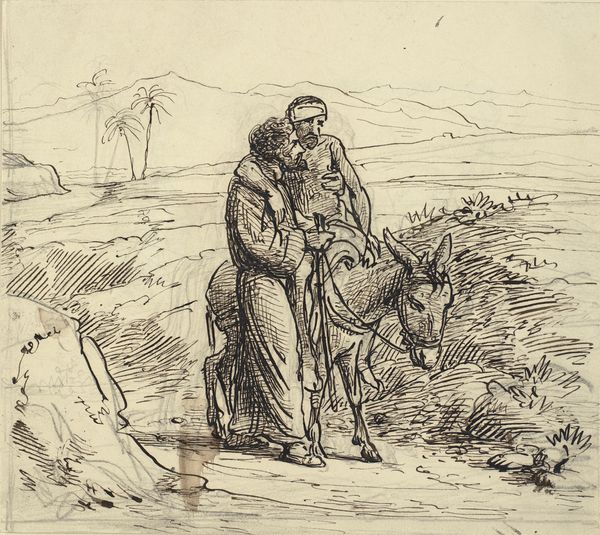
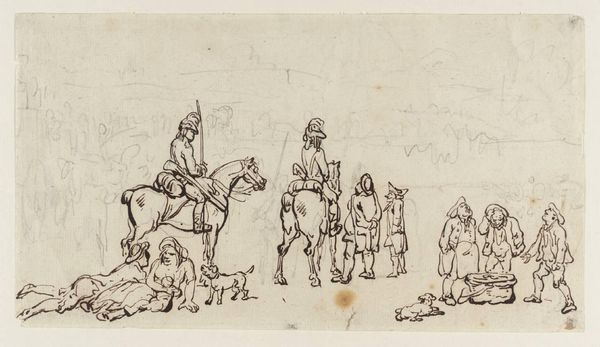
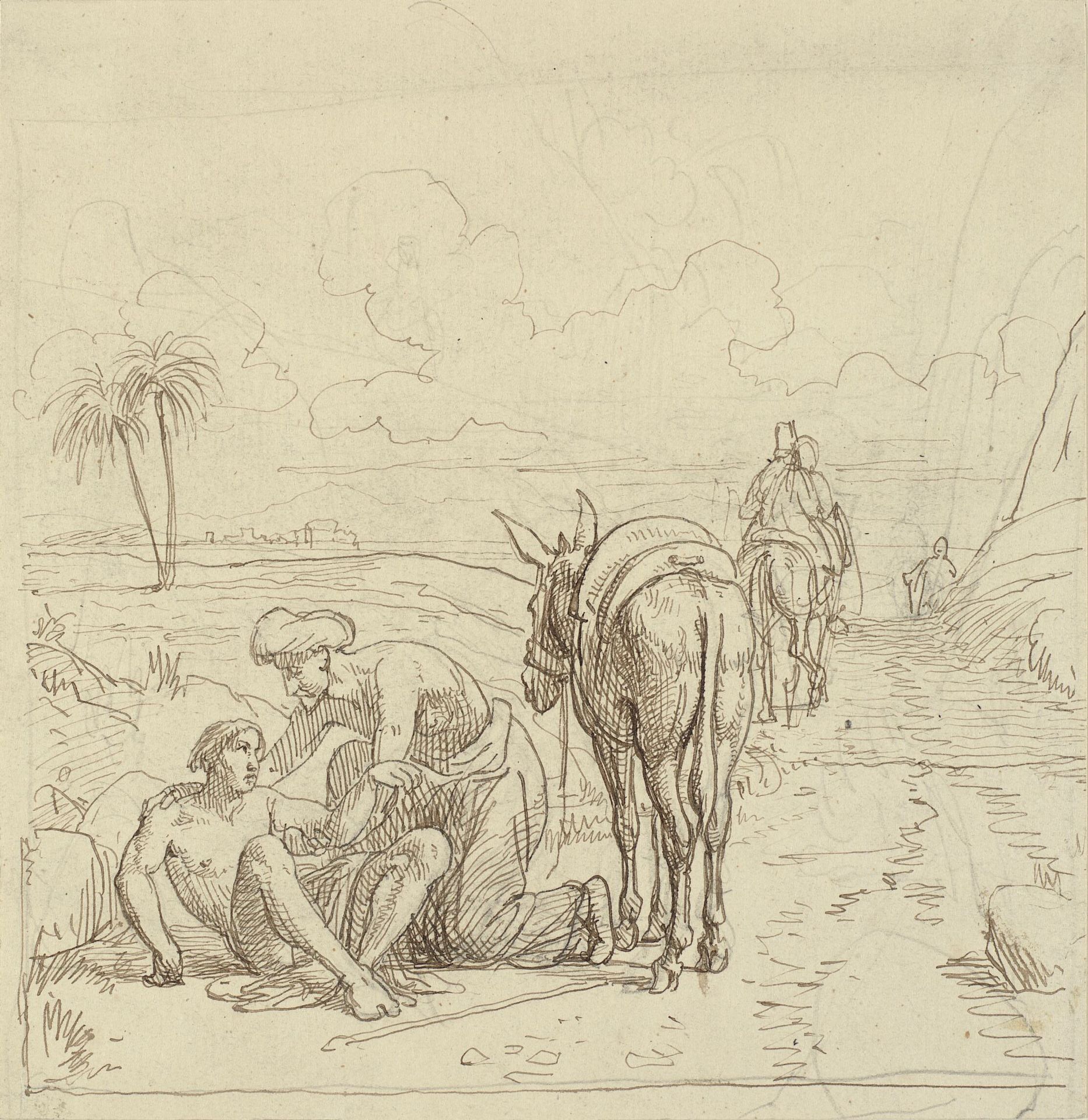
Wilhelm Marstrand made this drawing, Den barmhjertige samaritan finder den sårede, with pen and brown ink. Here we see the parable of the Good Samaritan, a tale of compassion transcending social divisions, as told in the Gospel of Luke. Marstrand, a product of Denmark's Golden Age, was deeply embedded in the cultural and religious norms of his time, yet he was also part of a burgeoning artistic scene. He studied at the Royal Danish Academy of Fine Arts which played a significant role in shaping artistic styles and values. This seemingly straightforward biblical scene subtly critiques contemporary society. By focusing on the Samaritan’s act of kindness, Marstrand may have been prompting viewers to reflect on their own moral responsibilities and societal prejudices. He urges a consideration of who is excluded from social care. To fully appreciate Marstrand's work, we need to examine the art academy and the function of religious imagery. The image’s meaning is never fixed, and is always shaped by social and institutional contexts.
Den barmhjertige samaritan finder den sårede
1810 - 1873


Artwork details
- Medium
- drawing, pen
- Dimensions
- 201 mm (height) x 195 mm (width) (bladmaal)
- Location
- SMK - Statens Museum for Kunst
Tags
Comments
Share your thoughts
About this artwork
Wilhelm Marstrand made this drawing, Den barmhjertige samaritan finder den sårede, with pen and brown ink. Here we see the parable of the Good Samaritan, a tale of compassion transcending social divisions, as told in the Gospel of Luke. Marstrand, a product of Denmark's Golden Age, was deeply embedded in the cultural and religious norms of his time, yet he was also part of a burgeoning artistic scene. He studied at the Royal Danish Academy of Fine Arts which played a significant role in shaping artistic styles and values. This seemingly straightforward biblical scene subtly critiques contemporary society. By focusing on the Samaritan’s act of kindness, Marstrand may have been prompting viewers to reflect on their own moral responsibilities and societal prejudices. He urges a consideration of who is excluded from social care. To fully appreciate Marstrand's work, we need to examine the art academy and the function of religious imagery. The image’s meaning is never fixed, and is always shaped by social and institutional contexts.
Comments
Share your thoughts