About this artwork
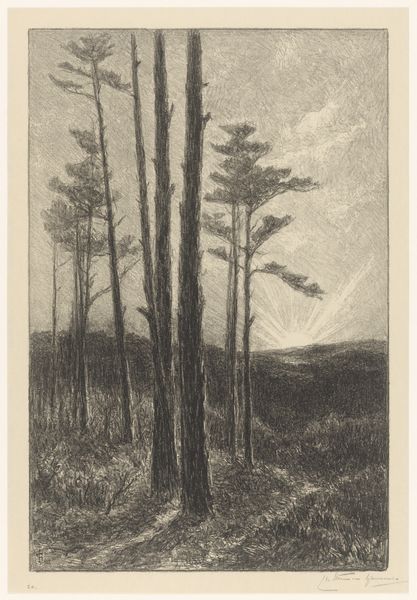
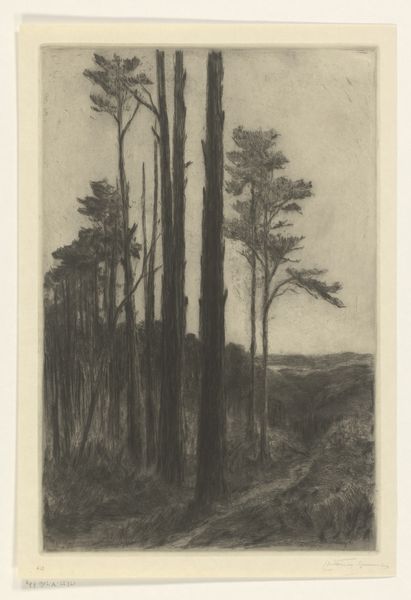
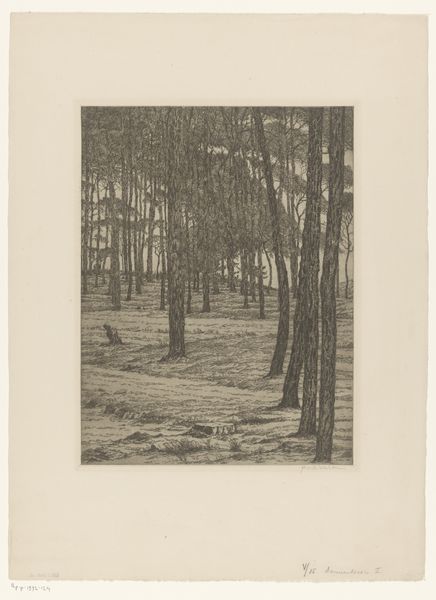
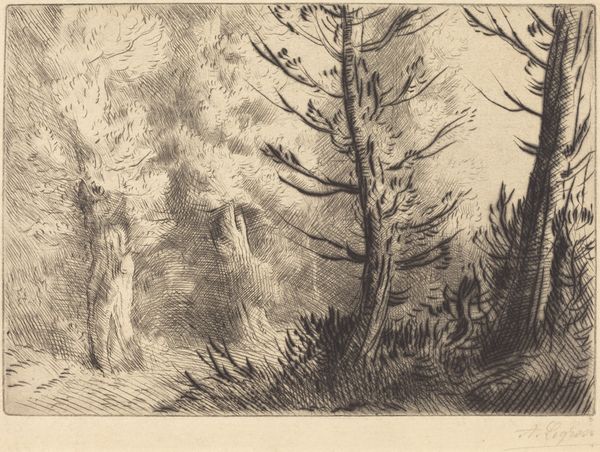
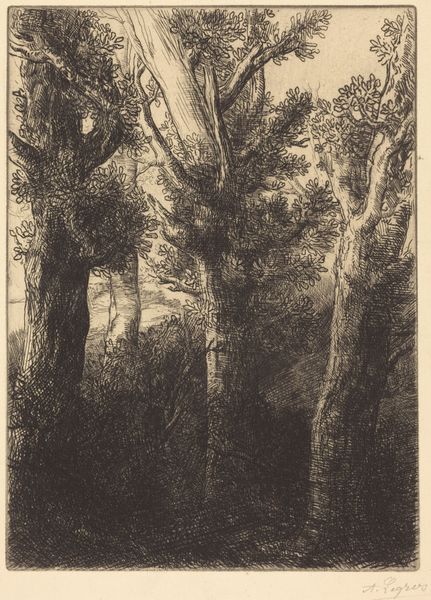
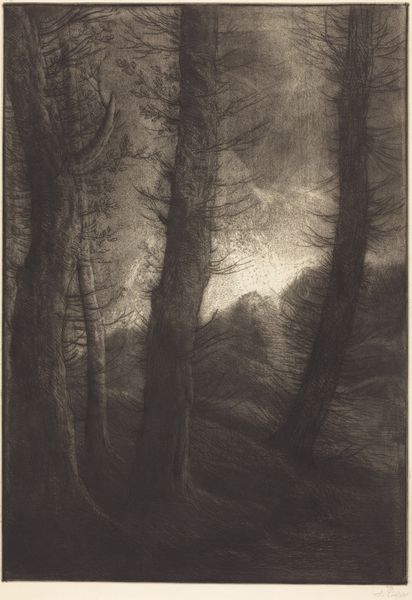
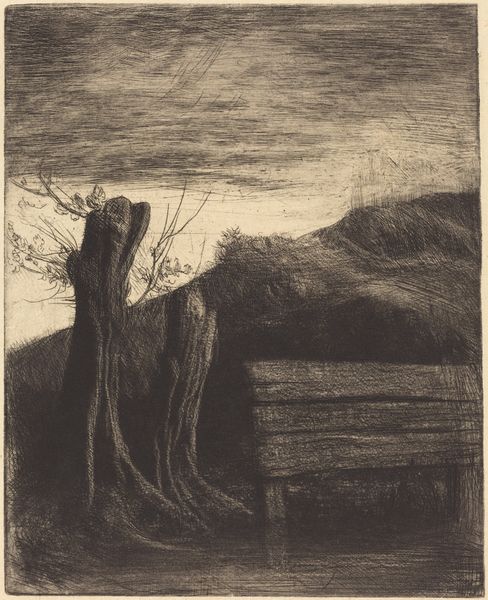
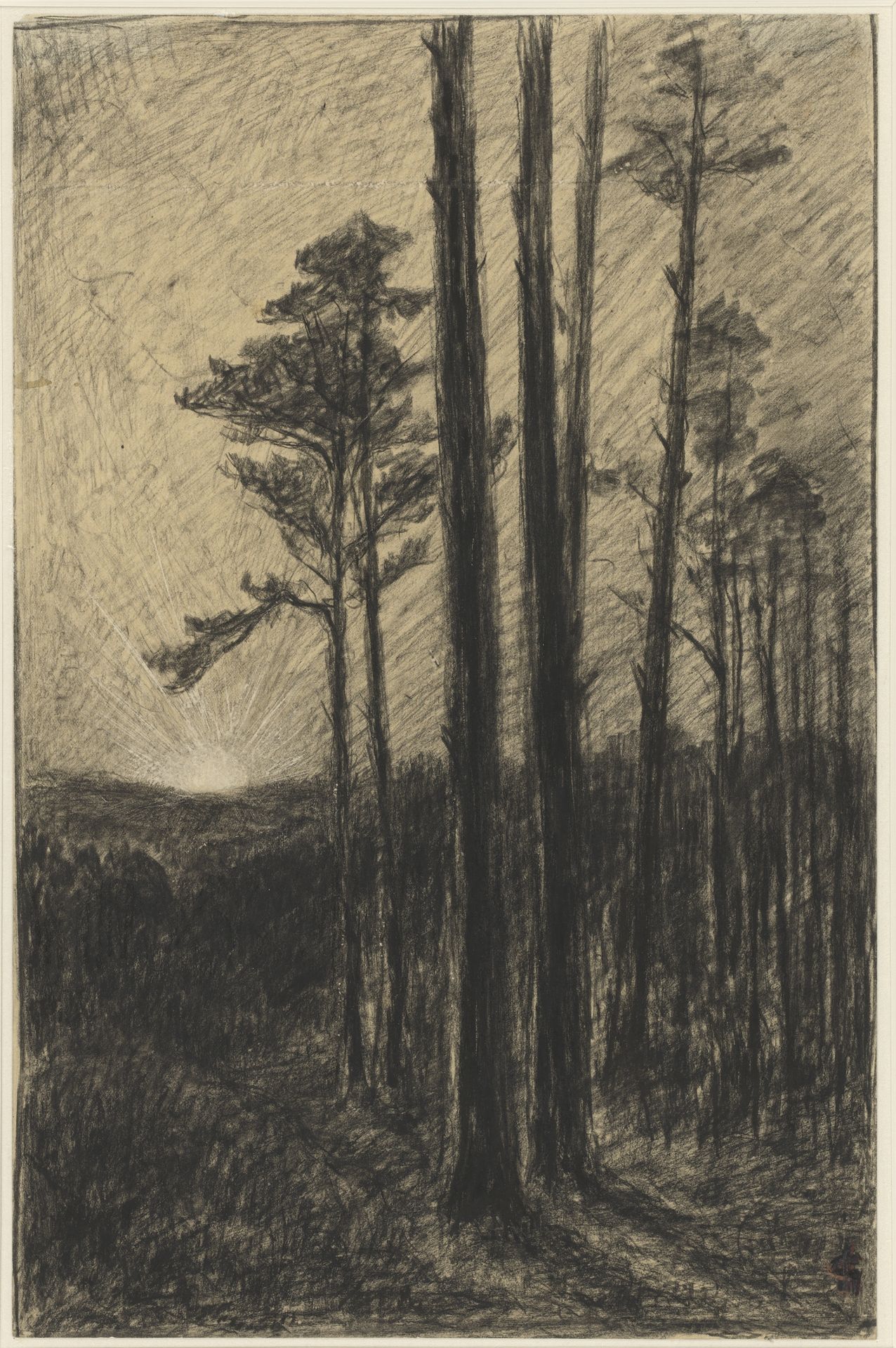
Carel Nicolaas Storm van 's-Gravesande made this evocative etching, Naaldwoud met ondergaande zon, or 'Coniferous Forest at Sunset', in the Netherlands at the end of the 19th century. Its stark contrasts of light and shadow suggest the influence of the Hague School, a Dutch art movement interested in the tonal qualities of a scene. The forest was a recurring motif in European art. While in previous centuries it was a dangerous, untamed space, by the late 1800s it was regarded as an important national resource. In the Netherlands, landowners managed forests for timber and hunting. Yet, these forests also provided opportunities for recreation and reflection to the expanding middle classes. As industrialisation and urbanisation increased, so did the need for the open spaces and 'unspoiled' nature. Knowing the social and economic conditions helps us understand the values that the artist and his audience placed on the natural world. By studying the social history of artistic production, we gain insights into the complex relationship between art and society.
Naaldwoud met ondergaande zon 1851 - 1924

Carel Nicolaas Storm van 's-Gravesande
1841 - 1924Location
RijksmuseumArtwork details
- Dimensions
- height 420 mm, width 275 mm
- Location
- Rijksmuseum
- Copyright
- Rijks Museum: Open Domain
Comments
No comments
About this artwork
Carel Nicolaas Storm van 's-Gravesande made this evocative etching, Naaldwoud met ondergaande zon, or 'Coniferous Forest at Sunset', in the Netherlands at the end of the 19th century. Its stark contrasts of light and shadow suggest the influence of the Hague School, a Dutch art movement interested in the tonal qualities of a scene. The forest was a recurring motif in European art. While in previous centuries it was a dangerous, untamed space, by the late 1800s it was regarded as an important national resource. In the Netherlands, landowners managed forests for timber and hunting. Yet, these forests also provided opportunities for recreation and reflection to the expanding middle classes. As industrialisation and urbanisation increased, so did the need for the open spaces and 'unspoiled' nature. Knowing the social and economic conditions helps us understand the values that the artist and his audience placed on the natural world. By studying the social history of artistic production, we gain insights into the complex relationship between art and society.
Comments
No comments