About this artwork
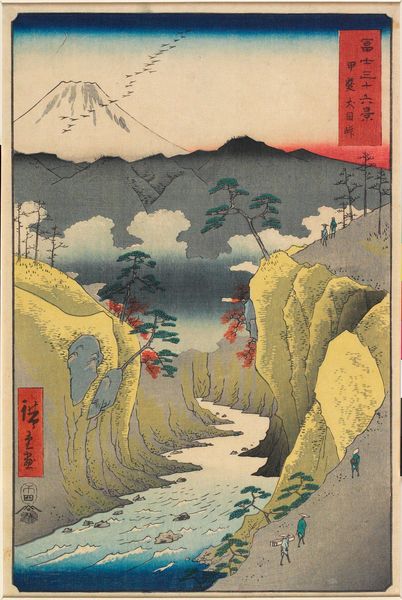
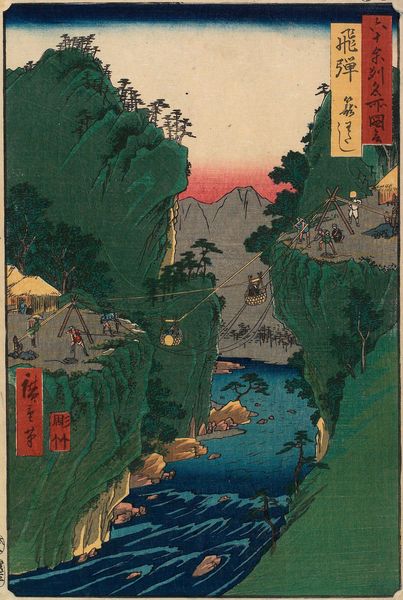
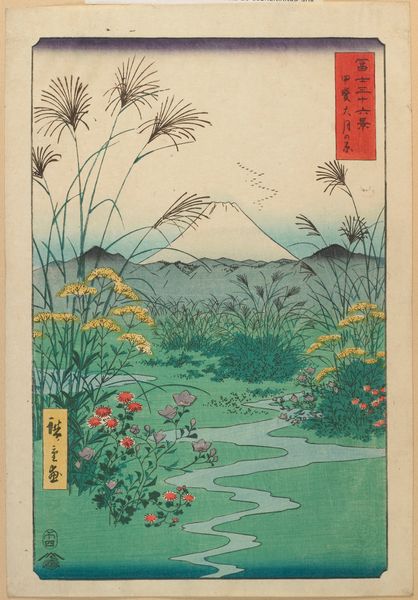
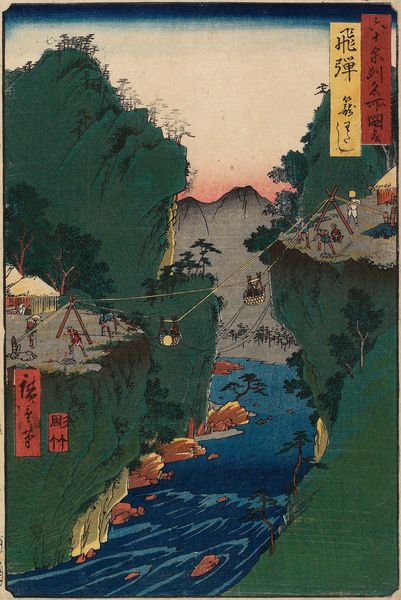
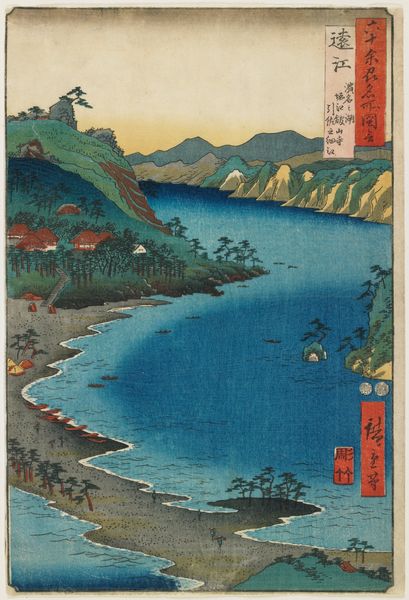
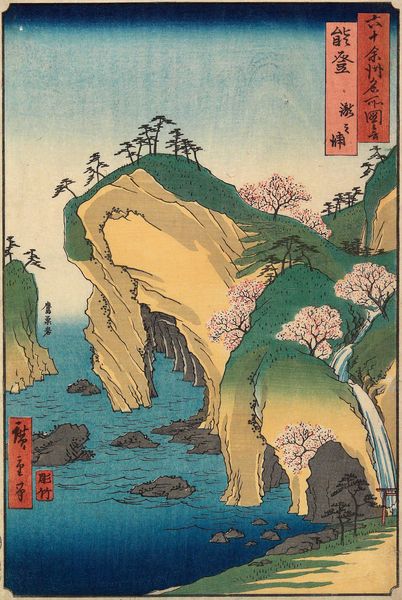
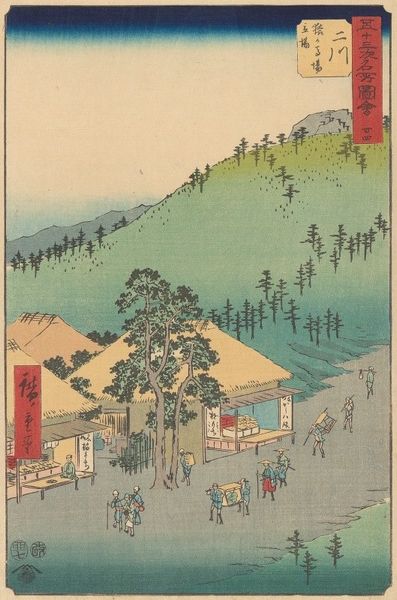
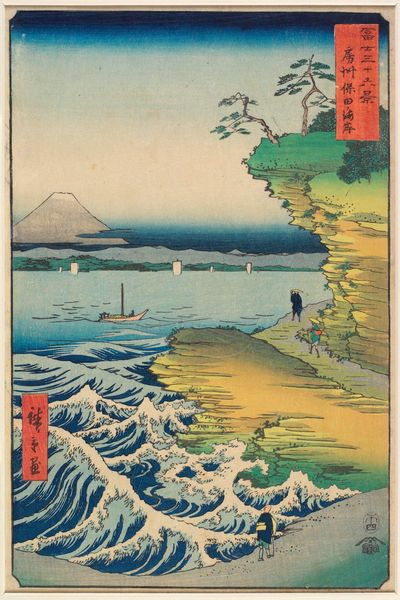
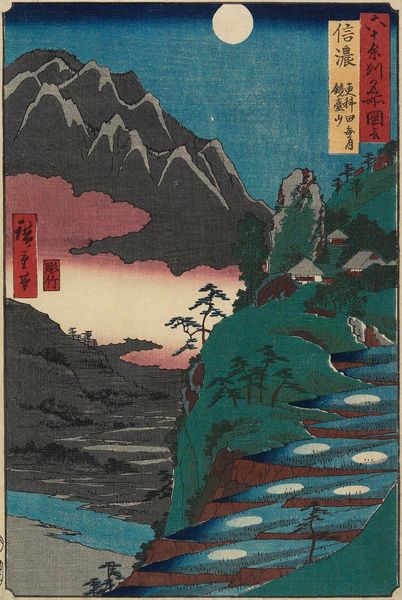
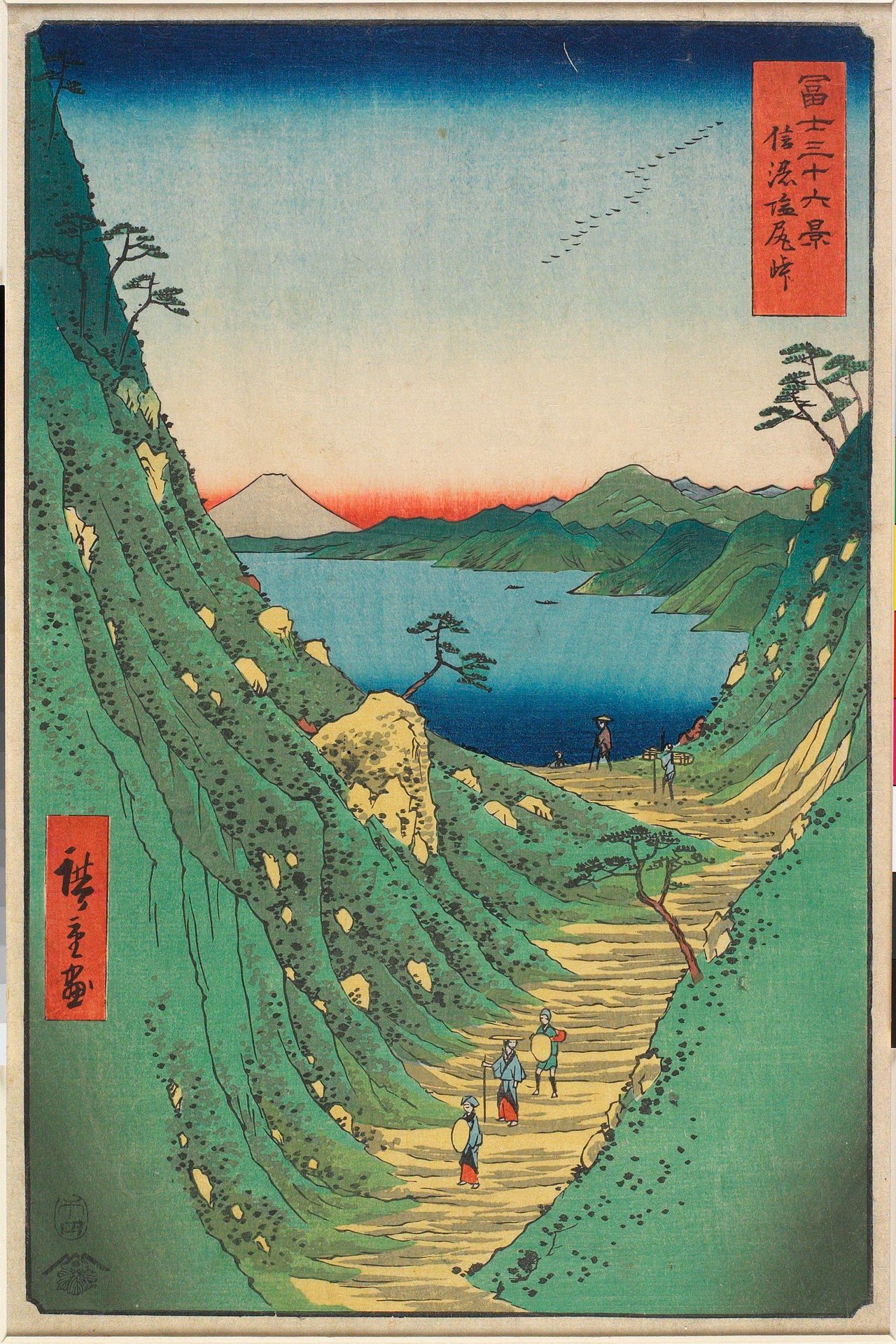
Utagawa Hiroshige designed this woodblock print, "Shiojiri Pass in Shinano Province," as part of his series "Thirty-Six Views of Mount Fuji," sometime between 1852 and 1858. Hiroshige's series was produced during the late Edo period in Japan, a time of relative peace and economic growth under the Tokugawa shogunate. Woodblock prints like this one catered to a growing merchant class with an interest in travel and leisure. They reflect a broader cultural fascination with landscapes and famous sites. The print's composition, with its receding perspective and inclusion of travelers on a mountain path, invites the viewer to imagine experiencing the journey to the mountain firsthand. The placement of Mount Fuji in the distance emphasizes its symbolic importance in Japanese culture. Art historians rely on various sources, including historical documents and cultural studies, to understand the social and cultural context of artworks like this. The meaning of "Shiojiri Pass" is contingent on its historical and institutional context.
Shiojiri Pass in Shinano Province Possibly 1858


Artwork details
- Medium
- print, ink, woodblock-print
- Dimensions
- 13 1/4 × 8 11/16 in. (33.7 × 22 cm) (image, vertical ōban)
- Location
- Minneapolis Institute of Art
- Copyright
- Public Domain
Tags
ink painting
asian-art
landscape
ukiyo-e
japan
ink
woodblock-print
orientalism
line
realism
Comments
No comments
About this artwork
Utagawa Hiroshige designed this woodblock print, "Shiojiri Pass in Shinano Province," as part of his series "Thirty-Six Views of Mount Fuji," sometime between 1852 and 1858. Hiroshige's series was produced during the late Edo period in Japan, a time of relative peace and economic growth under the Tokugawa shogunate. Woodblock prints like this one catered to a growing merchant class with an interest in travel and leisure. They reflect a broader cultural fascination with landscapes and famous sites. The print's composition, with its receding perspective and inclusion of travelers on a mountain path, invites the viewer to imagine experiencing the journey to the mountain firsthand. The placement of Mount Fuji in the distance emphasizes its symbolic importance in Japanese culture. Art historians rely on various sources, including historical documents and cultural studies, to understand the social and cultural context of artworks like this. The meaning of "Shiojiri Pass" is contingent on its historical and institutional context.
Comments
No comments