About this artwork
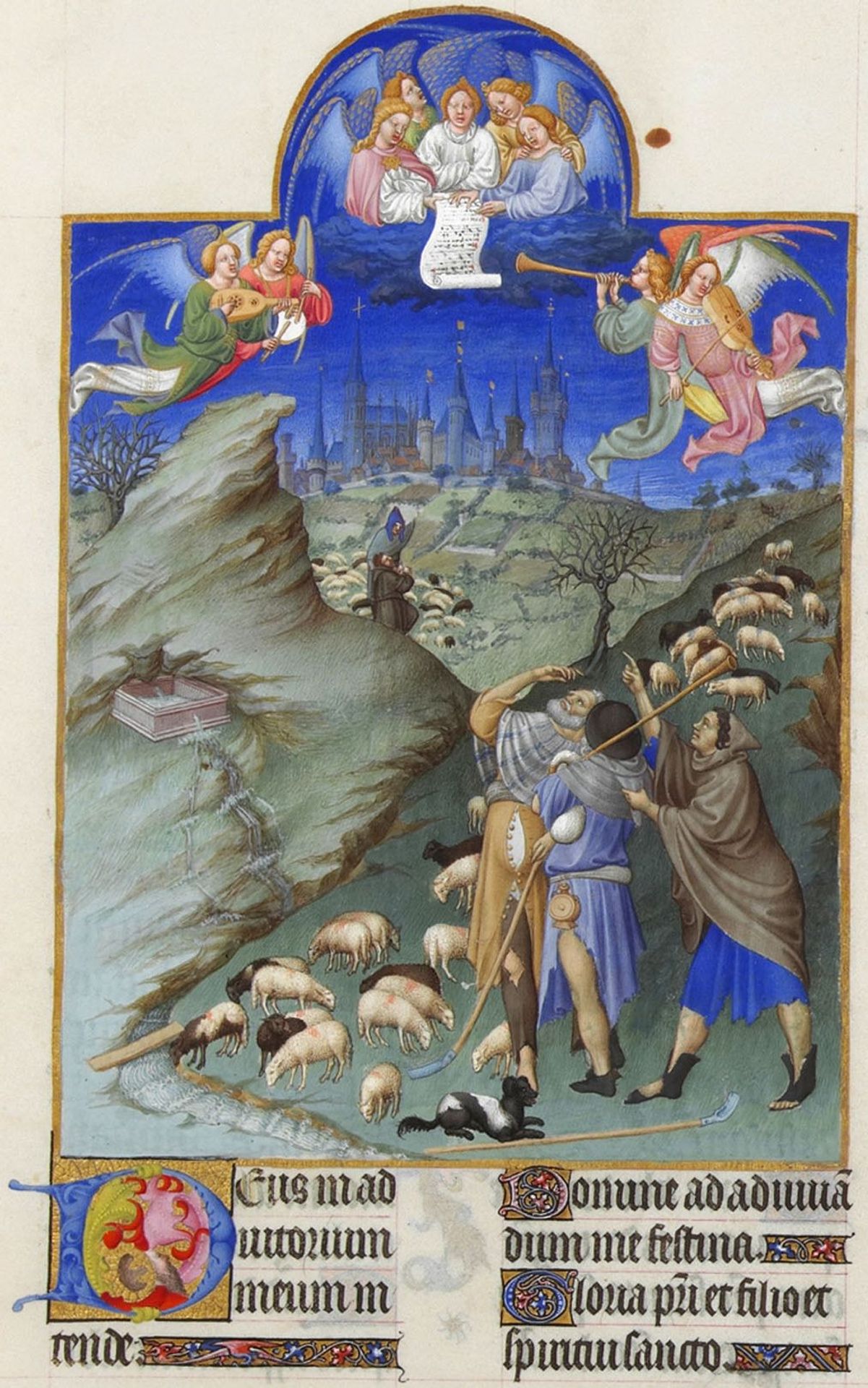
This is the Limbourg brothers' "The Annunciation to the Shepherds," a medieval illuminated manuscript. The brothers lived in a time when the lines between religious devotion, artistic patronage, and social hierarchy were sharply defined. Here, we see the biblical scene of shepherds receiving news of Christ's birth. But consider the socio-political layers: The Limbourg brothers were commissioned by wealthy patrons. Art served as a display of power and wealth. This image flattens class and identity; the shepherds are rendered with the same level of detail as the angels, blurring social boundaries in a moment of divine revelation. The emotionality of the scene is palpable – a sense of awe. Yet, it's also a carefully constructed image, reflecting the values of its commissioners. "The Annunciation" invites us to reflect on the intersections of faith, power, and artistic representation in the late medieval period. How do such images both reinforce and subtly challenge the social order?
The Annunciation to the Shepherds

Limbourg brothers
1385 - 1416Location
Musée Condé, Chantilly, FranceArtwork details
- Medium
- tempera, painting, watercolor
- Location
- Musée Condé, Chantilly, France
- Copyright
- Public domain
Tags
medieval
water colours
narrative-art
tempera
painting
landscape
figuration
watercolor
international-gothic
miniature
watercolor
angel
Comments
No comments
About this artwork
This is the Limbourg brothers' "The Annunciation to the Shepherds," a medieval illuminated manuscript. The brothers lived in a time when the lines between religious devotion, artistic patronage, and social hierarchy were sharply defined. Here, we see the biblical scene of shepherds receiving news of Christ's birth. But consider the socio-political layers: The Limbourg brothers were commissioned by wealthy patrons. Art served as a display of power and wealth. This image flattens class and identity; the shepherds are rendered with the same level of detail as the angels, blurring social boundaries in a moment of divine revelation. The emotionality of the scene is palpable – a sense of awe. Yet, it's also a carefully constructed image, reflecting the values of its commissioners. "The Annunciation" invites us to reflect on the intersections of faith, power, and artistic representation in the late medieval period. How do such images both reinforce and subtly challenge the social order?
Comments
No comments