About this artwork
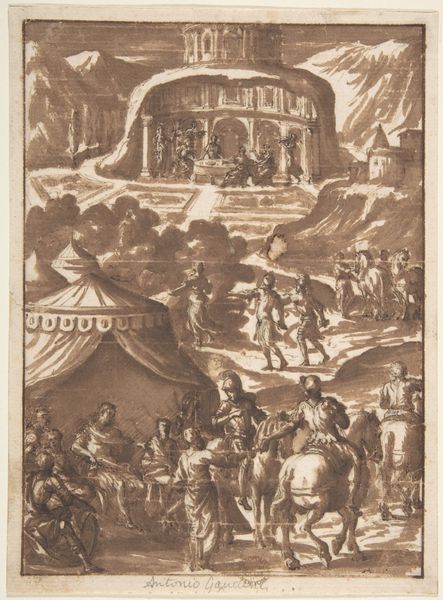
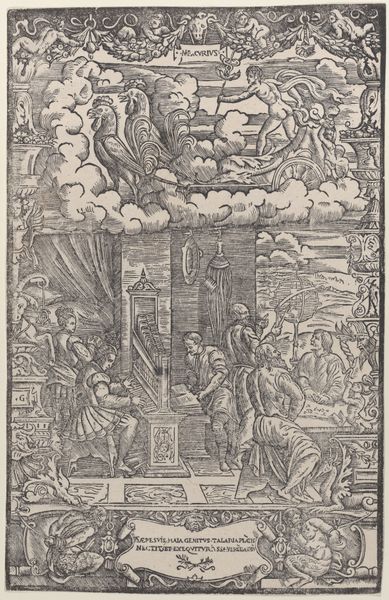
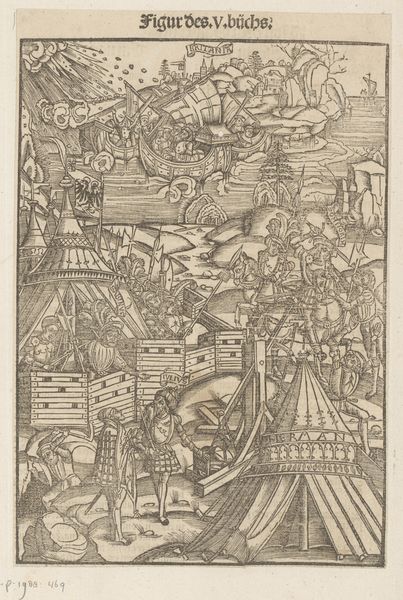
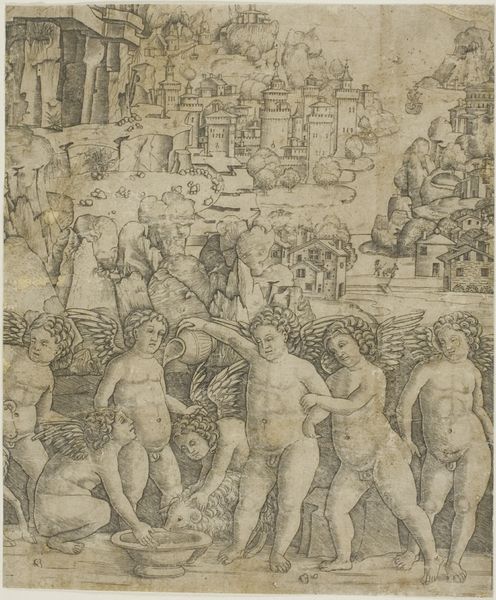
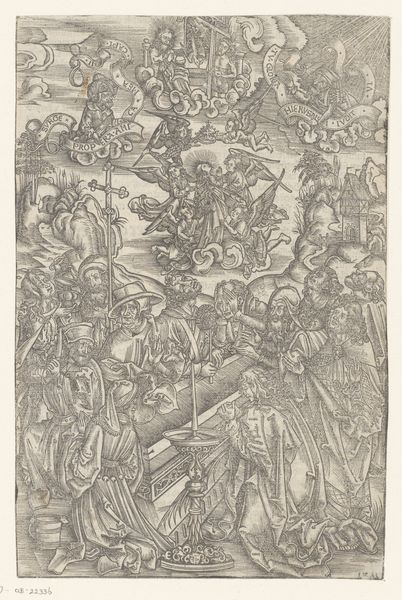
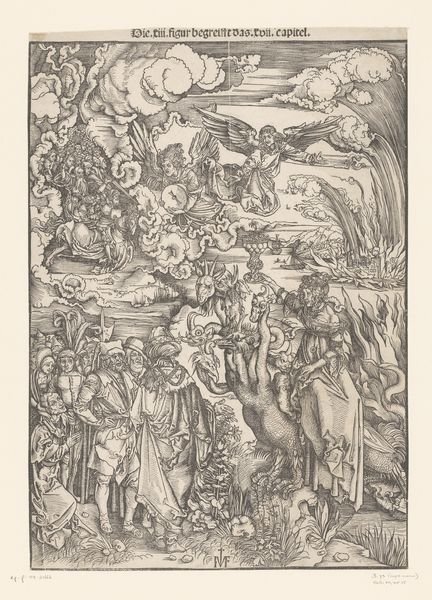
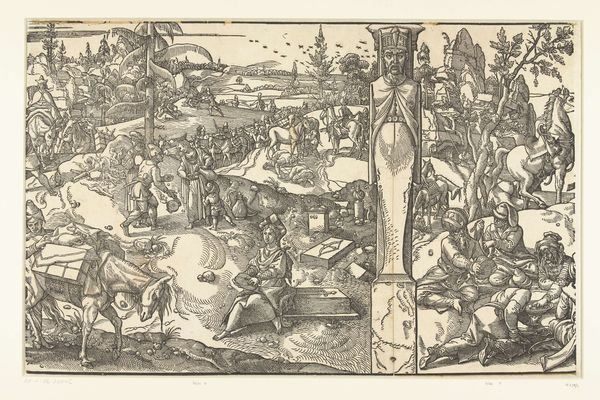
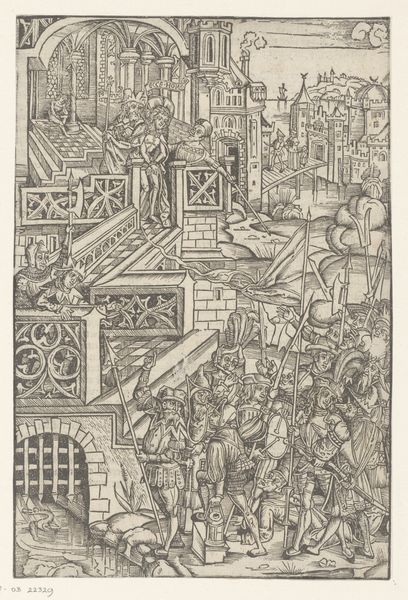
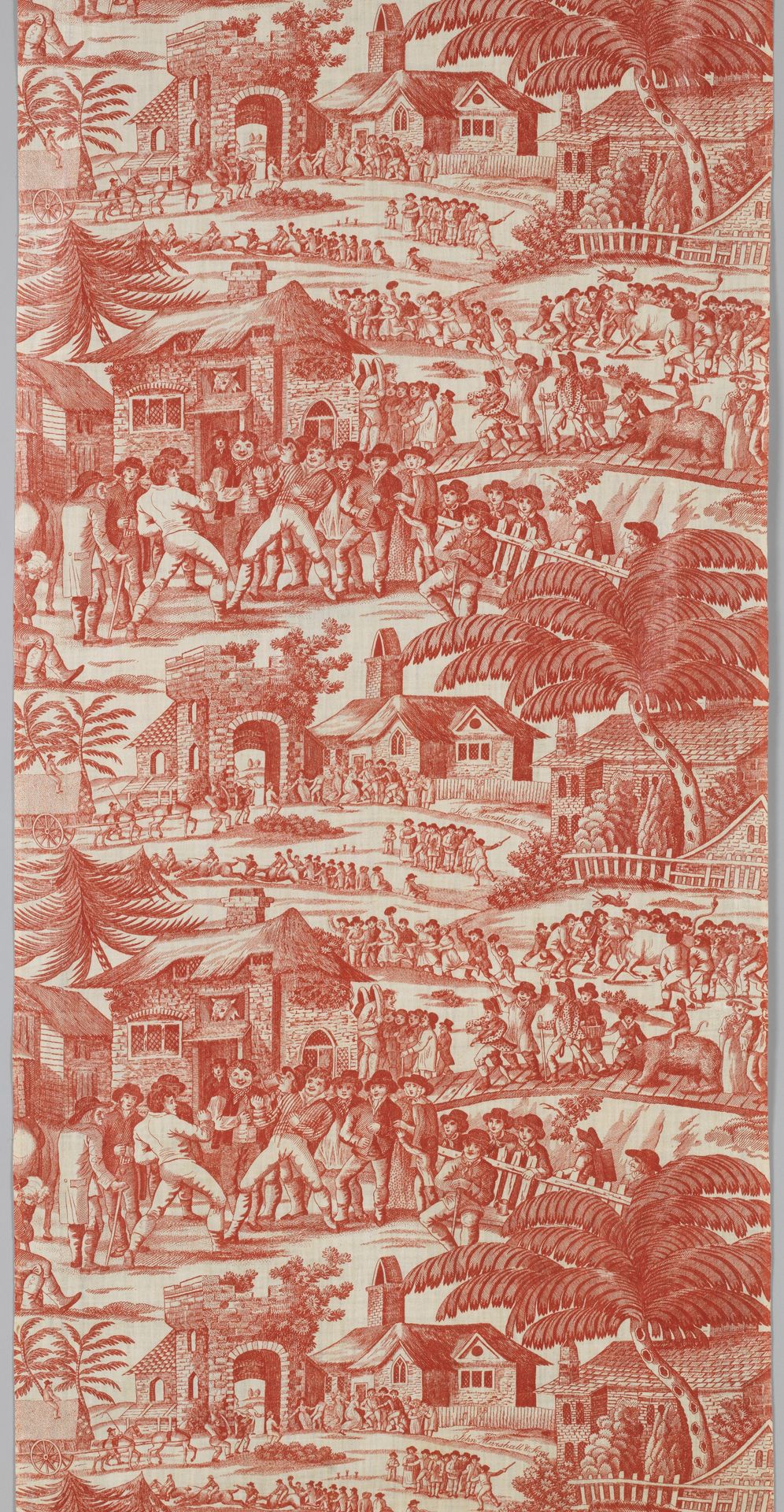
This is a length of cotton created by John Marshall and Sons, its date is unknown. The fabric immediately strikes the eye with its repeated patterns of monochromatic scenes, creating a rhythmic visual experience. The choice of a singular color, a terracotta-like red, against the pale ground, streamlines the narrative, prompting us to observe the shapes and forms more acutely. The scenes themselves are densely populated, filled with figures engaged in various activities, set against architectural and naturalistic backdrops. This complexity encourages a wandering eye, moving across the textile. The repeated images of human interaction and social order invites a semiotic reading, where each motif acts as a signifier of a broader cultural narrative. The scenes, while appearing bucolic and charming, also hint at a structured society. The formal elements such as color, line, and composition, not only define the visual appeal of the textile, but also invite ongoing interpretation.
Piece
1800 - 1815

John Marshall and Sons
@johnmarshallandsons
The Metropolitan Museum of Art
Metropolitan Museum of Art, New York, NYArtwork details
- Medium
- print, textile, engraving
- Dimensions
- L. 70 x W. 23 1/2 177.8 x 59.7 cm
- Location
- Metropolitan Museum of Art, New York, NY
- Copyright
- Public Domain
Tags
Comments
Share your thoughts
About this artwork
This is a length of cotton created by John Marshall and Sons, its date is unknown. The fabric immediately strikes the eye with its repeated patterns of monochromatic scenes, creating a rhythmic visual experience. The choice of a singular color, a terracotta-like red, against the pale ground, streamlines the narrative, prompting us to observe the shapes and forms more acutely. The scenes themselves are densely populated, filled with figures engaged in various activities, set against architectural and naturalistic backdrops. This complexity encourages a wandering eye, moving across the textile. The repeated images of human interaction and social order invites a semiotic reading, where each motif acts as a signifier of a broader cultural narrative. The scenes, while appearing bucolic and charming, also hint at a structured society. The formal elements such as color, line, and composition, not only define the visual appeal of the textile, but also invite ongoing interpretation.
Comments
Share your thoughts