About this artwork
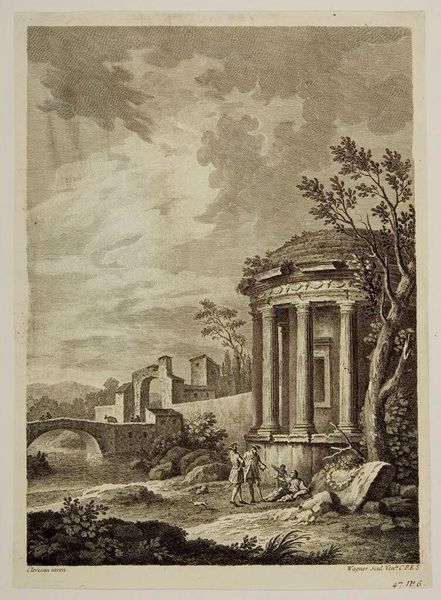
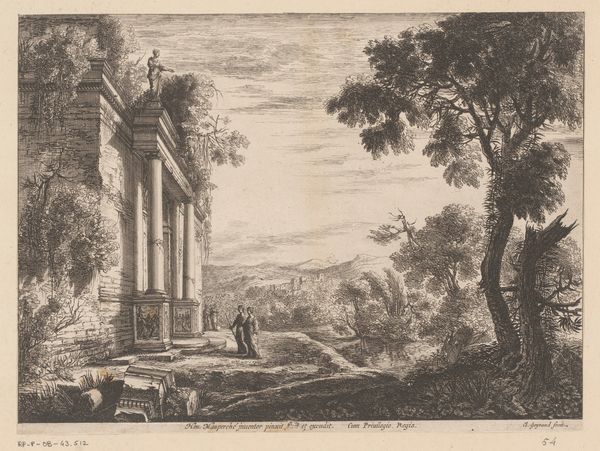
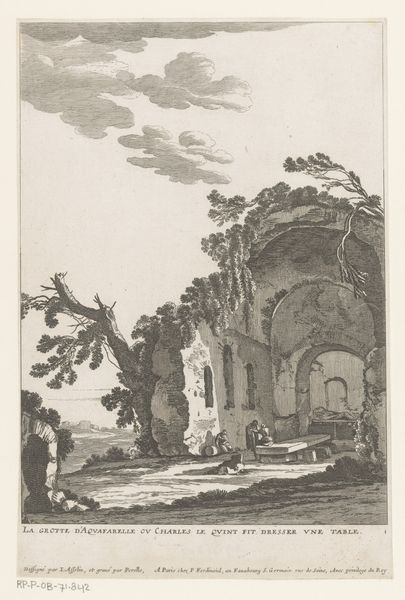
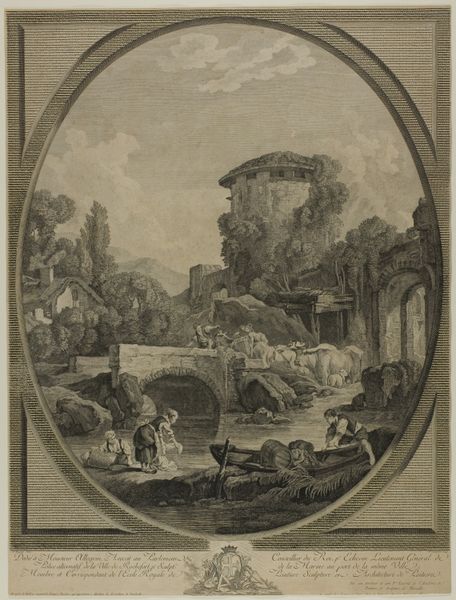
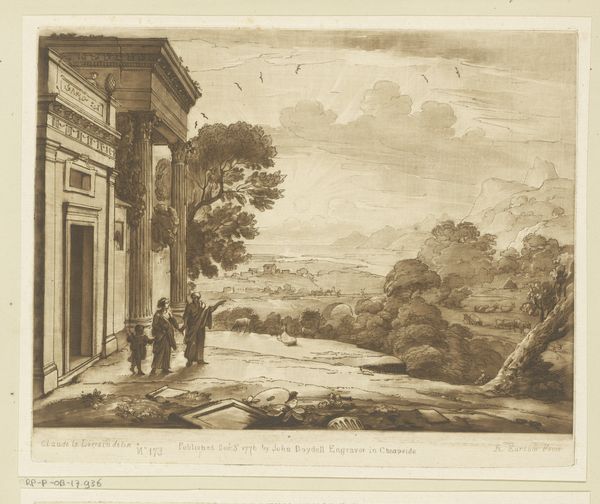
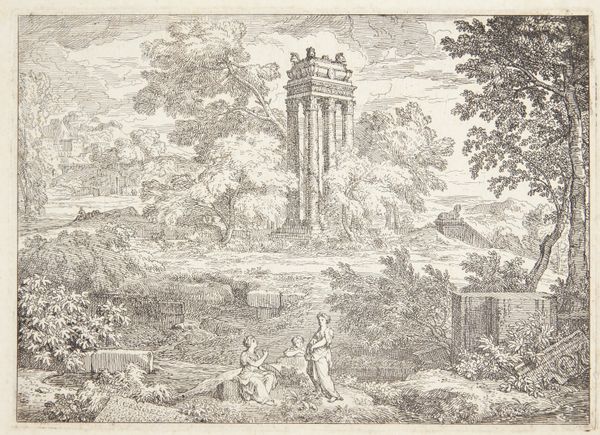
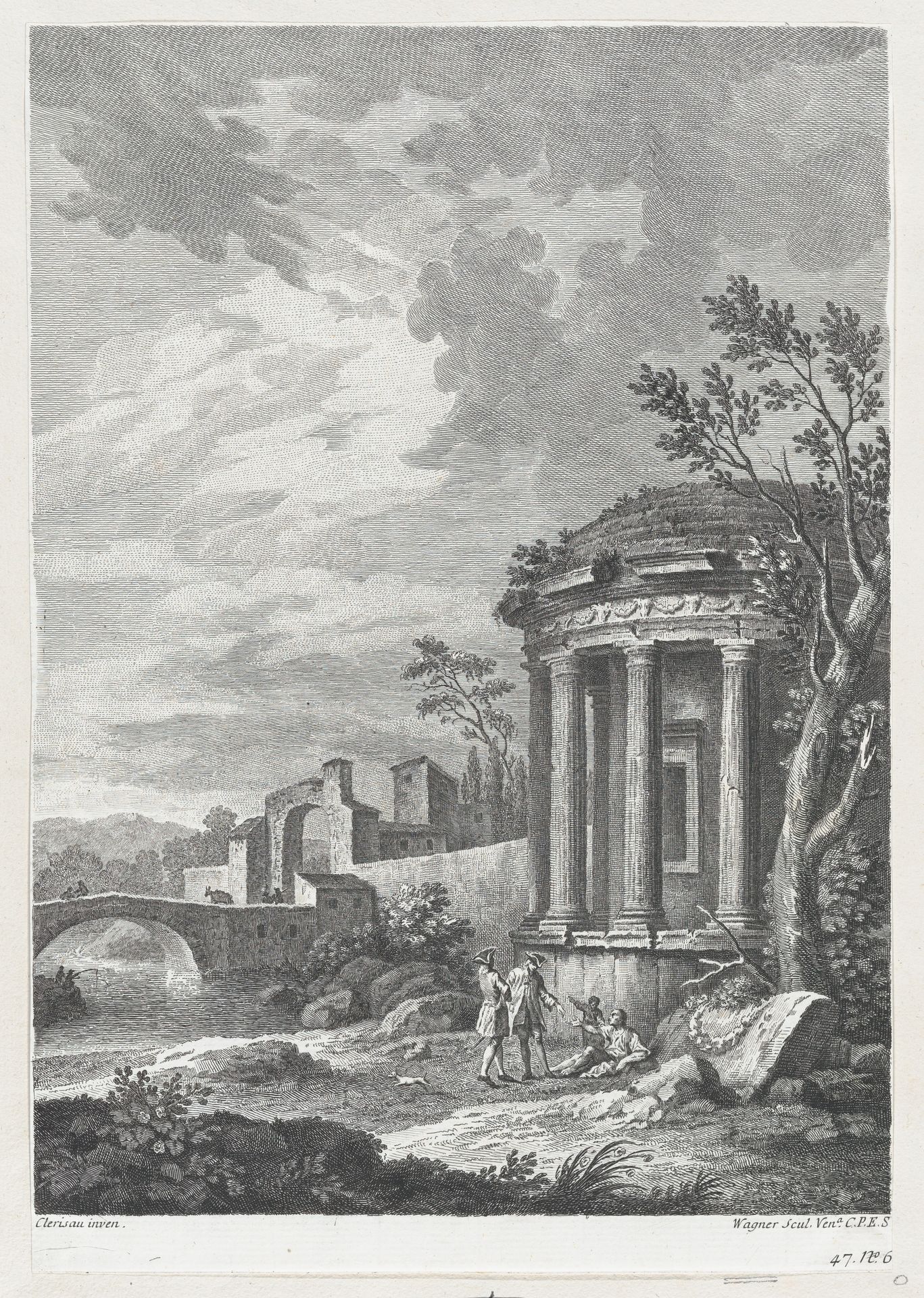
Editor: So, this is Joseph Wagner's "Landscape with Temple," an etching from around 1745-1775. The light is beautiful, really, but there's a strange melancholic feeling that the ruined architecture gives off. What do you see in this piece? Curator: I see a meditation on time and memory. Note the classical temple, meticulously rendered, yet clearly weathered. What feelings are evoked by the figures in contemporary dress dwarfed by this architectural relic? Editor: It feels like they're visitors... like we are. As though they're also contemplating the weight of history. Curator: Precisely! Wagner uses this juxtaposition to explore the persistence of cultural memory. The temple itself is a symbol, carrying echoes of past empires, philosophies, and artistic ideals. Doesn’t its crumbling state highlight the transience of even the most enduring symbols? Editor: I guess it does. Like, empires rise and fall, but the image remains... the *idea* of the temple survives. What is communicated through that contrast? Curator: That there are cyclical rhythms throughout all existence, a constant conversation between present and past. The human figures are, in a way, stand-ins for *us*. They reflect our role as both inheritors and interpreters of cultural legacies. Editor: It’s incredible to think about how much symbolism and meaning can be packed into what at first just seems like a landscape print. It's a history lesson, really. Curator: Indeed. Wagner invites us to actively participate in the continuous reconstruction of meaning embedded in such evocative imagery, engaging with the emotional resonance and intellectual weight of classical symbols across generations.
Landscape with Temple
1745 - 1775


Artwork details
- Medium
- drawing, print, etching, architecture
- Dimensions
- Sheet (Trimmed): 14 3/16 × 9 3/4 in. (36 × 24.8 cm)
- Location
- Metropolitan Museum of Art, New York, NY
- Copyright
- Public Domain
Tags
Comments
Share your thoughts
About this artwork
Editor: So, this is Joseph Wagner's "Landscape with Temple," an etching from around 1745-1775. The light is beautiful, really, but there's a strange melancholic feeling that the ruined architecture gives off. What do you see in this piece? Curator: I see a meditation on time and memory. Note the classical temple, meticulously rendered, yet clearly weathered. What feelings are evoked by the figures in contemporary dress dwarfed by this architectural relic? Editor: It feels like they're visitors... like we are. As though they're also contemplating the weight of history. Curator: Precisely! Wagner uses this juxtaposition to explore the persistence of cultural memory. The temple itself is a symbol, carrying echoes of past empires, philosophies, and artistic ideals. Doesn’t its crumbling state highlight the transience of even the most enduring symbols? Editor: I guess it does. Like, empires rise and fall, but the image remains... the *idea* of the temple survives. What is communicated through that contrast? Curator: That there are cyclical rhythms throughout all existence, a constant conversation between present and past. The human figures are, in a way, stand-ins for *us*. They reflect our role as both inheritors and interpreters of cultural legacies. Editor: It’s incredible to think about how much symbolism and meaning can be packed into what at first just seems like a landscape print. It's a history lesson, really. Curator: Indeed. Wagner invites us to actively participate in the continuous reconstruction of meaning embedded in such evocative imagery, engaging with the emotional resonance and intellectual weight of classical symbols across generations.
Comments
Share your thoughts