1784
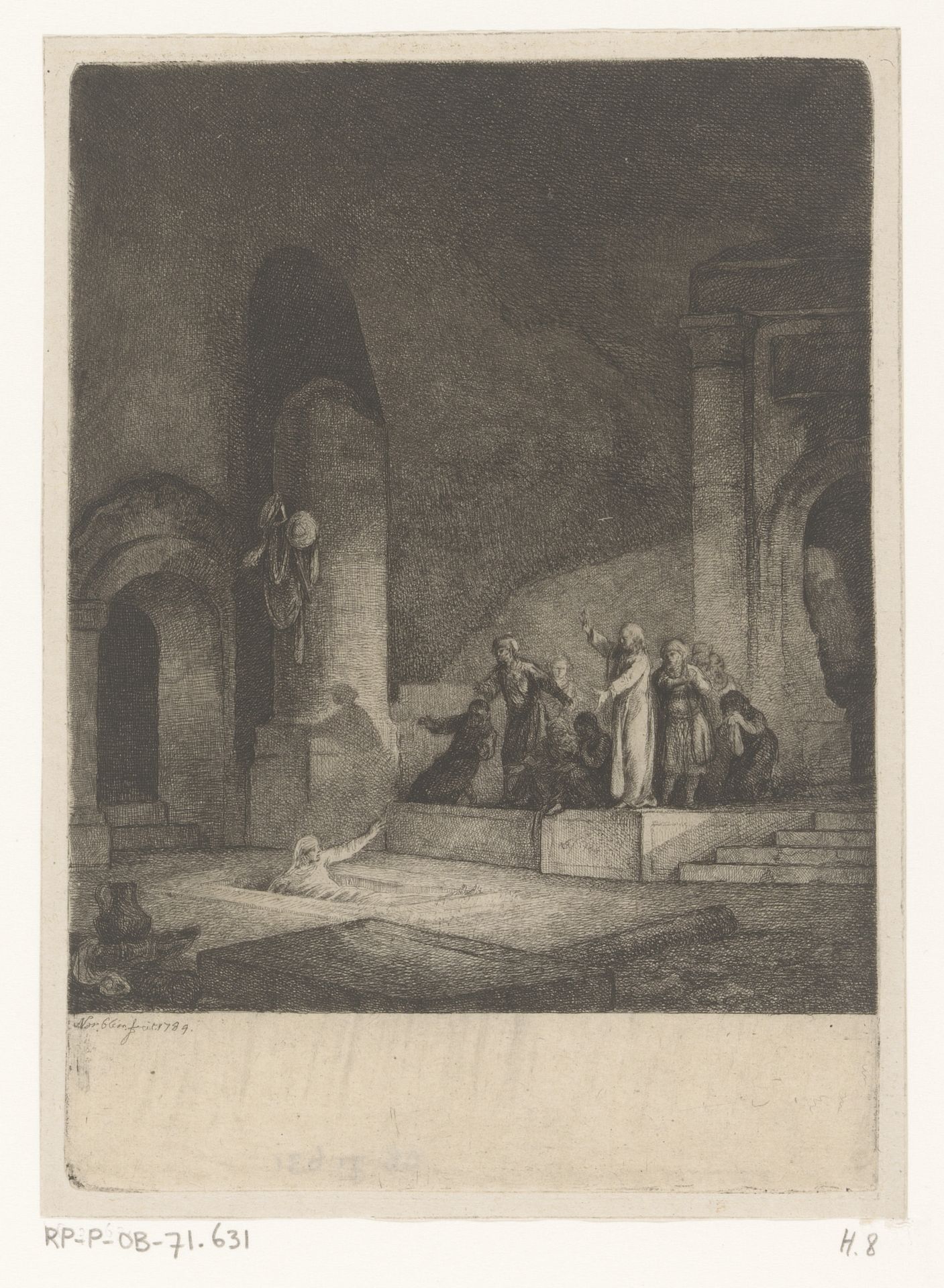
Opwekking van Lazarus

Listen to curator's interpretation
Curatorial notes
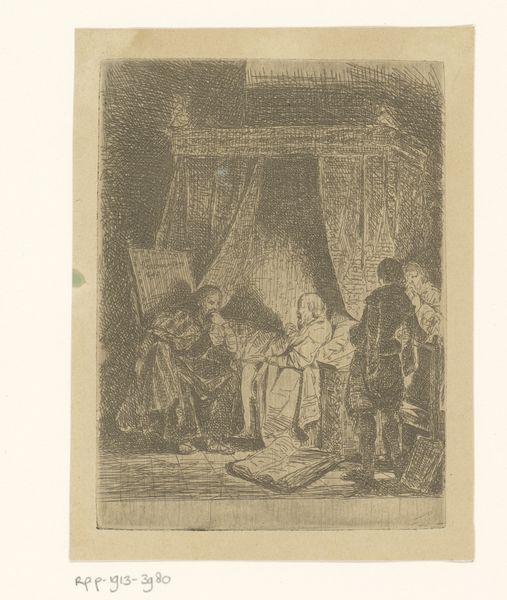
Jean-Pierre Norblin de la Gourdaine created this etching of the Raising of Lazarus, capturing a pivotal moment from the Gospel of John. Note Lazarus emerging from the tomb, still wrapped in his burial cloths, and the dramatic gestures of those around him, embodying shock, awe, and faith. Consider the raised hand of Jesus, a gesture echoed across millennia. It appears in ancient Roman art as a symbol of authority and reappears in countless religious scenes signifying blessing or divine intervention. It’s a primal expression, transcending cultural boundaries. The swaddling clothes, also, are significant. In ancient times, binding the dead was a common practice to prepare the body for burial and, symbolically, restrain the spirit. Here, they represent not only physical death but also spiritual confinement. As Lazarus rises, he sheds these constraints, an act of liberation that resonates deeply within the human psyche. It is a universal desire to break free from the bonds of mortality. Observe how these symbols recur throughout history, continually reshaped by collective memory and subconscious desires. This potent iconography engages viewers on a profound level, reminding us of humanity's ongoing dialogue with faith, death, and resurrection.