About this artwork
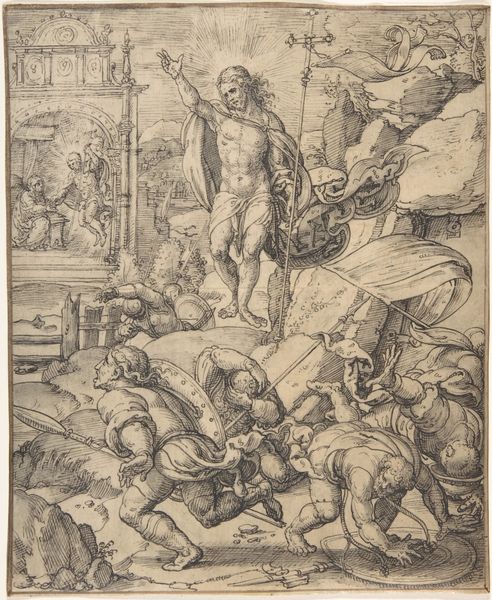
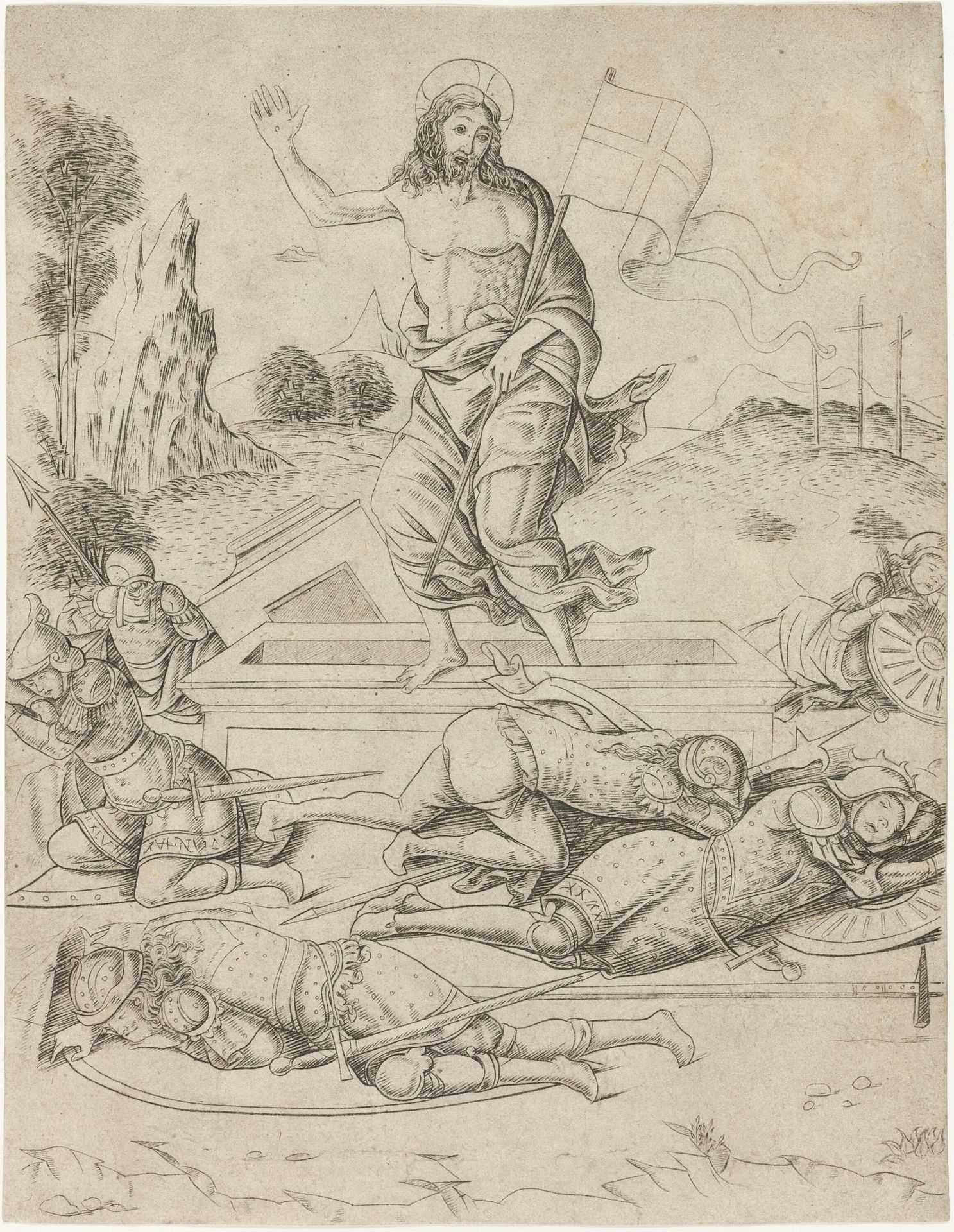
Francesco Rosselli created this engraving, *The Resurrection,* as part of his series, *Life of the Virgin and Christ.* Printed around 1500, this work emerges from a society steeped in religious doctrine, yet it also reflects the burgeoning spirit of humanism that characterized the Renaissance. Rosselli, positioned at the intersection of these worlds, renders a scene laden with symbolic meaning. Christ, muscular and divine, rises from his tomb, embodying a triumph over death. The artist uses line and form to express both the physical and spiritual drama of the resurrection. The fallen soldiers below Christ, represent earthly powerlessness in the face of divine intervention. Rosselli adheres to traditional religious narratives while simultaneously using new printmaking technology that made the image accessible to a wider audience. The emotional tension between the human and the divine is palpable. Through *The Resurrection,* Rosselli captures a pivotal moment in Christian theology. The print becomes a mirror reflecting the complex interplay between faith, power, and human experience.
The Resurrection, plate eleven from the Life of the Virgin and Christ
c. 1470


Artwork details
- Medium
- drawing, print, paper, engraving
- Dimensions
- 221 × 162 mm
- Location
- The Art Institute of Chicago
- Copyright
- Public Domain
Tags
Comments
Share your thoughts
About this artwork
Francesco Rosselli created this engraving, *The Resurrection,* as part of his series, *Life of the Virgin and Christ.* Printed around 1500, this work emerges from a society steeped in religious doctrine, yet it also reflects the burgeoning spirit of humanism that characterized the Renaissance. Rosselli, positioned at the intersection of these worlds, renders a scene laden with symbolic meaning. Christ, muscular and divine, rises from his tomb, embodying a triumph over death. The artist uses line and form to express both the physical and spiritual drama of the resurrection. The fallen soldiers below Christ, represent earthly powerlessness in the face of divine intervention. Rosselli adheres to traditional religious narratives while simultaneously using new printmaking technology that made the image accessible to a wider audience. The emotional tension between the human and the divine is palpable. Through *The Resurrection,* Rosselli captures a pivotal moment in Christian theology. The print becomes a mirror reflecting the complex interplay between faith, power, and human experience.
Comments
Share your thoughts